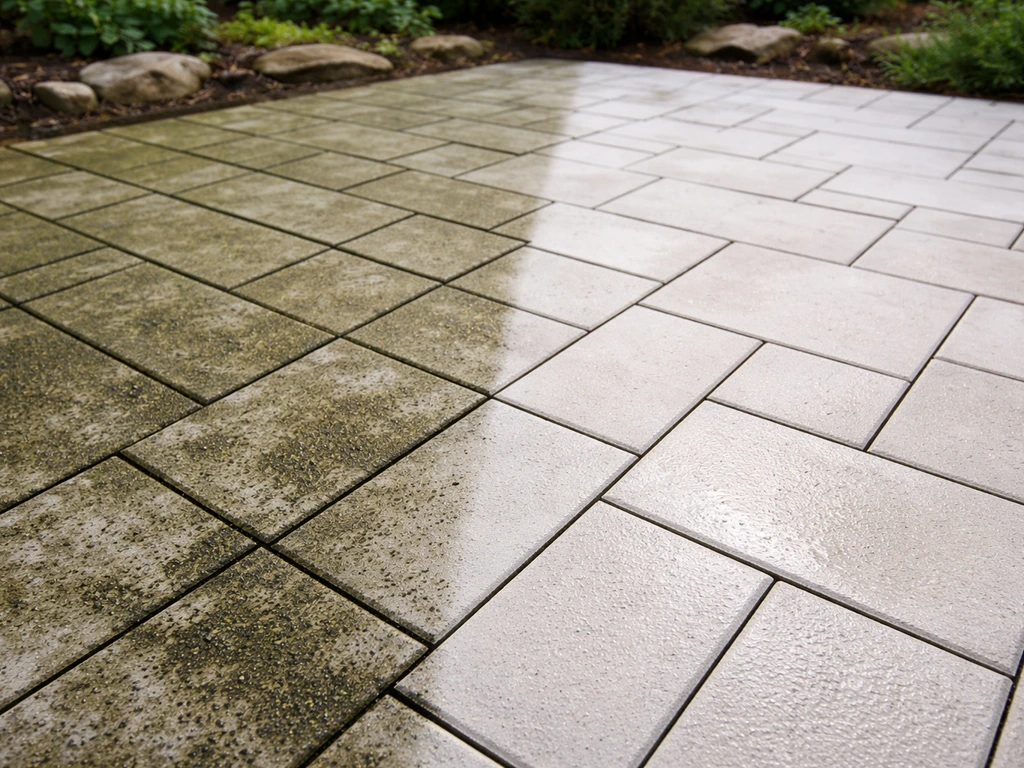
Yes, patio cleaners genuinely work, but only when you match the right product to the right problem and surface. Use a bleach-based cleaner on algae and mold on concrete, give it 10 minutes to dwell, rinse well, and you will see a dramatic difference. Use that same cleaner on sandstone or slate and you risk etching or discolouring the surface permanently. The honest answer is that patio cleaners are a solid tool, not a magic fix, and knowing when to reach for one (and which one) is the difference between a result you are happy with and a surface you have ruined.
Are Patio Cleaners Any Good? Honest Results Guide
Rhea Lang
31 May 2026
What patio cleaners actually are
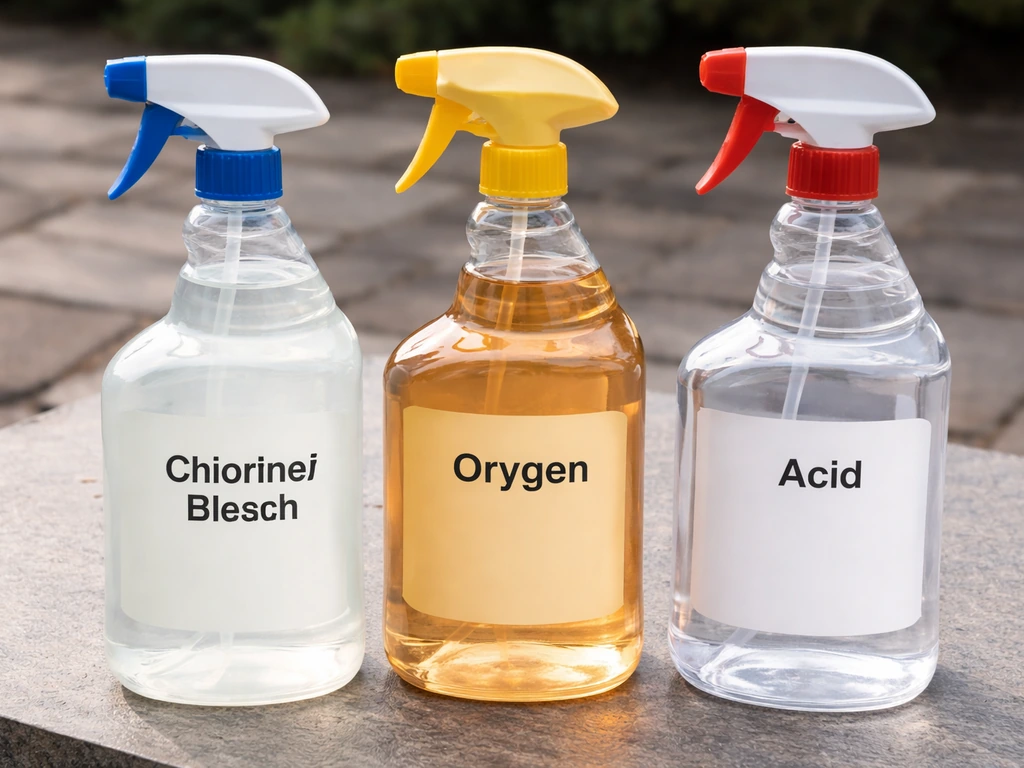
Most off-the-shelf patio cleaners fall into one of three chemical families. Bleach-based or chlorine cleaners use sodium hypochlorite as the active ingredient, the same compound you find in household bleach, typically at 5.25% in concentrated form. Products like Clorox Pro Results Patio and Deck Cleaner contain sodium hypochlorite at 1 to 5% by weight, paired with sodium hydroxide (a mild alkaline booster) and a surfactant like lauramine oxide to help the solution spread and penetrate grime. These are your go-to for biological growth: algae, mold, mildew, and moss. Oxygen-based cleaners use sodium percarbonate, which releases hydrogen peroxide when it contacts water. They are gentler on sensitive surfaces and wood, and they handle organic staining and general discolouration well. Then there are acid-based cleaners, typically containing phosphoric or oxalic acid, which tackle mineral stains, rust, and efflorescence on hard surfaces like concrete and brick. Each chemistry does a different job, and knowing which one you are dealing with matters a lot before you pour anything on your patio.
Ready-to-use formulas come in trigger sprays or hose-end attachments that dilute automatically as you apply them. Concentrate versions need mixing first. The hose-end type (like Home Armor Deck and Patio Wash) is genuinely convenient, attach to your hose, spray on, wait 10 minutes, rinse off. Just be aware that these auto-dilute formulas are usually weaker than mixing a concentrate yourself, which can matter for heavy infestations of algae or deeply embedded mold.
When patio cleaners actually work vs when they don't
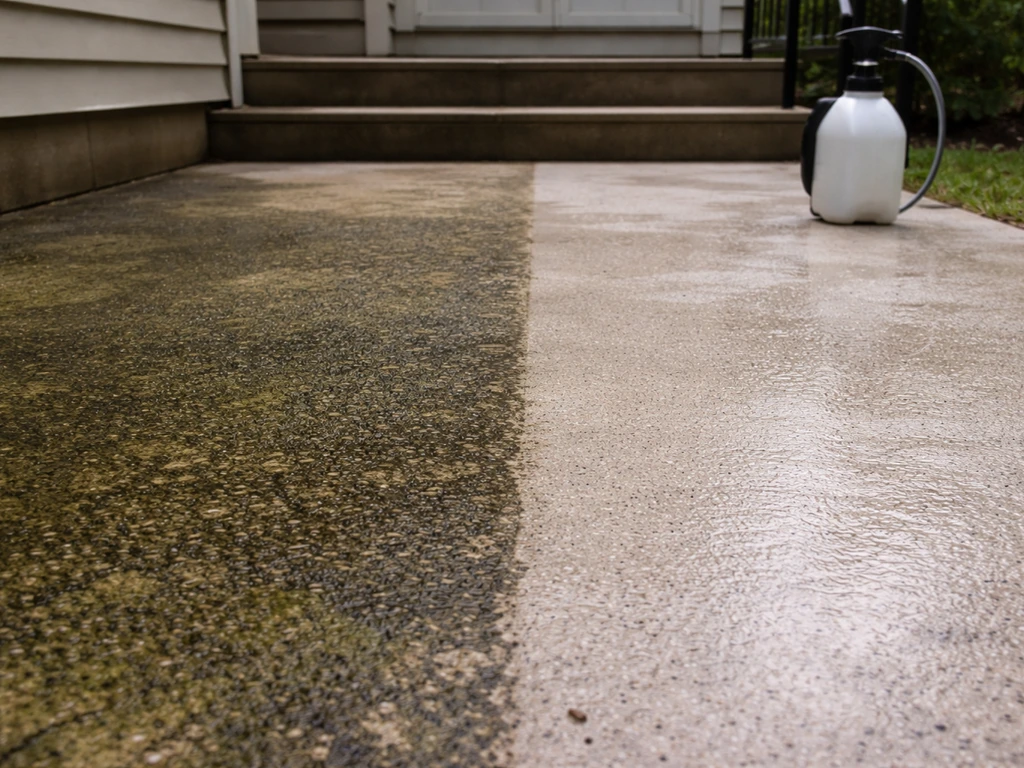
Patio cleaners genuinely earn their place when you are dealing with biological growth. Green algae, black mold, orange and brown mildew, and surface moss all respond very well to bleach-based or oxygen-based treatments, particularly on concrete, brick, and block paving. The chemistry breaks down the cell structure of the organism and lifts it off the surface. I have tested this repeatedly on concrete slabs: a decent bleach-based cleaner left on for 10 minutes and then rinsed removes green algae almost completely without any scrubbing. For moderate staining, that is genuinely impressive for a product that costs a few pounds or dollars.
They are also useful for general grime and surface dirt, especially when combined with light scrubbing. The surfactants in most formulas help break the bond between dirt and the surface, so you are not just diluting the mess, you are actually lifting it. Grease stains from barbecues respond reasonably well to alkaline or surfactant-rich cleaners. Pet stains (urine in particular) tend to respond better to oxygen-based cleaners since the peroxide component tackles both the stain and the odour.
Where patio cleaners struggle or outright fail: deeply ingrained rust stains on porous stone, old oil stains that have cured into the surface over several seasons, and paint or resin deposits. For rust specifically on natural stone, you need a dedicated rust remover, not a general patio cleaner, and even then, acid-based rust removers can cause their own problems depending on the stone type. Natural Stone Institute advises avoiding acid with certain rust-removal workflows and recommends wetting the surface with clear water before using an appropriate poultice or rust remover for iron stains avoid acid-based rust removers with the wrong stone type. Bleach-based cleaners also do very little for mineral deposits or efflorescence (the white powdery bloom you see on brick). For that, you want a diluted acid-based cleaner, not bleach.
The surface matters more than people think
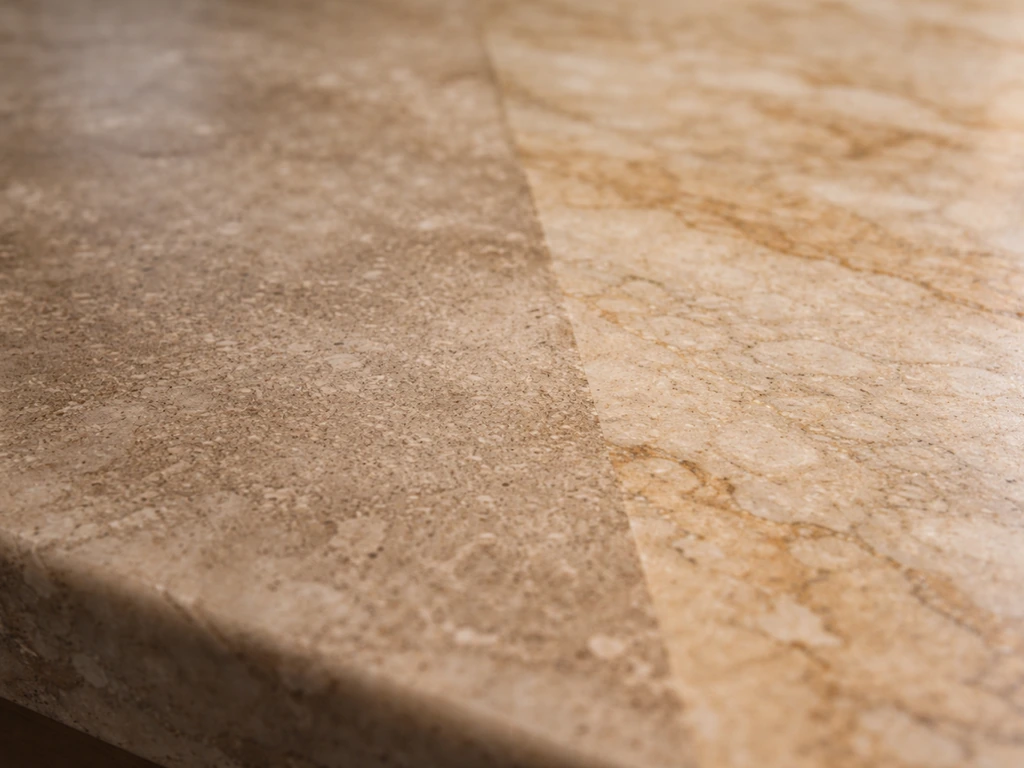
This is where most DIY cleaning goes wrong. Acid-sensitive stones, including sandstone, limestone, marble, and some slate types, etch visibly when they contact acid. According to LATICRETE, the result is a dull, damaged spot where the stone surface has been chemically dissolved. That damage is permanent. So any cleaner containing hydrochloric acid or strong phosphoric acid should never go near these surfaces. Even bleach-based cleaners at high concentration can lighten or discolour softer sandstone and natural limestone over time. Porcelain pavers are the most forgiving: they are dense, non-porous, and resistant to most cleaning chemistry. Concrete handles bleach well. Brick is usually fine with bleach at normal dilutions. Natural stone is where you need to be most careful.
Choosing the right cleaner for your surface and stains
| Surface | Best cleaner type | Avoid |
|---|---|---|
| Concrete | Bleach-based or oxygen-based; acid for rust/efflorescence | Nothing to avoid at normal dilutions |
| Brick and block paving | Bleach-based for algae/moss; diluted acid for efflorescence | Strong acid at high concentration |
| Natural sandstone | Oxygen-based (sodium percarbonate) at low concentration | Acid-based cleaners; strong bleach |
| Slate | Oxygen-based; pH-neutral surfactant cleaners | Acid-based cleaners |
| Limestone | pH-neutral or mild oxygen-based only | Any acid; strong bleach |
| Porcelain pavers | Most cleaners work; bleach-based or oxygen-based are safest | Nothing at standard dilutions |
| Timber decking | Oxygen-based (sodium percarbonate) only | Strong bleach; acid cleaners |
For algae and mold on concrete or brick, a bleach-based cleaner is your most effective and economical option. A household bleach diluted 1:10 with water gives you roughly 0.5% sodium hypochlorite, which is effective for surface disinfection and biological stain removal. Ready-mixed patio cleaner products containing 1 to 5% sodium hypochlorite are therefore quite concentrated, you may still want to dilute them further on sensitive or coloured surfaces. For wood decking, sodium percarbonate-based products (sold as oxygenated wood bleach or deck brighteners) are the right call. Messmer's Wood and Deck Cleaner specifies a 10 to 15 minute dwell time followed by a thorough rinse, which is typical for this category. If you are researching whether chlorine or specific bleach products work for your patio, the chemistry covered here applies directly. Similarly, options like washing powder or specialist detergents can help with surface dirt and grease, though they are not the strongest choice for heavy biological growth.
How to use patio cleaners safely and effectively
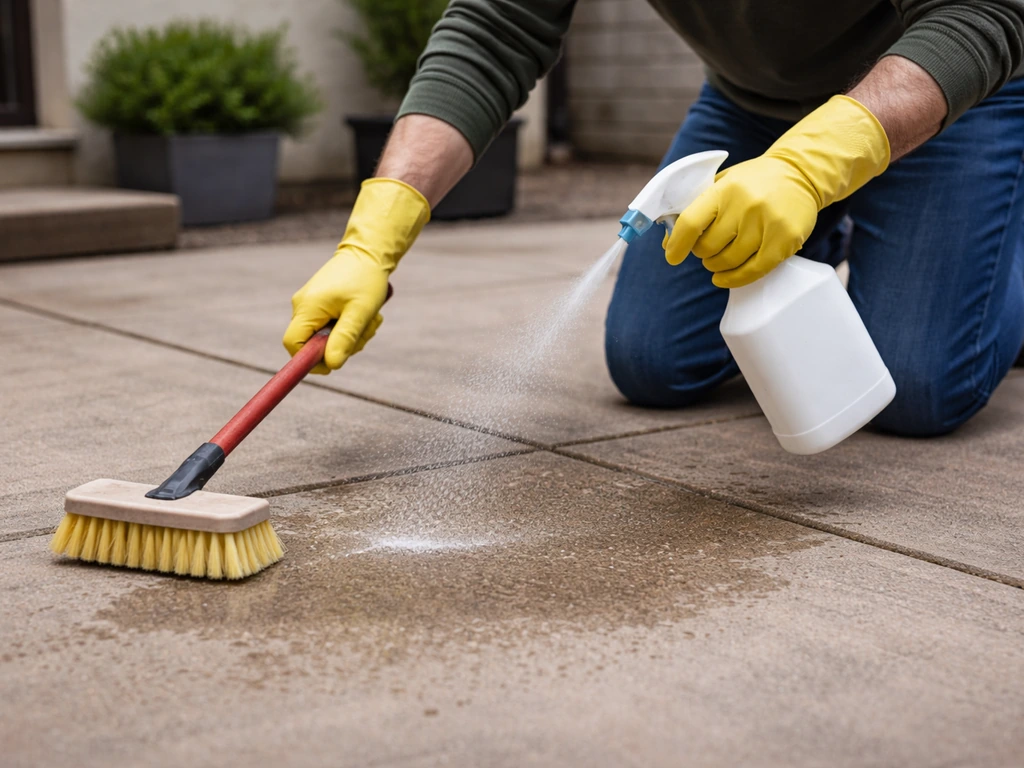
- Clear the patio first. Move furniture, planters, and anything else off the surface. Sweep or blow off loose debris so the cleaner contacts the surface rather than sitting on top of dirt.
- Wet down surrounding plants and grass before you start. This dilutes any overspray or runoff that reaches them. After you finish, rinse them again. Most bleach-based cleaners at working dilutions will not kill established plants if rinsed promptly, but do not let concentrated solution pool around roots.
- Wet the patio surface with clean water before applying the cleaner. This prevents the cleaner from being absorbed too quickly into porous surfaces and helps it spread evenly.
- Apply the cleaner and respect the dwell time. Home Armor's hose-end formula specifies 10 minutes. Sodium percarbonate products typically need 5 to 20 minutes depending on the stain. Do not let the cleaner dry on the surface — if it starts to dry before you rinse, mist with water to keep it active.
- Scrub where needed. Light algae rinsing alone may be enough. Heavier staining — ground-in grime, grease, or thick moss — needs a stiff-bristle brush worked in during or after the dwell time.
- Rinse thoroughly. This is not optional. Residual cleaner left on the surface can continue reacting, leave residue, and cause long-term discolouration. Use a hose rather than a pressure washer for the rinse if you are on sandstone or softer stone.
- Wear PPE. Bleach-based cleaners cause skin and eye irritation. Gloves, eye protection, and old clothes are the minimum. Work in a ventilated area and avoid mixing different cleaning products together — bleach combined with acid cleaners produces toxic chlorine gas.
One thing the CDC is clear on: bleach only delivers its full disinfecting effect at the right dilution and with adequate contact time. More is not always better. Pouring neat bleach on your patio is wasteful, increases runoff risk, and can damage coloured jointing sand or nearby materials. Stick to the label dilution and dwell time. The IRS explains that liquid bleach can be a hazardous substance and should be handled and stored carefully to reduce risks to people and the environment. The US EPA also recommends minimising runoff by controlling your water use, a spray nozzle rather than a free-flowing hose keeps cleaner on the surface longer and reduces chemical runoff into drainage.
How patio cleaners compare to pressure washing and other methods
Pressure washing and chemical cleaners do different things, and the best results usually come from combining them rather than treating them as alternatives. A pressure washer shifts surface grime, loose moss, and debris very effectively through mechanical force. It does not kill algae and mold spores, it scatters them. Treat with a bleach-based cleaner after pressure washing (or before, to kill and loosen the growth first) and you get a much more thorough result that stays clean longer. Using a patio cleaner alone, without any mechanical scrubbing or pressure rinsing, works well for maintenance cleans but may leave traces of heavy staining or thick moss in textured surfaces.
For surfaces where pressure washing risks damage, natural sandstone at high pressure, for example, or older brick where the pointing is already soft, chemical cleaners are often the safer primary method. Apply the cleaner, let it dwell, scrub gently, and rinse with a garden hose at low pressure. This is slower but far less likely to cause surface damage or blast out jointing sand.
Home remedies like white vinegar are sometimes suggested as alternatives to proprietary patio cleaners. Vinegar is acidic (typically 5% acetic acid), which means it has the same etching risk as commercial acid cleaners on sensitive stone, without being particularly effective at killing algae compared to bleach. It is not something I would recommend for patio cleaning as a primary method. White vinegar's main use case is descaling, not biological stain removal. Washing soda and detergent-based approaches can shift light surface grime on robust surfaces but are not strong enough for established algae or mold. If you are deciding on the best detergent to clean patio surfaces, look for options that can handle your specific grime without damaging sensitive stone Washing soda and detergent-based approaches.
| Method | Best for | Limitations | Verdict |
|---|---|---|---|
| Bleach-based patio cleaner | Algae, mold, mildew on concrete/brick/porcelain | Not for natural stone; no effect on rust or mineral stains | Best value for biological growth |
| Oxygen-based cleaner | Wood decking, natural stone, organic staining | Less effective on heavy algae than bleach | Safest all-rounder for mixed surfaces |
| Acid-based cleaner | Rust, efflorescence, mineral deposits on concrete/brick | Damages acid-sensitive stone; requires careful dilution | Use only when specifically needed |
| Pressure washing | Surface grime, loose moss, general refresh | Does not kill spores; can damage soft stone/pointing | Best combined with chemical treatment |
| Vinegar/home remedies | Very light grime, descaling hard water marks | Weak on algae; acid risk to stone; slow | Not recommended as primary method |
What to buy and what to skip
For most homeowners dealing with algae, mold, or green growth on concrete or brick, a ready-to-use bleach-based patio cleaner is the most cost-effective starting point. Look for sodium hypochlorite listed as the active ingredient, with a concentration of at least 1% in the ready-to-use product. Hose-end applicators like Home Armor Deck and Patio Wash make application straightforward for large areas. For natural stone or wood, look for sodium percarbonate as the active ingredient and follow the product's stated dwell time (usually 10 to 20 minutes). Avoid anything that lists hydrochloric acid or strong phosphoric acid for use near natural stone.
What to avoid: very cheap unbranded products with no clear active ingredient listed, anything that claims to clean every surface equally well without any precautions, and any product that does not have a clear label with dilution instructions and a safety data sheet available. A product worth using will tell you exactly what chemistry it uses, what surfaces it is safe on, and what PPE to wear. If it does not, do not buy it.
Before you spend anything, do a quick test. Apply a small amount of your chosen cleaner to an inconspicuous corner of the patio, wait the full dwell time, and rinse. Check for discolouration, etching, or any surface change after it dries. This takes five minutes and saves you from finding out the hard way across your entire patio. I learned this specifically with a mid-priced cleaner on a sandstone path, the corner test saved me from a very expensive mistake.
Are patio cleaners worth it? The bottom line
For biological growth on hard, robust surfaces like concrete, brick, and porcelain, patio cleaners are absolutely worth buying. If you are asking, “does pink stuff clean patios,” this article suggests you will get far better results by matching the cleaner to the surface and the stain type patio cleaners are absolutely worth buying. They are significantly cheaper than hiring a professional, safer than aggressive pressure washing for maintenance cleans, and they genuinely work when used correctly with the right dwell time and rinse. For natural stone or specialist surfaces, they are still worth it but you need to be more selective about chemistry. For rust, heavy oil stains, or paint, a standard patio cleaner is probably not your answer, you need a dedicated product or professional help. Know what you are fighting, pick the right chemistry, follow the instructions, and patio cleaners will deliver real results.
FAQ
Are patio cleaners any good for green algae on concrete if I do not scrub?
They can, but only if the chemistry matches the growth. Sodium hypochlorite (bleach-based) and sodium percarbonate (oxygen-based) are the two families that reliably kill and lift algae or mold. For true rust or efflorescence, a dedicated rust remover or diluted acid-based product is usually required, since bleach and oxygen cleaners do little for mineral deposits.
How long do I need to leave a patio cleaner on for it to actually work?
Do not treat them like “soak and forget.” Let the cleaner dwell for the full label time (often 10 minutes for bleach-based and 10 to 20 minutes for oxygen products), then rinse thoroughly. If you rinse early or apply too little, you will often see algae return quickly.
Are hose-end patio cleaners as effective as concentrate versions?
Yes, but weaker mixes can fail on heavy infestations. Hose-end applicators are convenient and usually diluted, so for thick black mold or long-established algae you may need the concentrate option or a stronger mix that still stays within the product’s safety guidance, especially on coloured paving and jointing sand.
Can I replace a patio cleaner with white vinegar for mildew and green growth?
Usually not. Vinegar is acidic, it carries the same etching risk to sensitive stone, and it is not particularly effective at killing algae compared with bleach-based products. If you want a safer DIY alternative, choose an oxygen-based cleaner for organic growth rather than an acidic descaler.
What safety gear should I use when using bleach-based or oxygen-based patio cleaners?
For most patio cleaners, yes, but do it strategically. Keep people and pets away until after the full dwell time and rinse. Wear gloves and eye protection, and consider clothing that covers skin, because bleach-based products can irritate and oxygen cleaners can also burn skin if concentrated.
Will bleach patio cleaners damage colored jointing sand or nearby plants?
If your patio has colored jointing sand, bleach-based cleaners can lighten it. Rinse more aggressively along joints and consider protecting nearby landscaping with a light cover. Also avoid using stronger-than-label dilutions because the damage is often permanent and not limited to the stain spot.
Is it safe to use the same patio cleaner on sandstone, limestone, and slate as I use on concrete?
Many will, especially bleach-based products on unsealed or softer natural stone (and high-concentration use even on some sandstone). Always do the small corner test, and treat a “no reaction” test as only that corner. If you see any dulling or lightening after drying, stop and switch chemistry.
Should I pressure wash first, or use a patio cleaner first for algae and mold?
Pressure washing changes the surface by blasting loose material and spreading spores, but it does not reliably kill growth. For best results, clean mechanically first, then apply a patio cleaner, or apply the patio cleaner first and then use light pressure to rinse and remove loosened growth.
Why did my patio cleaner do nothing on old oil stains and rust?
Usually no. Patio cleaners are often designed for algae, mildew, grime, and some biological staining. If you have oil that has cured for months or years, or rust that has penetrated porous stone, you will likely need a dedicated oil stain remover or rust remover rather than a general patio cleaner.
Why does my patio cleaner work in patches but leave streaks or missed areas?
Auto-dilute products can underperform if the nozzles spray too fast or the cleaner runs off before it penetrates. Use a spray pattern that keeps wet coverage for the full dwell time, and rinse only after the dwell period, not immediately after “spraying down.”
Are patio cleaners any good for wood decking, or will they ruin it?
Yes, but only when the active ingredient matches the surface. For wood decking, choose sodium percarbonate or a product specifically labeled for decks/wood and follow dwell time closely, usually with a thorough rinse. Avoid bleach-based cleaners on wood unless the label explicitly permits it.
What should I look for on the label so I do not buy the wrong patio cleaner?
For a first purchase, look for a clear active ingredient list and label instructions that specify surfaces, dilution if needed, and dwell time. Avoid products that claim universal cleaning without listing chemistry, because you cannot reliably predict safety on natural stone or colored materials.
Next Article
Does Chlorine Clean Patios? Safe Use, Results, and Alternatives
Get chlorine patio cleaning results, safe dilution, timing, and rinsing for concrete, brick, stone, and porcelain plus s