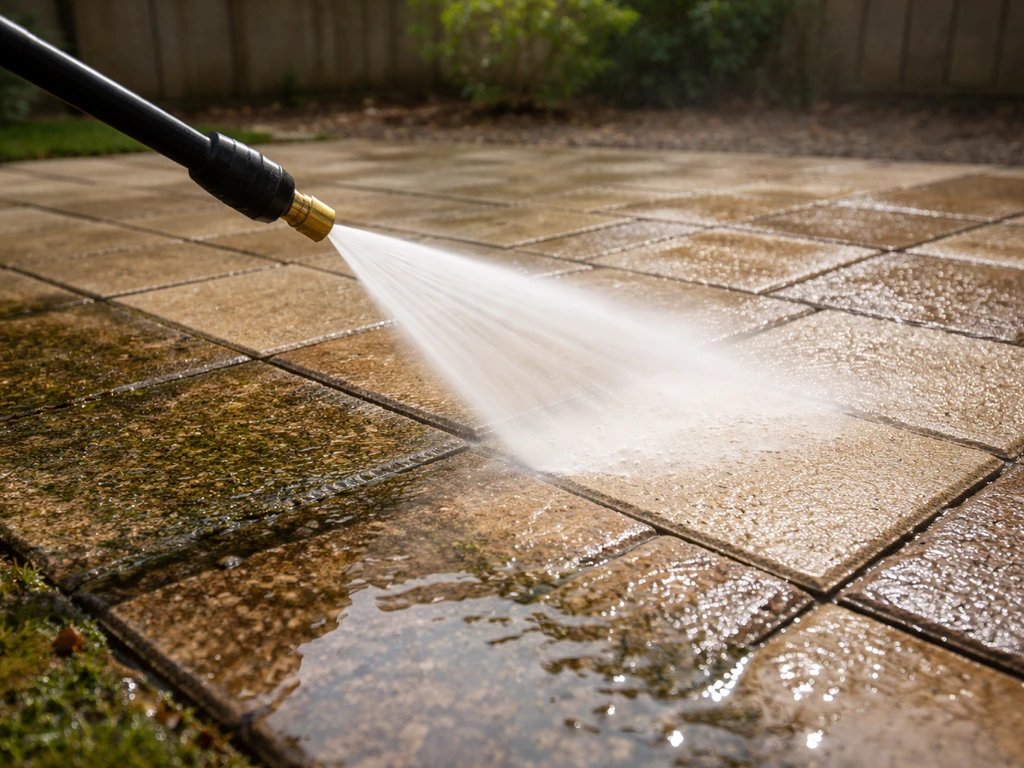
The best electric patio cleaner for most homeowners is an electric pressure washer paired with a surface cleaner attachment, running between 1,500 and 2,500 PSI depending on your patio surface. That combination gives you fast, streak-free coverage without the uneven lines you get from a single lance nozzle. For delicate surfaces like sandstone or slate, drop the pressure further and lean harder on the right chemical pre-treatment. For concrete with deep grease or rust, you'll need a purpose-built stain chemistry alongside the machine, because water pressure alone won't shift everything.
Best Electric Patio Cleaner: Buy and Use Guide for 2026
Rhea Lang
29 May 2026
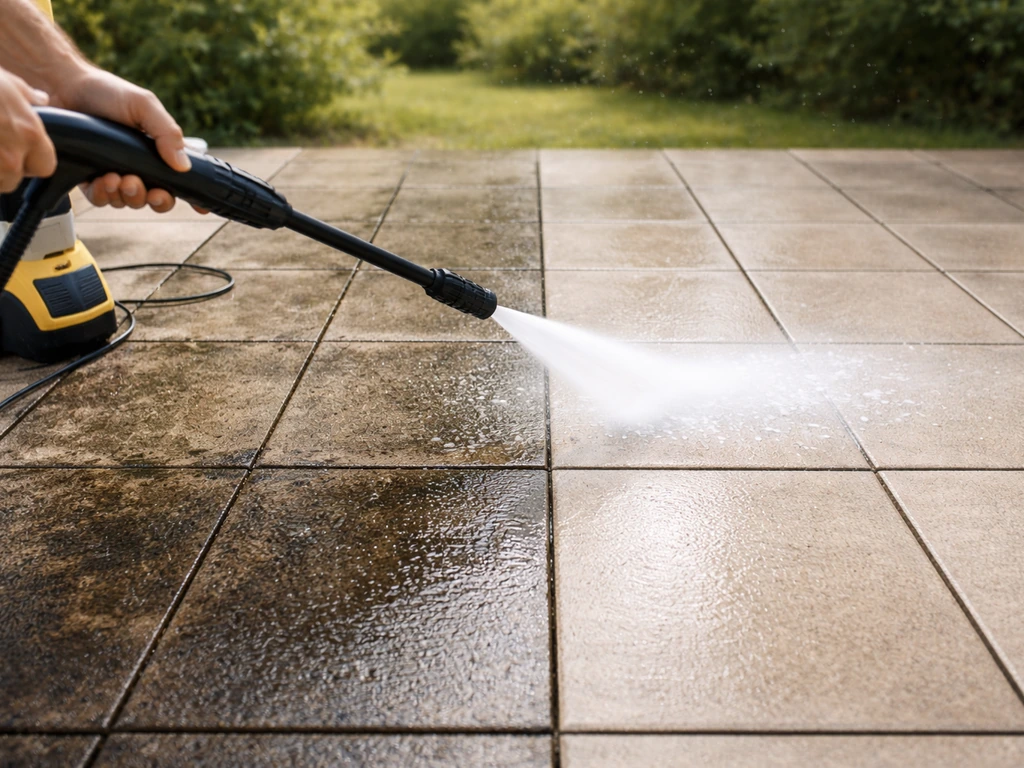
How to choose the best electric patio cleaner for your surface
Before you look at any machine, look at your patio. The surface material is the single biggest factor in which electric cleaner you should buy, and getting this wrong is how patios get damaged. A PSI that works perfectly on concrete will obliterate the pointing on a sandstone patio or shatter the surface of soft limestone.
Here's how to match the machine to the material. Concrete and pressed paving can handle the most pressure, typically up to 2,500 to 3,000 PSI for really stubborn grime, and a surface cleaner attachment at those pressures will make short work of a large area. Brick and clay pavers sit in the middle, anywhere from 1,200 to 2,000 PSI is usually fine, but watch the mortar joints. Natural stone, including sandstone, slate, limestone, and granite, needs careful handling. The SurfaceCarePros exterior stone care guide puts the safe range at 800 to 1,000 PSI for most natural stone surfaces. Go above that and you risk pitting the surface or blasting out the pointing. Porcelain tiles are tougher than most people expect, but their grout lines and bedding mortar are not. Stick to 1,200 to 1,500 PSI and use a fan nozzle rather than a zero-degree jet.
The second factor is whether your surface is sealed or unsealed. Sealed surfaces give you more margin for error because the sealer takes the brunt of the pressure and the chemicals. Unsealed surfaces, especially soft stone or old brick, need much lower pressure and gentler chemistry. If you push water at high pressure into an unsealed joint or directly into porous stone, you force grime deeper in and can cause efflorescence later, where soluble salts migrate to the surface and leave white staining.
| Surface Type | Recommended PSI Range | Best Tool Type | Sealed Surface Adjustment |
|---|---|---|---|
| Concrete / pressed paving | 2,000–3,000 PSI | Surface cleaner attachment | Can go to top of range |
| Brick / clay pavers | 1,200–2,000 PSI | Surface cleaner or 25° nozzle | Lower if mortar is old |
| Natural stone (sandstone, slate, limestone) | 800–1,000 PSI | Fan nozzle (40°) or soft brush | Keep at lower end |
| Porcelain / ceramic tiles | 1,200–1,500 PSI | Fan nozzle (25°–40°) | Standard range applies |
| Textured or riven surfaces | 800–1,500 PSI | Rotary brush or fan nozzle | Always test a corner first |
Top features that matter when picking an electric patio cleaner
Pressure (PSI)
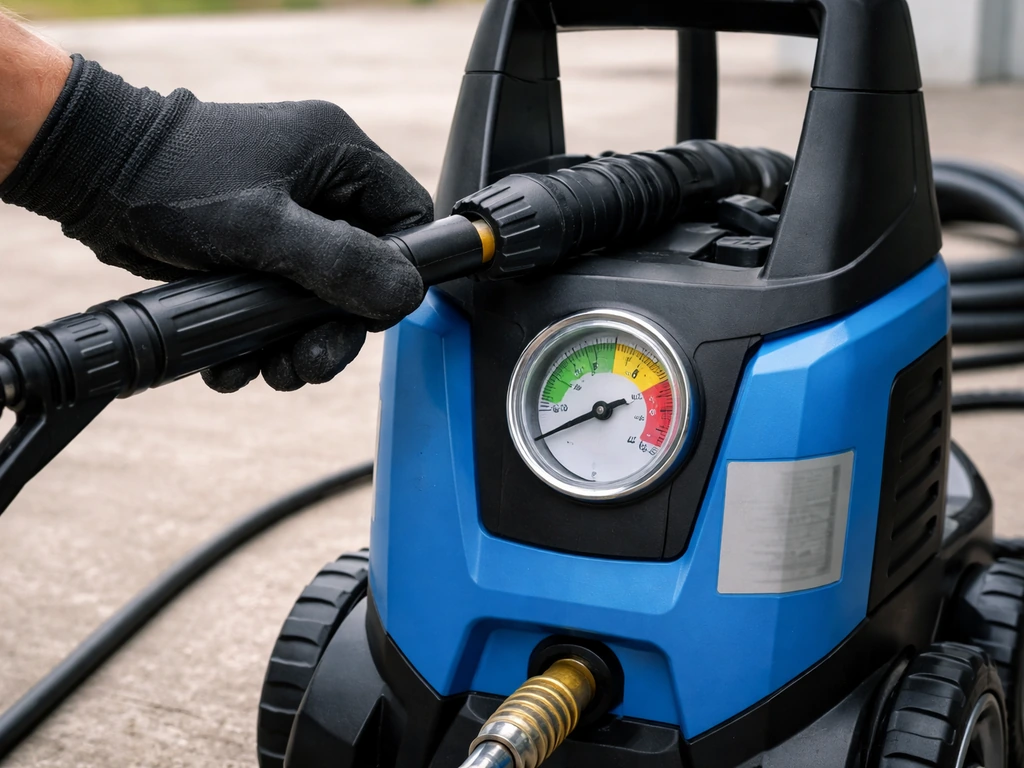
PSI is the headline number but it only tells part of the story. For most domestic electric pressure washers, you're looking at 1,400 to 2,200 PSI. That's plenty for concrete and brick, and enough to run a surface cleaner attachment efficiently. If your machine's PSI is too low for the surface cleaner you want to pair with it, the cleaning head won't spin properly and you'll get poor, patchy results. BE's Whirl-A-Way surface cleaners, for example, require a minimum PSI to spin correctly, and running them underpowered leaves streaks and misses dirt entirely.
Flow Rate (GPM or LPM)
Flow rate matters as much as pressure, arguably more for cleaning efficiency. A machine with decent flow rate (anything above 1.5 GPM or roughly 6.5 LPM) rinses away loosened dirt far faster than a high-PSI, low-flow machine. If you're pairing a surface cleaner attachment, check that your machine's GPM matches the attachment's requirements. The BE 15-inch Whirl-A-Way, for instance, needs up to 3.0 GPM, so if your electric washer only puts out 1.4 GPM, that attachment simply won't perform as intended.
Nozzle Options
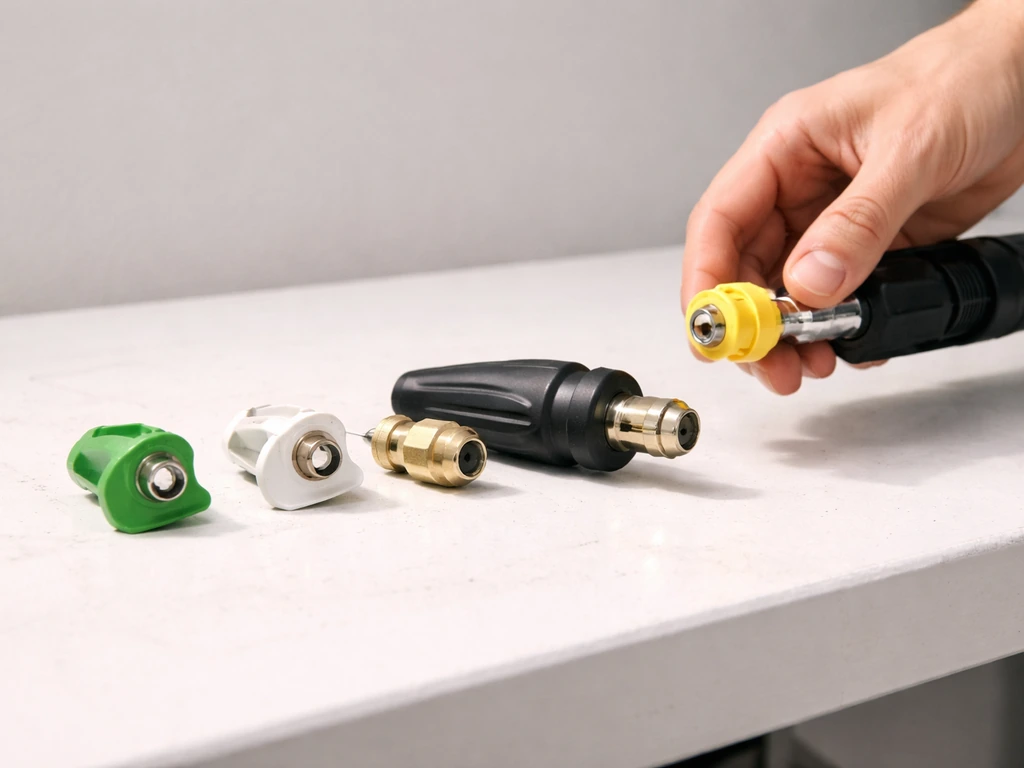
Any electric patio cleaner worth buying should come with at least a 25-degree and a 40-degree nozzle, a turbo (rotary) nozzle, and ideally a soap/low-pressure nozzle for applying detergent. The zero-degree nozzle is the one that causes most damage, and honestly you rarely need it for patio cleaning. If a kit only comes with one nozzle, walk away. Versatility across surfaces is what makes a machine genuinely useful rather than just a single-task tool.
Surface Cleaner Attachments
A surface cleaner attachment is the single upgrade that makes electric patio cleaning dramatically better. It encases two rotating jets under a plastic shroud, so you get consistent coverage across a wide path (typically 12 to 20 inches) without tiger-striping or overspray. BE's Whirl-A-Way range and the Simpson 80182 are well-regarded options, but you must match them to your machine's PSI and GPM output. The Simpson 80182 wants a minimum of 3,450 PSI, which is beyond most domestic electrics, so if you're running a standard home electric washer, look at the BE 15-inch model rated for 2,000 to 3,500 PSI instead.
Power, Hose Length, and Portability
Electric machines pull 1,300 to 2,000 watts on average. That means you'll be running off a standard 13-amp socket in most homes, which is convenient but also means you need to think about extension lead lengths and outdoor socket placement. Hose length is often overlooked until you're dragging the machine across a large patio, so look for at least 5 to 8 metres of high-pressure hose as standard. For storage, consider how compact the unit is when reeled up, especially if garage space is tight.
Detergent Compatibility
If you plan to use chemical pre-treatments, and for most stubborn patio stains you should, make sure your machine has a downstream or onboard detergent injection system. Downstream injection applies chemicals at low pressure through the soap nozzle, which is what you want for applying biocides, degreasers, or enzymatic cleaners without blasting the product straight off the surface before it can work.
Best electric patio cleaner options by patio problem
Algae, Mold, and Mildew
This is the most common problem and also the one where water pressure alone is the least effective. Pressure washing blasts off the visible growth but often leaves spores embedded in porous surfaces, meaning the algae and mold come back within weeks. The right approach is a chemical biocide first, then a rinse. Sodium hypochlorite (bleach) diluted to a 1 to 3% solution is the standard active ingredient. Apply it at low pressure through the soap nozzle, let it dwell for 10 to 15 minutes, then rinse thoroughly at your surface's safe PSI. For the machine itself, any electric pressure washer in the 1,500 to 2,000 PSI range with a downstream detergent system works well here. If you want to go even gentler on soft stone, this is essentially a softwash approach, applying biocidal solution at 40 to 100 PSI (through the soap setting) and letting the chemistry do the work rather than the pressure.
Moss
Moss needs a slightly different approach because it grips into joints and porous surfaces more aggressively than algae. Use a stiff-bristle brush attachment on an electric power scrubber or the turbo nozzle on your pressure washer to break up the physical mat first, then apply a biocide and let it kill off the root structure before rinsing. Skipping the kill step means you'll be dealing with regrowth within a couple of months. Sodium percarbonate-based products (oxygenated wood bleach) work well here and are gentler on surrounding vegetation than sodium hypochlorite. Dwell time for sodium percarbonate products is typically 5 to 20 minutes before rinsing, according to manufacturer guidance.
Grease and Oil Stains
Grease needs an alkaline degreaser, not just water. A pH 12 to 13 alkaline degreaser applied at a dilution of roughly 1:10, left for 5 to 10 minutes, then hit with hot water rinse is the textbook approach for concrete. Most domestic electric pressure washers are cold water only, so you won't get the hot water rinse advantage, but a strong alkaline pre-treatment followed by a high-pressure surface cleaner pass will still pull out most grease. ZEP's concrete and masonry degreaser range is worth looking at, applied at 2 to 4 oz per gallon of water for pressure washer use. For particularly stubborn grease on rough concrete, a second application and a turbo nozzle often closes the gap.
Rust Stains
Rust is one of the few stains where pressure washing alone achieves almost nothing useful. The chemistry has to come first. Oxalic acid-based removers are the standard approach, and products like PROSOCO Sure Klean Ferrous Stain Remover contain oxalic acid dihydrate specifically for iron and rust staining on masonry, brick, and stone. For sensitive stone like limestone or marble, GSA guidance recommends a poultice approach: mix oxalic acid powder at 1 part acid to 10 parts water by weight, apply as a paste, let it draw the stain out, then rinse. For less sensitive surfaces like concrete, CLR or diluted oxalic acid applied with dwell time as the product instructs, then rinsed with the pressure washer, is more straightforward. The key is not letting the rust remover dry completely on the surface before rinsing.
Pet Stains and Urine
Pet urine can permanently stain concrete if left untreated, and this is a case where enzyme-based cleaners are genuinely the only reliable solution. Enzymatic cleaners break down the uric acid crystals that cause both the staining and the odor. Apply the enzymatic cleaner generously to the affected area, let it dwell for at least 10 minutes (some products recommend longer for older stains), then rinse with your pressure washer at a moderate PSI. Never use ammonia-based cleaners on pet urine stains. The scent is chemically similar to urine and can actually encourage pets to re-mark the same spot.
Product reviews: what to actually buy
Electric Pressure Washers for Patios
For most homeowners, an electric pressure washer in the 1,600 to 2,000 PSI range is the practical sweet spot. It's powerful enough to clean concrete and brick properly, yet controllable enough to be used on harder natural stone with some care. The Simpson 13SIE-170 is an example of a compact electric in this range, rated at 1,700 PSI, and its manual explicitly highlights electrical hazard precautions, which are worth taking seriously near outdoor power sources. Brands like Karcher, Nilfisk, and Sun Joe have strong domestic electric ranges in the 1,400 to 2,000 PSI bracket that work well for standard patio use. If you're looking at related options across jet washers and power washers, there's plenty of overlap between these categories and what's covered in guides focused specifically on the best jet washer for patio or best patio power washer setups. If you want a jet-style setup that targets grime efficiently, use this guide alongside the patio power washer advice to narrow down the best fit best jet washer for patio.
Surface Cleaner Attachments
The BE Whirl-A-Way 15-inch (for 2,000 to 3,500 PSI machines) is the most accessible option for domestic electric setups and genuinely speeds up cleaning large flat areas compared to a wand. If you want the smoothest results across different surfaces, choosing the best patio washer for your PSI and GPM needs is the next step. If you've got a more powerful electric or semi-pro machine, the BE 20-inch Whirl-A-Way handles up to 4,500 PSI and up to 4.0 GPM. The Simpson 80182 20-inch industrial surface cleaner is rated for hot or cold water use and needs a minimum 3,450 PSI, which puts it in professional machine territory. For a standard domestic electric washer at 1,600 to 2,000 PSI, start with the 15-inch BE or a comparable 12 to 15-inch surface cleaner from Karcher or similar brands. Always match the attachment's minimum PSI and GPM specs to your machine before buying.
Electric Power Scrubbers
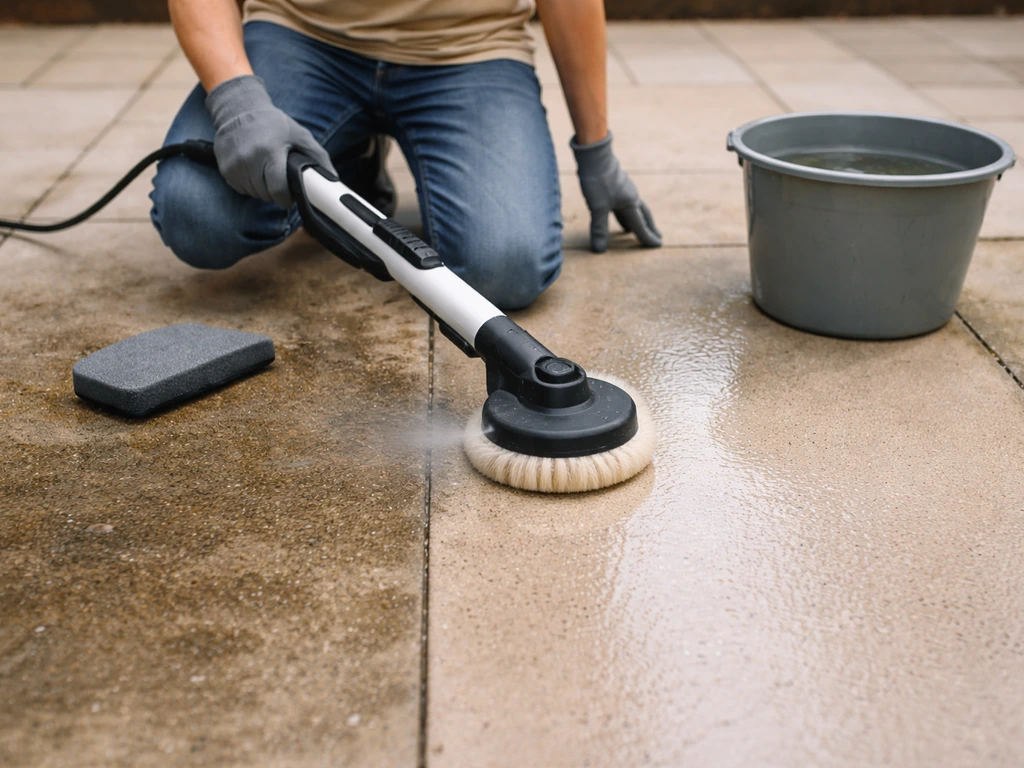
For situations where you genuinely can't use high pressure (very soft stone, crumbling pointing, or cleaning near delicate edging), an electric power scrubber with brush heads is a legitimate alternative. These are lower-pressure, higher-agitation tools, essentially a powered stiff brush. They work best in combination with a chemical pre-treatment, doing the scrubbing work on the pre-softened grime rather than trying to blast it off. They're slower for large areas but much safer on surfaces where PSI damage is a real risk. The Top Tech patio cleaner category covers some of these scrubber-style tools in more detail if you're specifically looking at that route.
Chemical vs water-only cleaning: when to use what
Water-only pressure washing works fine for loose dirt, dust, leaf debris, and light surface grime on concrete or sealed paving that gets cleaned regularly. If you're doing a quick seasonal freshen-up on a maintained patio, water alone is often enough and keeps things simple.
Chemical cleaners become necessary as soon as you're dealing with biological growth (algae, mold, mildew, moss), oil or grease, rust staining, deep embedded grime, or organic stains like pet urine. The rule of thumb is: if you've run the pressure washer over an area twice and the stain is still clearly there, you need chemistry rather than more pressure.
When applying chemicals alongside your electric patio cleaner, apply at low pressure through the soap nozzle or with a garden sprayer first, allow proper dwell time, then rinse at the appropriate cleaning pressure. This approach protects surrounding plants by not blasting chemicals outward, and it means the chemistry is actually in contact with the stain long enough to work rather than being rinsed off immediately.
If you're cleaning near planted borders or a lawn edge, wet down the surrounding vegetation with plain water before applying any chemical, then rinse again thoroughly after you've cleaned the patio. Sodium percarbonate-based products are generally lower-risk for vegetation than sodium hypochlorite, but neither is safe to leave pooling at the base of plants.
| Problem Type | Water Only? | Recommended Chemical | Application Method |
|---|---|---|---|
| Light dirt / dust | Yes | None needed | Pressure wash direct |
| Algae / mold / mildew | No | Sodium hypochlorite (1–3% solution) | Soap nozzle / garden sprayer, 10–15 min dwell |
| Moss | No | Sodium percarbonate solution | Spray on, 5–20 min dwell, then rinse |
| Grease / oil | No | Alkaline degreaser (pH 12–13) | Apply at 1:10 dilution, 5–10 min dwell |
| Rust stains | No | Oxalic acid-based remover (e.g., Sure Klean) | Apply as directed, don't let dry, then rinse |
| Pet urine / organic stains | No | Enzymatic cleaner | Apply generously, 10+ min dwell, then rinse |
Step-by-step cleaning process for best results
- Clear the patio. Move furniture, plant pots, rugs, and anything else off the surface. Sweep off loose debris, leaves, and dirt with a stiff broom first. This makes the pressure washing faster and prevents you from blasting debris into drains or plant beds.
- Protect surrounding areas. Wet down any nearby grass, borders, or planted areas with plain water. Cover anything that can't get wet (outdoor electrics, wooden furniture nearby) and close doors and windows facing the patio.
- Pre-treat stains. Apply your chosen chemical (biocide, degreaser, rust remover, or enzymatic cleaner) using the soap nozzle on your machine or a garden sprayer. Work in sections you can rinse before the product dries. Allow the product its full dwell time, typically 5 to 20 minutes depending on what you're using.
- Pre-rinse the surface. Before switching to full cleaning pressure, do a light pre-rinse with the 40-degree nozzle to wet the surface evenly and begin loosening softened grime.
- Attach the surface cleaner or select your nozzle. For large open areas, fit the surface cleaner attachment and work in slow, overlapping parallel passes. For edges, corners, steps, and joints, switch to a 25-degree or 40-degree fan nozzle. Keep the nozzle at least 6 to 12 inches from the surface and maintain a consistent distance throughout. Simple Green's guidance on OxySolve products, for example, recommends keeping the nozzle at least 2 feet from the surface when rinsing, which is a useful reminder not to get too close when in doubt.
- Clean in sections. Work from one end of the patio to the other, slightly overlapping each pass. Don't linger in one spot, especially on stone or around joints. The goal is consistent, even coverage.
- Final rinse. Once you've cleaned the whole area, do a thorough final rinse with the 40-degree nozzle to flush away all loosened dirt and any remaining chemical. Rinse from the centre of the patio outward toward the drain or a controlled runoff point.
- Allow to dry fully before resealing or applying any finishing treatment. On warm days this can be a couple of hours; in cool, humid conditions, give it at least 24 to 48 hours.
Safety, common damage mistakes, and keeping your machine running
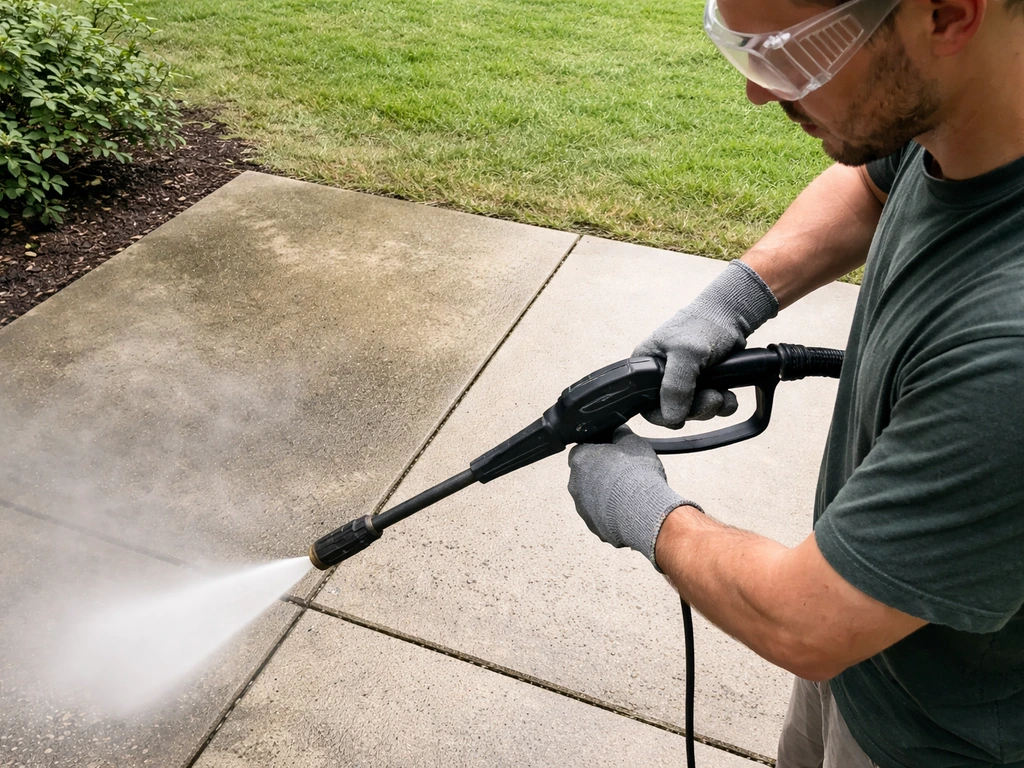
PPE and personal safety
Always wear safety goggles or glasses, not just sunglasses. Debris and chemical splash are real risks, and a high-pressure jet at close range can cause serious eye injury. Wear waterproof gloves, especially when handling chemical pre-treatments, and non-slip boots because a pressure-washed patio surface is extremely slippery. If you're using bleach-based chemicals, a basic dust or vapour mask is a sensible precaution in still-air conditions. Never point the nozzle at yourself or anyone else, and keep the jet well away from any outdoor electrical sources, sockets, or fittings.
Avoiding surface damage
The most common damage from electric patio cleaners is caused by too much pressure on soft stone or pointing, holding the nozzle too close to the surface, and using a zero-degree nozzle on anything other than very robust concrete. The GSA guidelines classify low-pressure washing as 100 to 400 PSI for sensitive masonry, which gives you a sense of just how careful you need to be with heritage or soft stone. GSA guidance classifies low-pressure washing as about 100 to 400 PSI for sensitive masonry low-pressure washing as 100 to 400 PSI for sensitive masonry. When in doubt, always test a small, inconspicuous corner of the patio first and let it dry before assessing any damage.
Efflorescence is a specific damage outcome worth knowing about. It happens when water forces soluble salts through porous masonry to the surface, leaving a white powdery deposit. It's most likely when you're pressure washing unsealed joints, old brick, or soft limestone. You can reduce the risk by not forcing water directly into joints, using lower pressure, and ensuring the surface dries thoroughly after cleaning. If efflorescence already exists before you clean, treat it with a dedicated efflorescence remover before pressure washing rather than trying to blast it off.
Protecting patio joints
This is the area where even experienced cleaners cause accidental damage. Never aim the jet directly into a joint at close range. Keep the nozzle moving across the surface rather than pausing over the joint line. If you're using a surface cleaner attachment, it automatically reduces the direct pressure on any single joint compared to a focused lance nozzle, which is another reason to favour it on jointed paving. After cleaning, inspect the joints and re-point any that have been dislodged or hollowed out before re-sealing.
Machine maintenance and storage
Fit a water inlet filter to protect the pump from sediment and grit, especially if you're on a hard-water supply or using an outside tap that draws from a tank. STIHL's maintenance guidance specifically recommends this to extend pump service life, and it's genuinely good advice regardless of brand. After each use, flush the chemical system through with clean water before storing the machine.
For winter storage, don't just leave a wet machine in an unheated garage. Run a glycol-based antifreeze through the pump before storing in any frost-risk environment. The procedure is straightforward: draw the antifreeze into the pump via the inlet, then flush through until it clears the system on restart in spring. Freezing can crack the pump housing and internal seals, which is an expensive repair on an otherwise perfectly good machine. If you can store the machine in a frost-free environment, a thorough flush and dry-out after the last use of the season is the minimum you should do.
FAQ
Can I use the same electric patio cleaner setup on all patio materials if I just lower the PSI?
Not reliably. Different surfaces also differ in how they shed grime and how quickly they erode at the edges and joints. Even at lower pressure, natural stone and soft brick can be damaged by the wrong nozzle angle or by cleaning too close to mortar. The safer approach is to match the PSI and nozzle type to the least robust surface you have, then use chemistry and dwell time to do more of the work on tougher stains.
What PSI should I target if my patio is sealed but has lots of algae streaking?
Use a low to mid setting that the sealer can tolerate, then prioritize chemical dwell. Sealed patios still develop biological staining that pressure alone often cannot remove from pores. A common mistake is blasting high pressure after a brief chemical contact, which can smear algae residue instead of lifting it. Pre-wet, apply biocide at low pressure, dwell, then rinse at the lowest PSI that clears runoff.
How do I know whether my pressure washer has enough GPM for a surface cleaner attachment?
Check the attachment manual for a minimum GPM requirement, then compare it to your washer’s published flow rate at the same pressure range. Many washers list flow using ideal conditions, and real performance can be lower if hoses are long, water supply is restricted, or the inlet filter is clogged. If your attachment demands 3.0 GPM and your washer can only sustain around 1.4 GPM in practice, expect streaks and incomplete cleaning.
Is a surface cleaner attachment always better than using a wand?
It’s better for large, flat areas and to reduce streaking, but not always for edges. Surface cleaners struggle near steps, narrow side access, and irregular shapes unless you do careful border work separately. For best results, use the surface cleaner for the main field, then switch to a fan nozzle for perimeter lines and tight grout and joint areas.
Should I use the zero-degree nozzle to remove stubborn stains faster?
Usually no. The zero-degree jet concentrates force at a point, which increases the chance of pitting, spalling, and dislodging pointing, especially on porous brick or any natural stone. If you need more cleaning power, try increasing chemical dwell, using the correct nozzle degree, or switching to a turbo nozzle with safe standoff distance rather than reverting to zero-degree.
How long should I let biocide sit before rinsing with an electric pressure washer?
Use dwell times as a range, not a guess. Common practice is 10 to 15 minutes for sodium hypochlorite solutions on biological growth, while oxygen-based products often need shorter to moderate contact windows depending on the formulation. If runoff dries before you rinse, you can leave residue, risk patchiness, and increase staining. Plan to rinse as soon as the product’s instructed dwell is reached.
What’s the safest way to prevent plant damage when using detergent or bleach-based cleaners?
Wet surrounding vegetation with plain water before applying chemicals, then avoid spraying chemicals directly toward borders. After rinsing the patio, do a final thorough rinse at the edges and check that you do not leave chemical pooling at the base of plants. If possible, work in sections so you can control where runoff goes instead of letting it flow across flower beds.
Will pressure washing always stop algae from coming back?
No. Pressure washing can remove the visible surface growth, but spores or embedded growth can remain, leading to regrowth within weeks. The more durable approach is biocide first, then rinse. For recurring infestations, consider timing the clean when growth is active, then repeat chemical treatment according to the product guidance rather than relying only on mechanical rinsing.
How should I handle rust staining if I plan to use a pressure washer afterward?
Treat rust with the right chemistry first, then rinse promptly. Letting oxalic acid removers dry completely on porous masonry can reduce effectiveness or leave residue. For sensitive stones where poultices are recommended, use that method instead of soaking through with a washer. Always rinse after the product’s specified dwell to remove dissolved contaminants.
Can I use ammonia-based cleaners on pet urine stains before pressure washing?
Avoid it. Ammonia-based cleaners can create chemically similar odor cues and can encourage pets to re-mark. Enzyme-based cleaners are the practical choice because they break down uric-acid compounds, then you rinse at a moderate PSI after sufficient dwell.
What should I do if I already see efflorescence before cleaning?
Don’t try to blast it off with higher pressure. Efflorescence is driven by salts moving through pores, so aggressive washing often redistributes salts and can worsen the appearance temporarily. Instead, use a dedicated efflorescence remover, then only pressure wash afterward once the product guidance says it’s safe. Afterward, allow full drying time before sealing if you plan to reseal.
How do I reduce the risk of efflorescence during cleaning on old brick or porous stone?
Prevent driving water into joints and pores. Use lower pressure, avoid holding the nozzle directly on joint lines, and maintain movement rather than pausing over hotspots. Ensure thorough drying before sealing or applying any protective coating, because trapped moisture can push salts back to the surface later.
What’s the best way to protect the pump from dirty water?
Install a water inlet filter if your supply is gritty or you draw from a tank or outside tap. This reduces sediment hitting the pump and can extend service life. Also flush the detergent or chemical line with clean water after use, because residue can corrode parts and clog injection systems over time.
Do I need antifreeze for winter storage of an electric pressure washer?
If there’s any risk of freezing, yes. Freezing can crack pump housings and damage seals. Run a glycol-based antifreeze through the system before storing in frost-risk environments, and flush it through with clean water before using again in spring. If you store in a consistently frost-free space, a full flush and dry-out after the last use is still a smart minimum.
Next Article
Best Patio Jet Wash: Choose the Right Cleaner for Your Patio
Pick the best patio jet wash by matching pressure, nozzles, and cleaner chemistry to concrete, stone, brick, slate, and