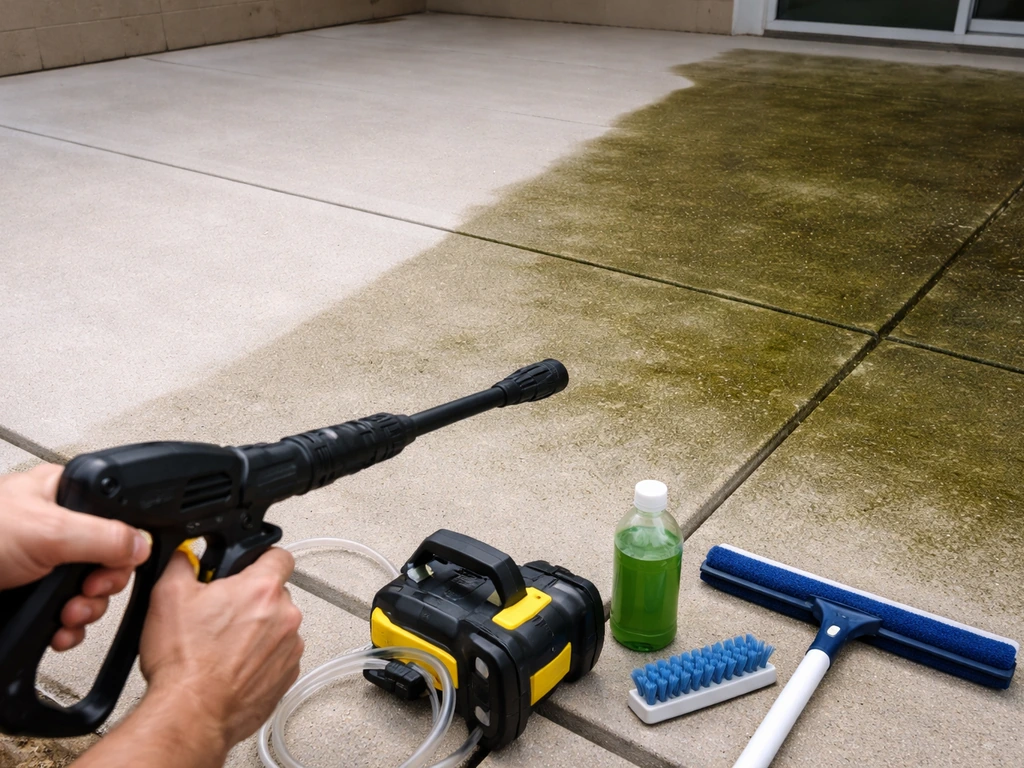
The best patio washer for most homeowners is a mid-range electric pressure washer in the 1,800–2,500 PSI range with a surface cleaner attachment, paired with a dedicated patio detergent. If you want the best jet washer for patio cleaning, focus on the right PSI and a compatible surface cleaner attachment. That setup handles concrete, brick, and most hard patios without the risk of etching or joint damage that comes with cranking up the pressure too high. If your patio is sandstone, slate, or porcelain, or if you're dealing with stubborn moss and algae rather than just surface grime, the method matters as much as the machine, and sometimes a soft wash or power scrub setup will do a better job with less risk.
Best Patio Washer: How to Choose and Use the Right One
Rhea Lang
4 Jul 2026
How to choose the best patio washer for your surface
The single biggest mistake people make is picking a washer based on how powerful it sounds rather than what their patio can actually handle. Concrete can take a beating, 2,000 to 2,500 PSI is a safe working range and gets the job done well. Push above 3,000 PSI and you risk spalling, scaling, and permanent surface damage. Go above 4,500 PSI and you're actively degrading the surface and blasting out joint material. I've seen patios that looked like they'd been attacked with a sandblaster after someone hired a contractor with a commercial 5,000 PSI unit.
Brick is softer than most people expect. The brick itself can handle moderate pressure, but the mortar joints are vulnerable, anything above 2,000 PSI should be used with caution, and you should always use a wide 25–40 degree nozzle held at least 12 inches from the surface. For very old or repointed brick, drop down to 800–1,200 PSI and let the detergent do more of the work.
Natural stones like sandstone, slate, and limestone are genuinely fragile under pressure. These surfaces are best cleaned with either low-pressure soft washing (under 1,000 PSI) or a powered rotary scrubber rather than a direct pressure blast. Porcelain paving is harder and more resistant to pressure, but the grout joints between slabs are not, aggressive pressure strips sealant and erodes grout over time, so keep it below 1,500 PSI and use a surface cleaner attachment to distribute the spray evenly.
| Patio Surface | Safe PSI Range | Recommended Method | Key Risk to Avoid |
|---|---|---|---|
| Concrete | 2,000–2,500 PSI | Pressure washer + surface cleaner | Spalling above 3,000 PSI |
| Brick | 800–2,000 PSI | Pressure washer, wide nozzle + detergent | Mortar joint erosion |
| Sandstone | Under 1,000 PSI | Soft wash or rotary scrubber | Surface pitting and crumbling |
| Slate | Under 1,000 PSI | Soft wash or low-pressure rinse | Surface delamination |
| Porcelain | Under 1,500 PSI | Surface cleaner attachment | Grout and sealant damage |
| Natural limestone | 500–1,000 PSI | Soft wash + specialist cleaner | Acid damage and etching |
Pressure washer vs soft wash vs power scrub: which method actually works
These three methods are not interchangeable, they suit different surfaces and different types of grime. A pressure washer uses high-velocity water to physically blast dirt, algae, and staining off the surface. A soft washer uses low pressure but relies on chemical dwell time to break down organic growth before rinsing. Soft washing is often the best option for delicate surfaces. A powered scrubber (rotary or oscillating brush head) uses mechanical agitation to lift grime without the water pressure risk. Knowing which one fits your situation saves you from either underperforming or damaging what you're cleaning.
Pressure washing
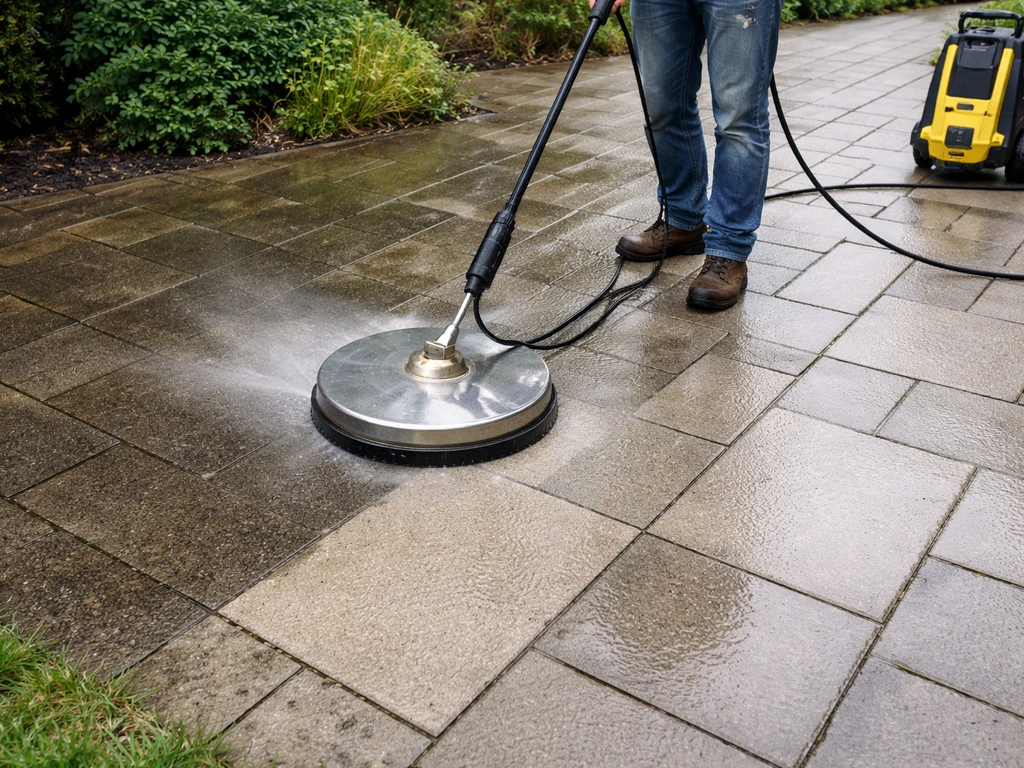
This is the go-to for concrete, block paving, and tougher surfaces. It shifts thick dirt, embedded algae, grease, and oil staining efficiently. The key is using the right nozzle, a 25-degree tip for general cleaning, a 40-degree tip for anything more delicate, and a surface cleaner attachment (a rotating disc that sits 2–4 inches off the surface) for large flat areas. The surface cleaner prevents the streaky tiger-stripe pattern you get from sweeping a lance across concrete. A good electric pressure washer in the 1,800–2,500 PSI range will handle most residential patios without issue. If you are comparing options, these are the kinds of specs that show up in the best patio cleaning machines.
Soft washing
Soft washing is the right call for delicate stone, aged brick, and anywhere you have heavy biological growth like thick moss or lichen. You apply a diluted biocide or algaecide solution at low pressure (sometimes just from a garden pump sprayer), let it dwell for 15–30 minutes, then rinse gently. The chemistry does the heavy lifting rather than water pressure. This method also tends to produce longer-lasting results on organic growth because it kills the root system rather than just blasting the visible surface layer off. If you're dealing with a sandstone or slate patio covered in green algae, soft washing will outperform pressure washing every time.
Power scrubbing
A powered deck or patio scrubber, either a standalone electric unit or a brush attachment for a pressure washer, is underrated for sensitive surfaces and in-between maintenance cleans. You can use one on wet or dry surfaces, and it's particularly good for working detergent into textured or riven stone where pressure washing would cause damage. It's slower than pressure washing for large areas, but for a sandstone or natural slate patio, it's often the safest practical option. Some of the better electric patio cleaner models combine scrubbing with light water flow, which gives you the best of both worlds on fragile surfaces.
Best features to look for when buying a patio washer
PSI and GPM: both numbers matter
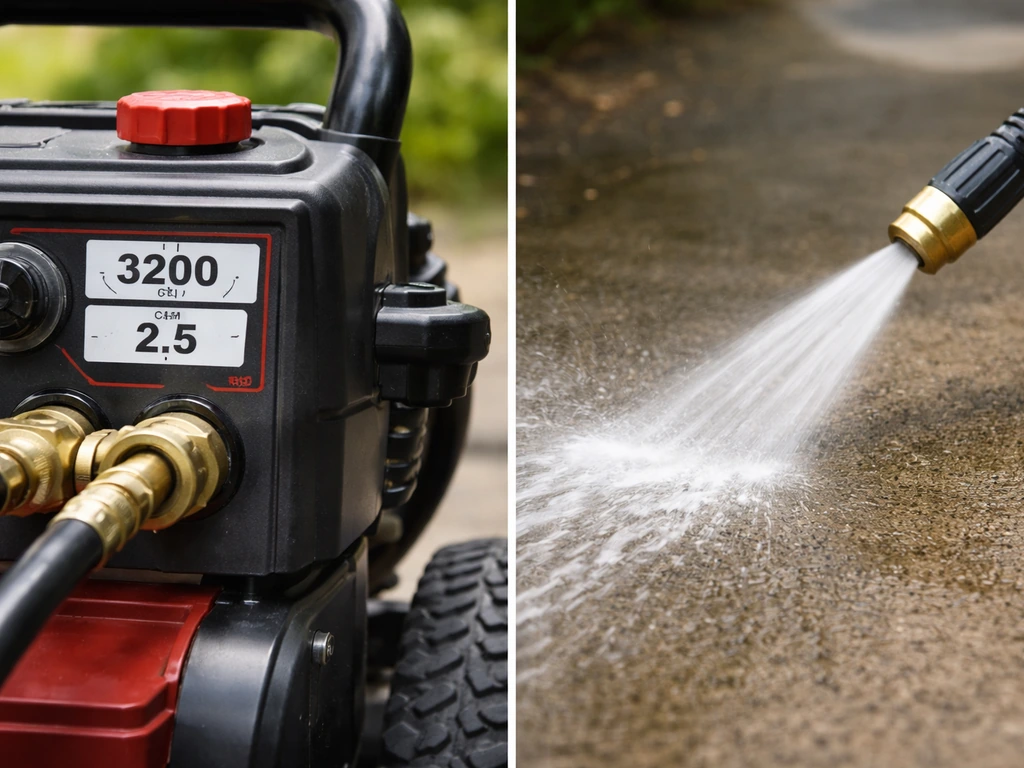
PSI (pounds per square inch) tells you the pressure of the water. GPM (gallons per minute, or L/min in the UK) tells you the flow rate. You need both to clean effectively, high PSI with a trickle of water moves dirt but doesn't flush it away cleanly. For residential patio use, aim for at least 2.0 GPM (around 9 L/min) alongside your chosen PSI. A 2,000 PSI machine at 2.5 GPM will outperform a 2,500 PSI machine at 1.4 GPM on large flat areas because it's shifting more volume of water across the surface.
Surface cleaner attachment
If you're buying a pressure washer for patio use and skipping the surface cleaner attachment, you're leaving the most useful tool off the list. A good rotary surface cleaner (typically 11–15 inches in diameter for home use) cuts cleaning time by 60–70% compared to hand-lancing a flat area, and it produces an even, streak-free result. Make sure the one you choose is rated for your machine's PSI and has an adjustable height to suit different surfaces.
Detergent injection
A built-in detergent tank or downstream detergent injection system is worth having. This lets you apply cleaning solution at low pressure (which is actually the correct way to do it, detergent applied at high pressure foams up and blows off before it can dwell) and then switch to rinse mode. Look for machines with at least a 0.5-litre onboard tank or a dedicated detergent nozzle setting. Some of the better patio jet wash models have a separate low-pressure soap mode triggered by a specific nozzle colour, usually black.
Hose length and mobility
For a standard UK or US garden patio, a 7–8 metre (23–26 ft) high-pressure hose is the minimum you want. Anything shorter and you're constantly moving the machine. A 10–12 metre hose is noticeably more comfortable to work with on larger areas. For mobility, look for solid wheels and a weighted base rather than lightweight units that tip over when you pull the hose at an angle. Compact units with integrated hose reels are excellent for storage but sometimes compromise on hose length, check the actual measurement, not just the marketing claim.
Nozzle set and lance design
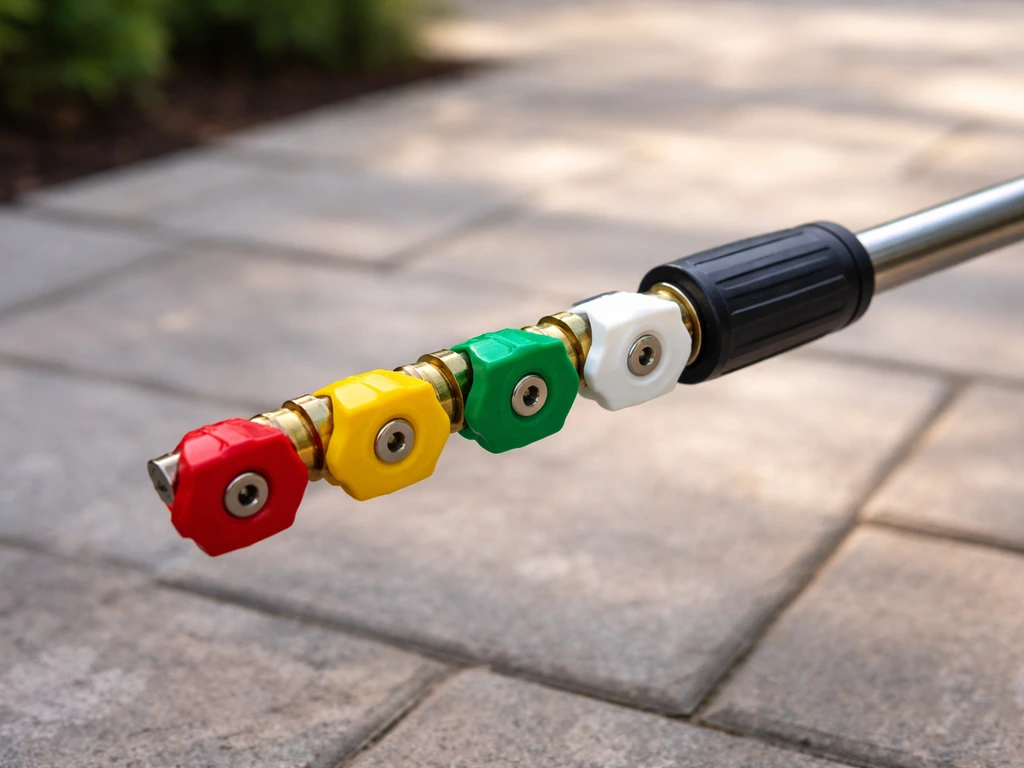
A good entry comes with at least a 0-degree pencil jet, a 25-degree fan, a 40-degree fan, and a low-pressure soap nozzle. Colour-coded quick-connect nozzles make switching fast. An adjustable variable nozzle sounds convenient but typically doesn't perform as well as dedicated tips at each setting. A telescoping or adjustable-angle lance is genuinely useful for reaching under furniture or working along edges without bending double.
Top picks by patio type and type of mess
Mold and algae on concrete or block paving
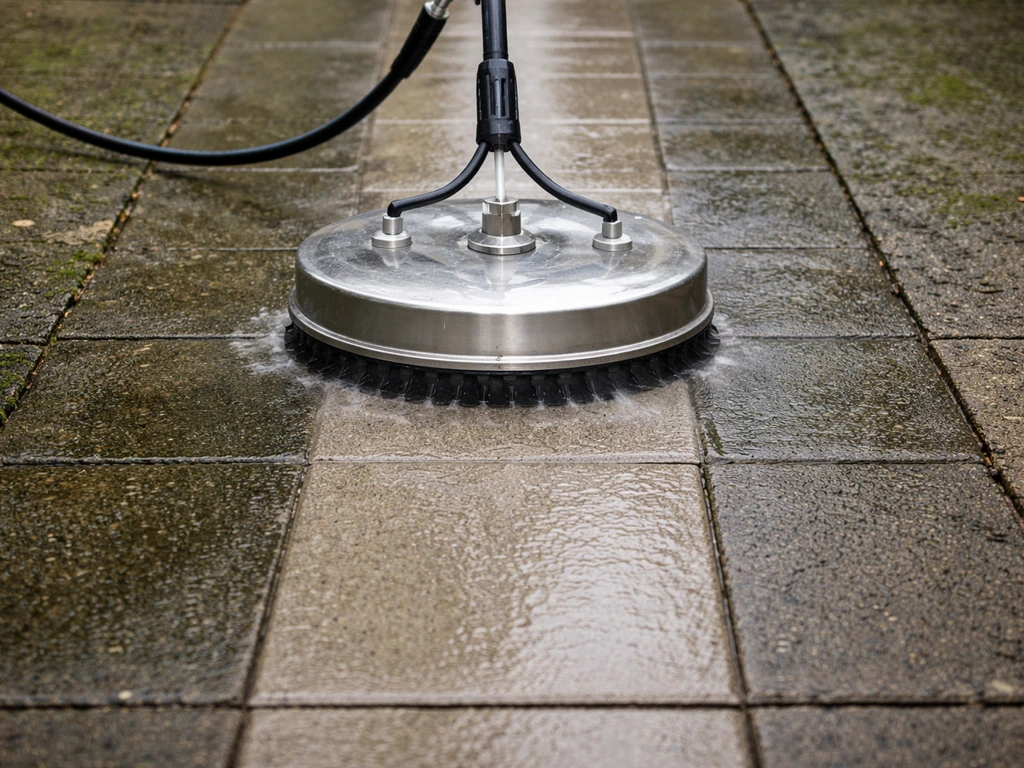
For mold and algae on hard surfaces, a 2,000–2,500 PSI electric pressure washer with a surface cleaner attachment is the strongest practical option. Apply a sodium hypochlorite-based patio cleaner at low pressure first, allow 10–15 minutes of dwell time, then clean with the surface cleaner. If you are comparing products, look for a top tech patio cleaner that matches the surface you have and the kind of grime you’re targeting. The chemical pre-treatment breaks down the algae cell structure so the pressure wash removes it completely rather than just redistributing it. Karcher K4–K5 range and Nilfisk Core 140 both sit comfortably in this category and are widely available with surface cleaner accessories.
Moss on block paving or natural stone
Thick moss needs chemistry first. Apply a purpose-made moss killer (potassium salts of fatty acids formulations are effective and relatively plant-safe) and give it 24–48 hours before any water washing. On block paving, follow up with a pressure washer at 1,500–2,000 PSI. On natural stone, use a soft wash rinse or a powered scrubber instead. Trying to blast established moss off a sandstone patio with a pressure washer is a reliable way to destroy the surface texture.
Rust staining
Rust stains on concrete or stone won't respond to pressure washing alone. You need a dedicated rust remover containing oxalic acid or a commercial-grade phosphoric acid cleaner. Apply it to the dry or damp surface, work it in with a stiff brush, allow it to react for 5–10 minutes, then rinse with your pressure washer at normal working pressure. Do not let acid-based cleaners sit on natural stone longer than the manufacturer recommends, they can cause etching, particularly on limestone and sandstone.
Grease and oil
Oil and grease from barbecues or vehicles need a degreaser applied before washing. A sodium lauryl sulphate or alkaline degreaser (pH 10–12) applied neat to the stain, worked in with a stiff brush, and left for 10 minutes will emulsify the oil so the pressure wash can remove it. For deep-set oil staining on concrete, you may need two or three applications. The pressure washer's hot water function (if you have a petrol or commercial unit with a heater) makes this dramatically more effective, hot water cuts grease in a way that cold water simply doesn't.
Pet stains and organic odors
Pet urine soaks into porous surfaces fast and leaves both a stain and an odor that pressure washing alone won't fix. Use an enzyme-based cleaner first, these break down the uric acid crystals that cause the smell rather than just masking them. Apply generously to the affected area, allow 15–20 minutes, then rinse thoroughly with your pressure washer at moderate pressure. Avoid bleach-based cleaners on areas pets will return to, as the residue can irritate their paws and respiratory systems. For sealed concrete or porcelain, a standard patio detergent followed by pressure washing is usually sufficient since the seal prevents deep penetration.
How to use a patio washer safely
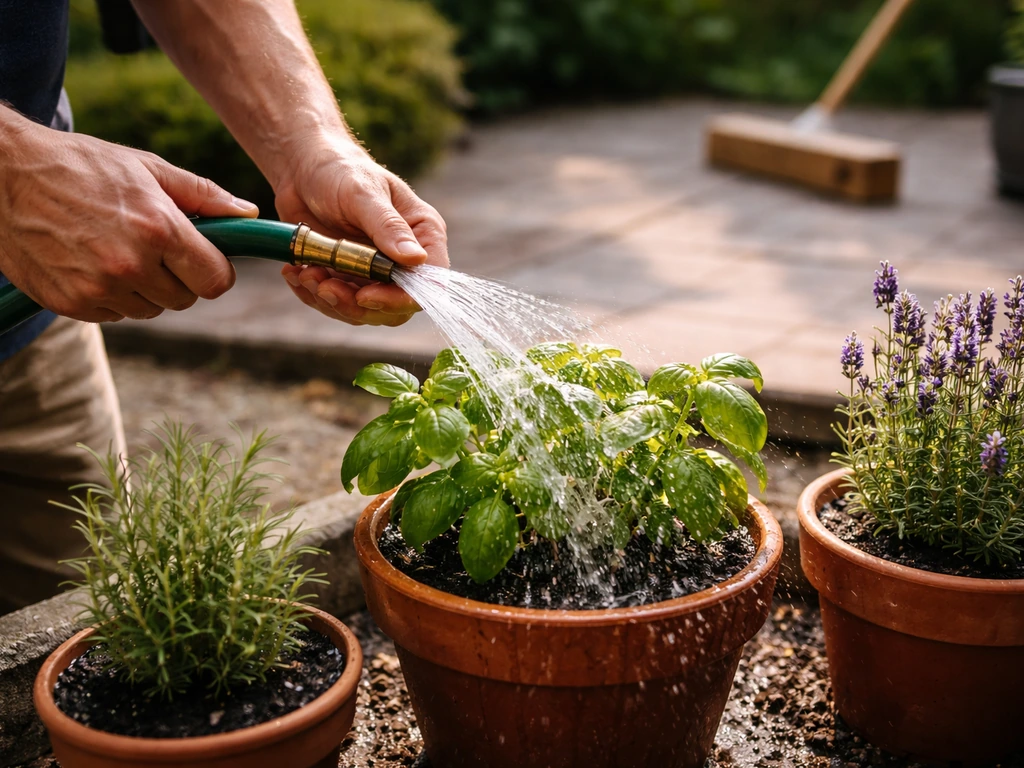
Protecting your plants, your jointing sand, and the surface seal isn't complicated, but it does require a few deliberate steps before you turn the machine on. I learned some of these the hard way, including the time I pressure washed directly toward a border and stripped the top 2 inches of soil out from under a hedge.
- Soak nearby plants thoroughly with plain water before you start—a waterlogged plant absorbs far less chemical runoff than a dry one. Move any pots or containers away from the wash area.
- Cover low-growing border plants and lawn edges with plastic sheeting if you're using strong chemical cleaners, particularly anything bleach or acid-based.
- Direct your spray and runoff away from drains where possible, and check your local guidance on disposing of chemical wash water—biocides and strong detergents can affect waterway ecosystems.
- Never point a pressure washer nozzle at expansion joints, flexible pointing, or kiln-dried jointing sand. Work parallel to joints rather than directly into them.
- Keep the nozzle moving at a consistent pace—stopping in one spot burns a visible line into the surface that's nearly impossible to reverse.
- Angle the spray away from door thresholds, window frames, and wall bases to prevent water tracking into sill cavities or under door seals.
- On sealed surfaces, use no more than 1,200–1,500 PSI and a 40-degree nozzle to avoid stripping the sealant. If you're resealing after cleaning, this is less critical—but remove the old sealant deliberately with a chemical stripper rather than accidentally with excessive pressure.
- Always wear safety glasses. A high-pressure stream can ricochet debris and small stones back at face level, especially with a surface cleaner on block paving.
Step-by-step cleaning process and what chemicals to pair with your washer
This is the workflow I'd use for a standard concrete or block paving patio with algae, general grime, and maybe some organic staining. Adapt the chemical choices to your surface type using the stain-specific guidance above.
- Clear the patio: Remove furniture, pots, and anything that can't get wet. Sweep off loose debris—leaves, grit, and dry dirt will just turn into mud slurry the moment water hits them and slow the whole process down.
- Pre-treat with detergent or biocide: Apply your chosen cleaner at low pressure using the soap nozzle, or with a garden sprayer for soft wash applications. For algae and mold on concrete, use a sodium hypochlorite-based patio cleaner diluted to the manufacturer's spec. For moss, use a dedicated moss killer. For grease, apply alkaline degreaser neat. Allow the product to dwell for the recommended time—usually 10–20 minutes. Don't let it dry out on the surface.
- Set up your pressure washer: Connect the surface cleaner attachment for large flat areas, or use a 25-degree nozzle for smaller sections and edges. For delicate surfaces, switch to a 40-degree nozzle. Check your hose connections, confirm the machine is on a stable surface, and thread the hose away from where you're working so you're not stepping over it.
- Wash in sections: Work in manageable 2–3 square metre sections, moving the surface cleaner or lance in consistent overlapping passes. Keep a steady, even speed. Direct the dirty water off the patio edge rather than back onto cleaned areas.
- Address stubborn stains directly: After the initial wash pass, spot-treat any remaining rust, grease, or biological staining with the appropriate chemical product and a stiff brush, then rinse with a focused spray at the same working pressure.
- Final rinse: Do a full rinse pass over the entire area with clean water, working from the furthest point back toward your exit. This lifts any remaining chemical residue and leaves the surface looking clean and even.
- Re-sand block paving joints if needed: If your patio uses kiln-dried jointing sand, you'll almost certainly need to top it up after pressure washing. Brush dry sand across the surface and compact it into the joints with a plate compactor or by walking firmly over the area. Skipping this step leads to unstable pavers and weed ingress.
- Re-seal if required: If your patio was previously sealed, check whether the seal is still intact by dripping a few drops of water onto the surface. If it beads up, the seal is fine. If it soaks in, apply a fresh coat of appropriate sealant once the surface has dried completely—usually 24–48 hours after washing.
Detergent pairing quick reference
| Stain / Growth Type | Recommended Chemical | Application Method | Notes |
|---|---|---|---|
| Algae and mold | Sodium hypochlorite patio cleaner | Low-pressure spray or pump sprayer | Dilute to label spec; rinse thoroughly |
| Moss and lichen | Moss killer (potassium fatty acids) | Pump sprayer, 24–48hr dwell | Kills roots; do not pressure wash until dead |
| General grime | Alkaline patio detergent | Pressure washer soap nozzle | Suitable for all hard surfaces |
| Grease and oil | Alkaline degreaser (pH 10–12) | Neat application with brush | Hot water rinse dramatically improves results |
| Rust staining | Oxalic acid or phosphoric acid rust remover | Apply to dry surface with brush | Do not use on limestone or sandstone |
| Pet stains / odor | Enzyme-based cleaner | Generous application, 15–20min dwell | Avoid bleach products in pet areas |
Maintenance and storage tips that extend your washer's life (and your patio's)
A good pressure washer will last 5–10 years with basic care. Neglect it for one winter and you can end up with a cracked pump from frozen residual water, gummed-up detergent lines, or corroded connections. None of this is complicated to prevent.
- Flush the detergent system after every use: Run clean water through the soap tank and the detergent line for 30–60 seconds before switching off. Dried detergent residue blocks the injection system and is a pain to clear.
- Drain the pump before winter storage: In any climate where temperatures drop below freezing, you must remove residual water from the pump. Either run the machine briefly without water connected to expel the last of it, or use a dedicated pump antifreeze product.
- Store the hose loosely coiled: High-pressure hoses develop kinks and cracks if stored tightly wound or left in direct sunlight. A loose figure-eight coil on a wall-mounted hook is ideal.
- Check O-rings and seals annually: The quick-connect couplings and gun connections rely on rubber O-rings that degrade over time. A set of replacement O-rings costs almost nothing and prevents the frustrating spray-back leaks that develop at connection points.
- Keep nozzles clean: A blocked or partially blocked nozzle changes the spray pattern and overworks the pump. Rinse nozzles in clean water after each use and use the small cleaning pin that comes with most sets to clear any debris.
- For your patio surface, schedule annual maintenance cleans: Don't wait until the patio is black with algae before cleaning. A light clean once a year (or twice in shaded, damp areas) keeps biological growth from establishing deep root systems and means you can clean at lower pressure with less detergent.
If you're also weighing up between different types of machines, whether that's a dedicated patio jet washer, a full-featured patio power washer, or a compact electric patio cleaner for lighter duties, the right choice really comes down to how much surface area you're covering and how often you'll be cleaning. If you want the best patio power washer for your patio, focus on the right PSI and the right cleaning method for your surface type. For a small to medium patio cleaned once or twice a year, a good mid-range electric pressure washer covers almost every scenario. For larger areas or regular maintenance across multiple surfaces, it's worth looking at machines with higher GPM ratings and better accessory compatibility to get the versatility you need.
FAQ
Can I pressure wash a patio that is already damp or recently rained on?
Yes, but only if the surface can tolerate it and you do the chemistry correctly. For most concrete and brick, a direct pressure rinse on a dry surface works better after detergent has had its dwell time. For moss, algae, sandstone, slate, and limestone, avoid starting with high-pressure water, use soft wash or a powered scrubber route so you do not force organics deeper into pores.
Why do I get streaks or tiger stripes when cleaning, and how do I prevent them?
To avoid striping and swirl marks on concrete, overlap passes by about 25 to 50% and keep the nozzle or surface cleaner moving at a steady speed. On a lance, hold a consistent distance and avoid stopping in one spot, because dwell time from the jet can etch or leave a darker halo.
Can I use one detergent for all patio cleaning jobs (algae, grease, rust, and general grime)?
Do not use the same detergent for everything. Patio detergent made for pressure washers is usually fine for general grime on concrete and paving, but algae killers and rust removers are specific chemistries. If you are switching from biological growth treatment to general cleaning, rinse thoroughly first, then apply a fresh detergent stage so residues do not interfere with the next chemical.
Is bleach safe to use for patio algae, and does it last longer than other cleaners?
Bleach can work but it is risky on many surfaces and on plants. If you want longer-lasting algae control, prefer a dedicated sodium-hypochlorite patio cleaner and follow dwell and rinse timing closely. Always wet surrounding plants before you start and rinse them after, because splashback and runoff can damage foliage.
How do I use a surface cleaner attachment without damaging concrete or leaving uneven results?
Surface cleaner attachments are pressure-rated, but the real limiter is the machine plus your pass height. Use the attachment at its intended PSI range, keep it 2 to 4 inches off the surface, and avoid tilting the unit because that can create uneven cleaning bands.
What’s the safest way to clean block paving or joint lines without washing out the jointing sand?
For joints and sealing, the main risk is removing jointing sand or eroding mortar. If you see sand loss, reduce pressure (or switch to a scrubber), use lower-angle fan settings only when needed, and keep the spray from blasting directly into grout lines. For sealed patios, test first because aggressive cleaning can dull or prematurely degrade sealants.
Can I clean a patio and then reseal it the same day?
Yes, especially on porches and near edges where runoff happens. Use a plastic sheet or edging to control spray, and do a quick sweep or pre-rinse of loose debris so you do not grind grit into the surface. After cleaning, let it dry fully before resealing, and do not seal until the surface is truly moisture-free.
If I remove moss with a washer, will it stop coming back?
Usually no. If you have established moss, you need a moss-killer or targeted biocide stage first so the growth stops, then you can pressure wash or scrub. If you only blast the top layer, moss often returns because the root structure remains.
How can I tell if my patio surface will get damaged before doing the whole job?
Use test spots. Start with the lowest pressure method you think will work, and check for immediate darkening trails, roughness, or grout washout after rinsing. Natural stone, sandstone, and slate are the most sensitive, so plan on soft wash or a powered scrubber rather than a direct jet as your default.
Is a shorter hose really a problem, or will it work fine for small patios?
If you cannot reach at least a typical 7 to 8 metre hose span, you will end up moving and repositioning constantly, which often leads to missed areas and over-cleaning patches. For larger areas, move up to 10 to 12 metres if your model supports it, and check the pressure washer inlet hose rating before adding extension lengths.
What PSI should I choose if I want one washer that can handle most patios?
Skip the “maximum PSI” mindset and match to the material and grime type. Concrete and block paving typically benefit from the 1,800 to 2,500 PSI band with a surface cleaner. Porcelain and sealed surfaces generally need lower pressure and gentler chemistry, while sandstone and slate usually require under-1,000 PSI soft wash or a scrubber approach.
How do I figure out if my patio is sealed or porous before cleaning?
After cleaning, do a simple water-break test. If water beads tightly, the surface may be sealed and you may not be able to remove buildup effectively with just detergent and rinse, you might need a cleaner designed for that situation. If water soaks in quickly, you likely have open pores and should be more cautious with aggressive degreasers and rust acids.
Next Article
Top Tech Patio Cleaner: Best Options by Surface and Stain
Top tech patio cleaner guide: match product and method by concrete, stone, slate, porcelain, stains, and equipment.