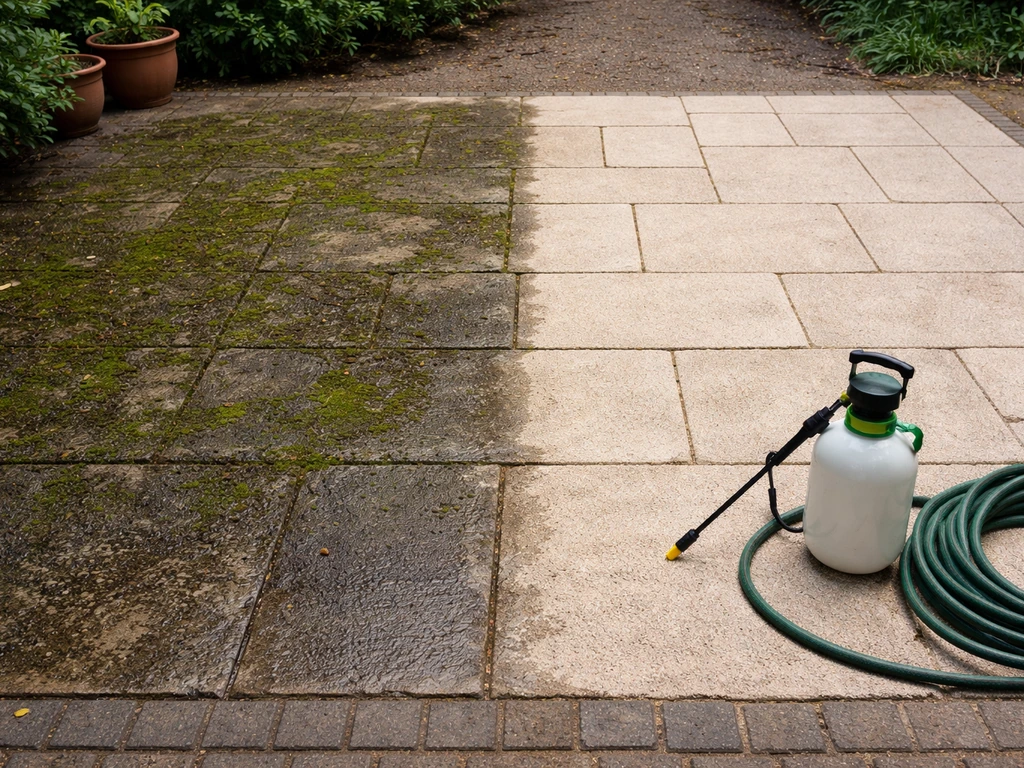
For most patios with green algae, an oxygen-based cleaner like Simple Green Oxy Solve or a no-scrub concentrate like Wet & Forget Outdoor will do the job without damaging your surface. Bleach-based cleaners work faster on tough staining but carry real risk on natural stone, jointing sand, and any surface near plants. Your best pick comes down to three things: what your patio is made of, how bad the growth is, and how much scrubbing you want to do. Get those three right and you'll have a clean patio without etching or staining anything in the process.
Best Patio Algae Cleaner: How to Choose and Use It
Rhea Lang
8 Jun 2026
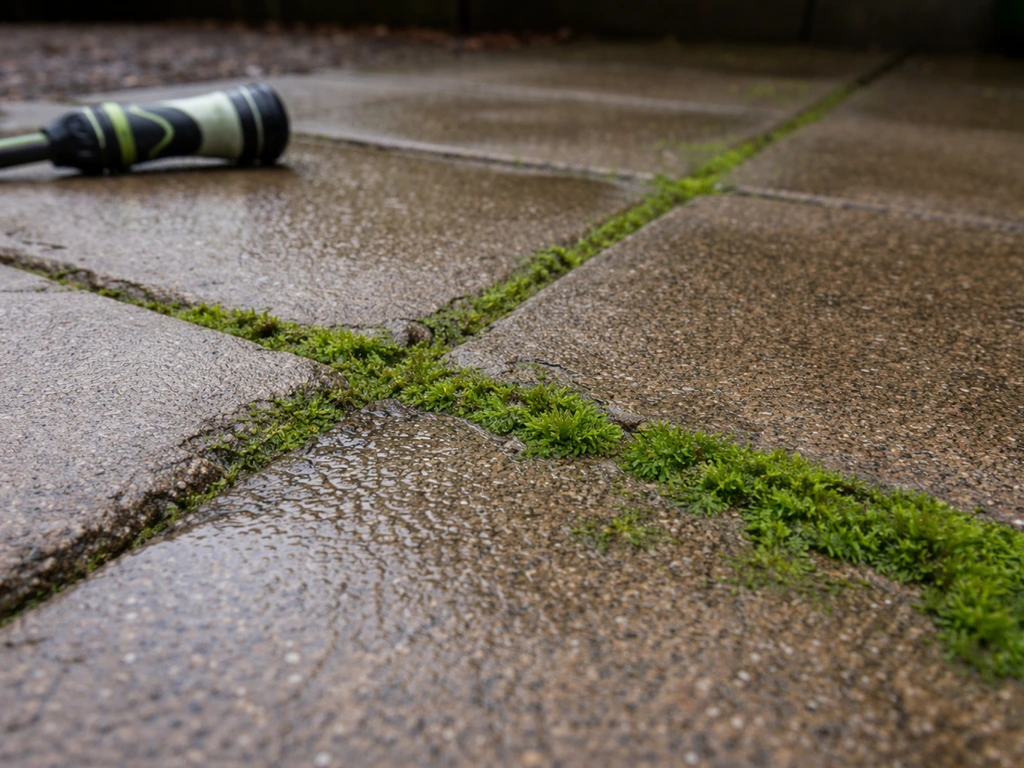
Is it actually algae? How to tell algae from mold and moss
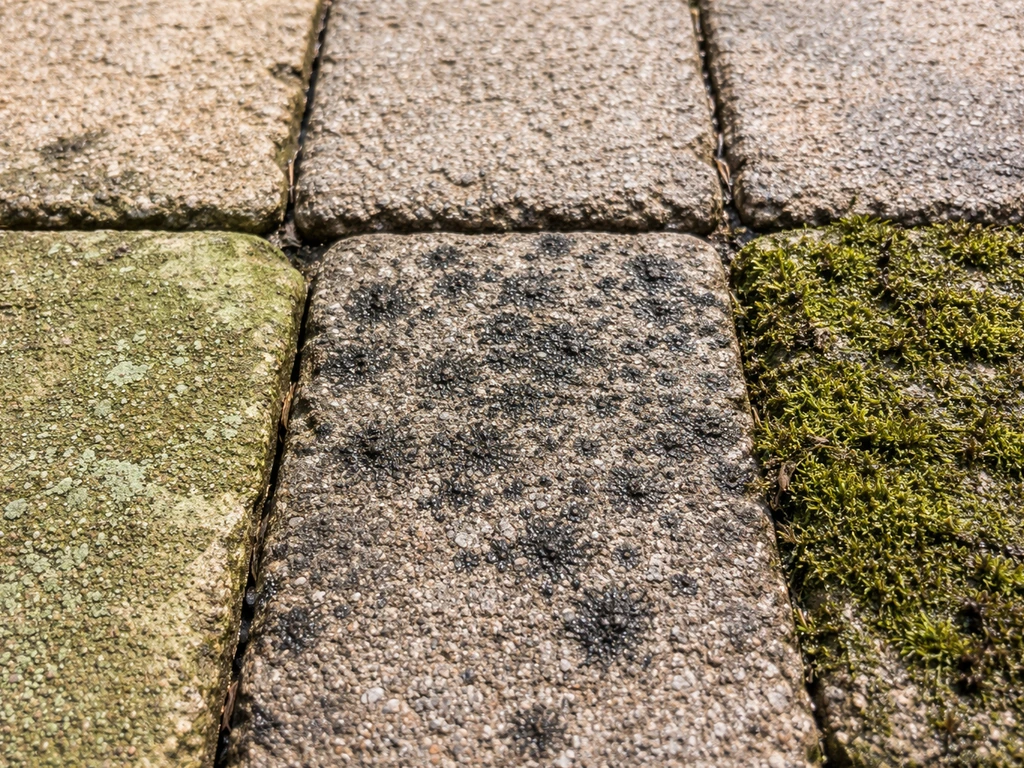
Before you buy anything, take 30 seconds to look at what you're dealing with. Getting this wrong means choosing the wrong product and either wasting money or making the problem worse. The good news is that algae, mold, and moss each have pretty distinct appearances once you know what to look for.
Algae shows up as a green film or powdery deposit on paving, stone, concrete, and decking. It's thin, slightly slippery when wet, and tends to spread across open surfaces that get a mix of moisture and sunlight. According to the RHS, this kind of green film on hard landscaping is classic algae, and it's the most common thing people find on patios. If it's green, flat, and a bit slimy underfoot in wet weather, you're almost certainly looking at algae.
Mold looks fuzzy. It tends to grow in lower, damper, shadier spots and often appears as dark grey or black spotting rather than the uniform green film of algae. If you're seeing black patches in cracks, corners, or areas that barely dry out, that's more likely mold or mildew. Algae tends to prefer sunlit, open surfaces where moisture meets light.
Moss is thicker and more three-dimensional than algae. It needs a bit of organic debris to get started, so you'll usually see it building up in joints, edges, and textured surfaces where dirt and leaf matter collects. It's spongy when wet and has a more plant-like structure. If you're dealing with a thick, cushiony green layer rather than a flat green film, that's moss, not algae, and the best approach is slightly different (though many algae cleaners handle moss too).
Lichen is the odd one out. It looks like dry, scaly patches in shades of grey, yellow, or orange, a bit like someone splashed spray paint on the stone and let it dry. It's crusty and brittle, not soft or slimy. Lichen is the toughest of the three to shift and needs a different treatment plan entirely. If your 'algae' looks powdery, scaly, and isn't green or slimy, you might be dealing with lichen instead, and it's worth checking out guidance specifically for that before you start.
Picking the right algae cleaner for your patio surface
The chemistry that clears algae from concrete can permanently damage limestone or etch marble grout. This is the part most people skip over and then regret. LATICRETE is very clear on this: acidic cleaners can etch, discolor, and scratch marble, limestone, travertine, and cement-based grout. So before you reach for the strongest thing on the shelf, figure out what your patio is actually made of.
| Surface Type | Safe Cleaner Chemistry | Avoid | Notes |
|---|---|---|---|
| Concrete (plain or sealed) | Bleach-based, oxygen-based, specialty algae removers | Very high-acid cleaners on bare concrete | Bleach works well; use diluted and rinse thoroughly |
| Brick and clay pavers | Oxygen-based, diluted bleach, no-scrub concentrates | Strong acids (muriatic acid) | Test in an inconspicuous spot first; bleach can lighten some bricks |
| Natural stone (sandstone, slate, limestone, marble) | Oxygen-based cleaners, pH-neutral or alkaline formulas, no-scrub concentrates | Any acidic cleaner, undiluted bleach | Acid and bleach risk permanent etching and discoloration on natural stone |
| Porcelain and ceramic tile | Bleach-based, oxygen-based, most algae removers | Acidic cleaners if grout is cement-based | Porcelain itself is tough; protect grout lines |
| Block paving with sand joints | No-scrub concentrates, oxygen-based | High-pressure washing alone, concentrated bleach directly in joints | Bleach can kill joint-stabilizing sand chemistry; flush well |
If you have natural stone, this is non-negotiable: stick to an oxygen-based or pH-neutral cleaner. I learned this the hard way watching a diluted bleach solution leave a permanent light patch on a sandstone step that had been there for 20 years. It wasn't worth the shortcut.
Which type of algae cleaner actually works best on green algae
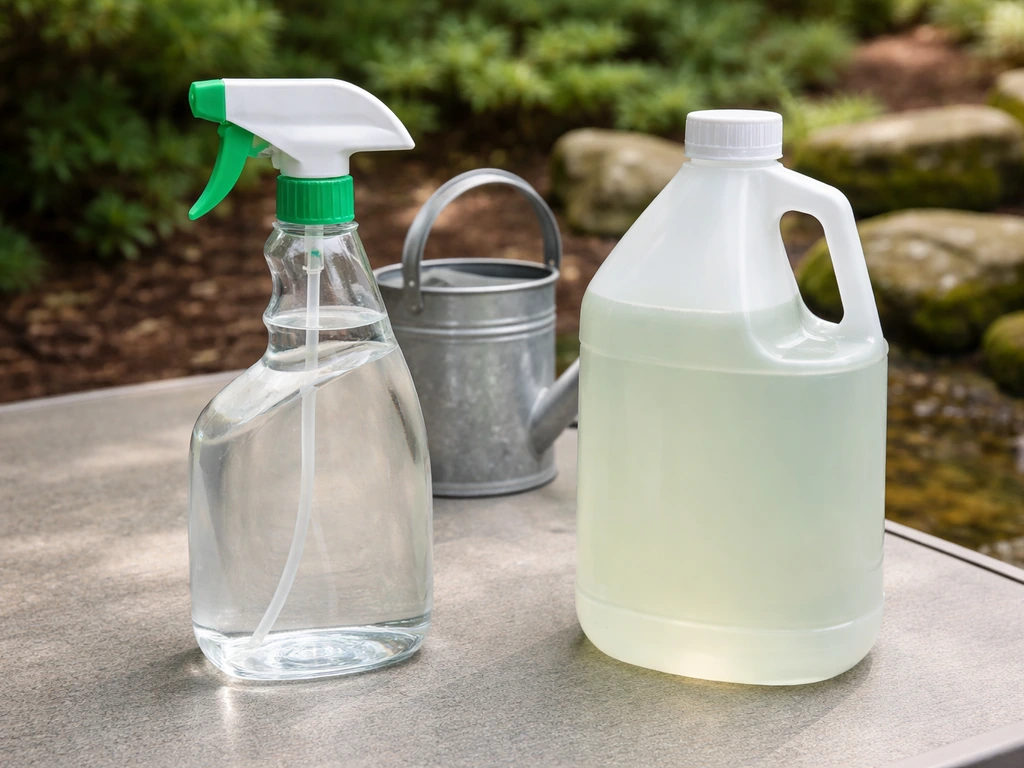
Ready-to-use vs concentrate
Ready-to-use (RTU) products are the easiest entry point. You spray them straight from the bottle with no mixing. Wet & Forget Ready-to-Use is the most well-known example in this category: blank" rel="noopener noreferrer">apply it to a dry surface until saturated, then walk away. No scrubbing, no rinsing. The algae breaks down over days to weeks as it weathers. RTU products cost more per square metre but they're genuinely convenient for small areas or occasional top-ups. Products like Zep Mildew Stain Remover also come ready to use with no dilution required, and they're better suited to stain-focused work on concrete and poolside surfaces.
Concentrates give you far better value if you have a large patio or need to treat regularly. Wet & Forget Outdoor Concentrate mixes at 1 part product to 5 parts water in a garden sprayer. Simple Green Oxy Solve Total Outdoor Cleaner concentrates mix at roughly 1.5 cups per gallon of water. Coverage varies a lot depending on how porous your surface is and how heavy the growth is, but concentrates are almost always the smarter buy for anything bigger than a small courtyard.
Oxygen-based cleaners
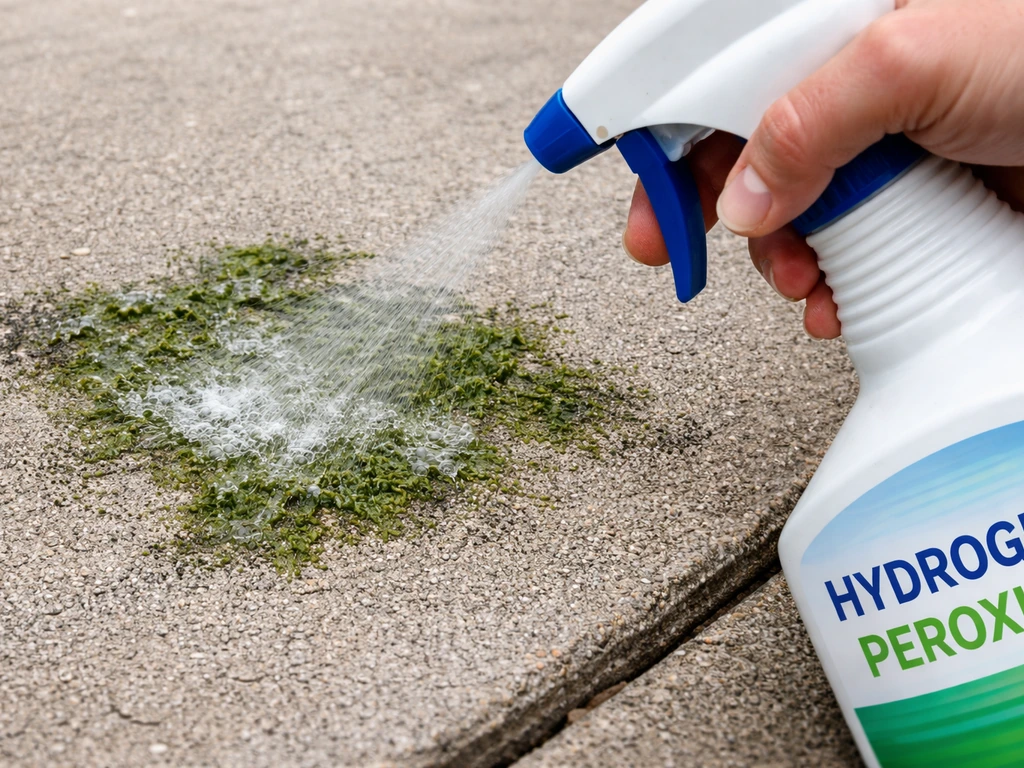
Oxygen-based cleaners (look for 'oxy' or 'hydrogen peroxide' on the label) are my go-to recommendation for most homeowners. They work by releasing oxygen that breaks down organic growth, and they're significantly safer on natural stone and jointing than bleach. Simple Green Oxy Solve is a good example: it handles green algae, mold, and mildew on a wide range of surfaces without the bleaching risk. They're not quite as fast-acting as chlorine bleach on heavy black staining, but for typical green algae on a patio, they do a thorough job and they're far less likely to cause damage.
Bleach-based cleaners
Chlorine bleach is genuinely effective at killing algae and it works fast, but it comes with real trade-offs. ConcreteNetwork flags that it's corrosive and irritating to skin and eyes, and Clorox's own guidance specifies a careful dilution: 1.5 cups of Outdoor Bleach in 14.5 cups of water to make one gallon of solution. That's not a splash-and-go product. It works well on sealed concrete, tile, brick, and stone paving, but keep it well away from natural stone with cement grout, plants, and pets. On patios near garden beds, the runoff risk is real. Use it with ventilation, eye protection, and gloves.
Specialty no-scrub outdoor algae removers
Products like Wet & Forget sit in their own category. They're non-acidic, bleach-free, and designed to work slowly over time through repeated rainfall, rather than instant action. You apply once, leave it, and the growth breaks down and washes away over the following days to weeks. Green algae typically clears up within days to a few weeks; heavier black mold staining can take a month or more. The main advantages are the low risk of surface damage and minimal effort. The main disadvantage is patience: if you want your patio clean for a party this weekend, this isn't your product.
How to apply an algae cleaner: step by step
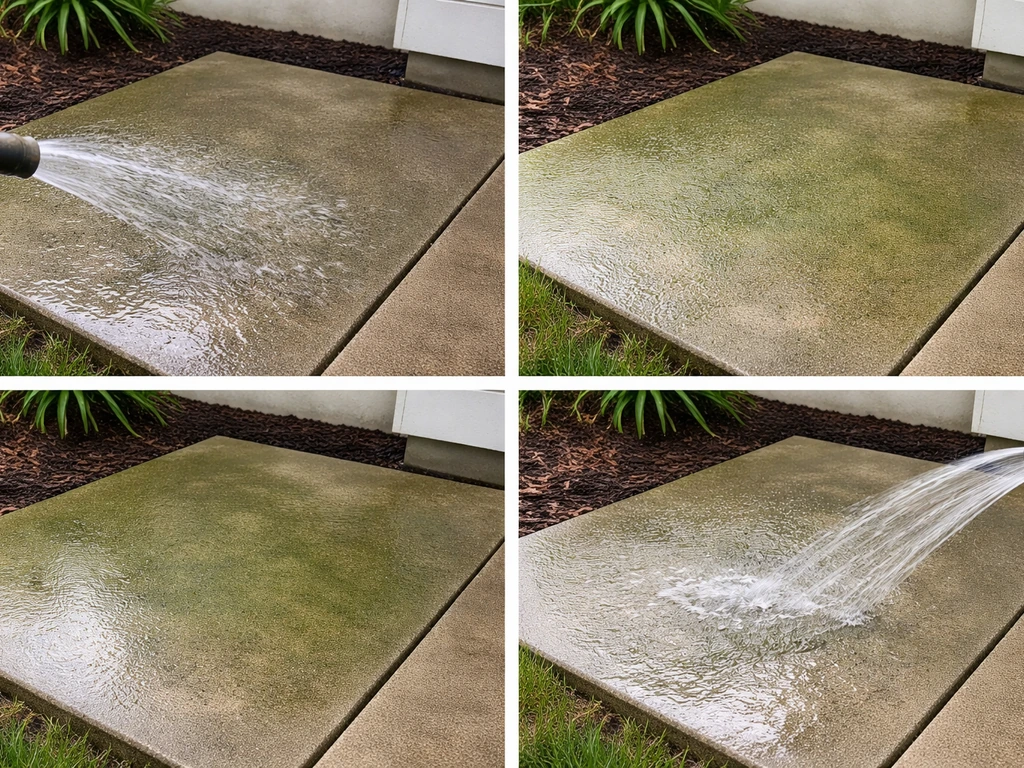
Getting the application right matters as much as choosing the right product. Here's how to do it properly, regardless of which cleaner you're using.
- Pick the right day: apply on a cool, dry, windless day with no rain forecast for at least 4 to 5 hours. Wet & Forget explicitly recommends this window. Hot, sunny days cause some cleaners to dry before they've had time to work, which leaves streaks and reduces effectiveness.
- Clear the surface: sweep off loose debris, leaves, and dirt first. You want the cleaner making contact with the algae, not sitting on top of leaf litter.
- Mix your dilution carefully: for concentrates, follow the label. Wet & Forget Concentrate is 1:5 (product to water) in a garden sprayer. Simple Green Oxy Solve mixes at approximately 1.5 cups per gallon. For bleach, use Clorox's recommended ratio of 1.5 cups per 14.5 cups water. Don't guess or go stronger thinking it'll work better, stronger often means surface damage.
- Apply evenly and thoroughly: for spray-on products, coat the surface until it's saturated but not pooling. For scrub-and-rinse products, work in manageable sections of around 2 to 3 square metres at a time so the cleaner doesn't dry before you're done.
- Allow the correct dwell time: Simple Green recommends 3 to 5 minutes. Bleach solutions need a similar contact time. No-scrub products like Wet & Forget don't need rinsing at all, they work over time. Do not let any cleaner dry onto the surface before rinsing, as this can cause streaking or residue.
- Scrub if needed: for stubborn algae, a stiff-bristle brush (not wire, which scratches stone) works well on the dwell-soaked surface. Most algae on patios doesn't need hard scrubbing if you let the chemistry do its job.
- Rinse thoroughly: use a garden hose at reasonable pressure or a pressure washer on a low, fan-tip setting. Flush the entire treated area and direct runoff away from plants and drains where possible.
- Pet precaution: if pets use the patio area, keep them off until the surface is dry. Wet & Forget advises rinsing pet paws with fresh water if they walk through a treated wet area as a precaution.
Chemical treatment vs pressure washing: which one, when, and how to avoid damage
This is where a lot of people go wrong. Pressure washing and chemical treatment are not the same thing, and for algae on patios, the best results usually come from combining them in the right order, not picking one or the other.
Pressure washers generate between roughly 1,500 and 4,000 PSI (Consumer Reports puts a standard garden hose at around 50 PSI for comparison). At that pressure, a machine can blast algae off a concrete surface in minutes. But on sandstone, soft brick, or mortar joints, that same pressure can erode the surface, blast out jointing sand, and create pitting that actually makes regrowth faster. Consumer Reports specifically warns against using a 0-degree nozzle, which concentrates all that force into a pencil-thin stream capable of damaging skin instantly if misdirected.
The smarter approach for most patios is to apply an algae cleaner first and pressure wash after. Let the chemistry kill and loosen the algae, then use the pressure washer at a sensible distance (typically 30 to 45 cm) with a 25 or 40-degree fan tip to rinse it clean. This means you need less pressure, you reduce streaking risk, and you're not just pushing living algae spores into the joints. Consumer Reports also notes that you should never let detergent dry on a surface while pressure washing, because it streaks badly.
When to skip the pressure washer entirely: on aged or soft sandstone, crumbling mortar joints, old pointing, or surfaces where sand infill has already been partially displaced, chemical-only treatment with a gentle hose rinse is the safer call. Products like Wet & Forget are specifically designed for this scenario, no pressure washing or scrubbing required.
| Situation | Best Approach |
|---|---|
| Heavy green algae on concrete or porcelain | Chemical cleaner first, then pressure wash at medium PSI with fan tip |
| Light green film on any surface | Chemical spray-on cleaner, hose rinse after dwell time |
| Algae on soft or aged natural stone | No-scrub chemical treatment only, no pressure washing |
| Algae in mortar joints or block paving joints | No-scrub chemical treatment, gentle hose rinse only |
| Thick algae + moss combined | Pre-scrape/brush to remove bulk, then chemical treatment, then rinse |
| Regular maintenance after initial clean | Annual no-scrub spray treatment to prevent regrowth |
What actually makes an algae cleaner 'the best' for your situation
There's no single best patio algae cleaner for everyone. But there are clear criteria you can use to make the right pick for your specific patio, time frame, and how much effort you want to put in. Here's how I think through it.
- Effectiveness on your growth type: oxygen-based and bleach-based cleaners work fastest on active green algae. No-scrub products work thoroughly but slowly. If you need results in 24 hours, choose a scrub-and-rinse formula. If you're happy to wait a week or two, a no-scrub product is often gentler and more practical.
- Surface compatibility: this is the non-negotiable. A product that etches your stone or bleaches your brick permanently is not a good cleaner, no matter how fast it removes algae. Always match chemistry to surface, especially with natural stone.
- Ease of use: RTU products are the most convenient but cost more. Concentrates need a garden sprayer and mixing but save money over time, especially for repeat use. Wet & Forget recommends reapplying once a year or at the first sign of regrowth, which makes concentrates particularly cost-effective for maintenance.
- Safety and environmental impact: bleach-based products need protective equipment (gloves, eye protection) and careful handling around plants and pets. Oxygen-based and non-bleach concentrates are generally safer to handle and have less runoff risk. If you have a patio close to a pond or planted borders, this matters.
- Odour: bleach products have a strong smell during and after application. Oxygen-based and no-scrub products are far more tolerable to use. A practical consideration if you're working near open windows or with neighbours close by.
- Cost vs results: for a small patio, a ready-to-use product is fine. For a larger area treated once or twice a year, a concentrate almost always wins on value. Don't pay RTU prices for a large surface area.
If I had to give a single practical recommendation for the majority of homeowners: an oxygen-based concentrate like Simple Green Oxy Solve for scrub-and-rinse jobs, or Wet & Forget Outdoor Concentrate for low-effort, surface-safe treatment that you apply and walk away from. Use bleach-based products only on concrete, sealed tile, or brick, and always dilute properly. And if you're dealing with lichen rather than algae, or a thick moss layer rather than a green film, the approach changes enough that it's worth reading up on those specifically before you start.
One final thing: whatever you use, the algae will come back if the underlying conditions don't change. Shade, moisture, and lack of airflow are what algae thrives on. After cleaning, an annual preventative treatment, especially with a product like Wet & Forget that leaves a residual protective effect, is genuinely worth doing. It takes 15 minutes once a year and keeps your patio looking clean without another full clean-up job each spring.
FAQ
How long will it take for the algae to disappear after using the cleaner?
Not always. If the growth is heavy and slimy, you may see improvement before it fully breaks down. For oxygen-based cleaners and Wet & Forget style products, expect a period of dwell time (days to a few weeks) before the “dead” algae finally washes out with rain or a gentle rinse.
Should I pressure wash immediately after applying an algae cleaner?
Yes, but only in a controlled way. Use a gentle hose rinse or a low-pressure fan rinse after the product has done its work, especially for natural stone and anything with jointing sand. Avoid blasting before the chemistry has loosened growth, because you can embed residue deeper into joints.
Can I add dish soap or other cleaners to boost results?
Usually no. Many algae cleaners rely on remaining wet long enough to work, and adding detergent can increase streaking and leave residue that makes future growth harder to remove. If you need a rinse aid, rinse with clean water only and follow the product label for any additives.
How do I know my patio surface will not be damaged before doing the full job?
You can, but start with a small hidden spot and wait for full dry time. Some cleaners can temporarily darken wet stone or grout, and others can leave a lightening effect on sensitive materials. Once you confirm no discoloration or etching, then treat the whole patio.
Is it safe to mix or layer different algae cleaners (like oxygen and bleach)?
Always check label compatibility before mixing products, especially if bleach is involved. Combining bleach with acids, most rust removers, or other chemicals can create dangerous fumes and can also weaken the jointing sand or stain stone. If you already used bleach, rinse thoroughly and wait until everything is fully neutralized and dry before any follow-up cleaner.
What if it doesn’t look like algae, and it’s more scaly or powdery?
For typical green algae on hard surfaces, look for oxygen-based cleaners, pH-neutral cleaners for sensitive stone, or a dedicated non-pressure option like Wet & Forget. If the “growth” is dry, scaly, and crusty (lichen), switching to an algae cleaner often disappoints, and you need a lichen-specific approach.
Why does algae come back so quickly even after I cleaned it?
Often. Algae cleaners can reduce the surface film, but regrowth comes from shade, persistent moisture, and poor airflow, plus shaded soil splash-back. After cleaning, improve drainage where possible, trim back overhanging plants, and consider an annual residual treatment to slow recurrence.
Is bleach okay if my patio is sealed?
Yes, sealed surfaces behave differently. Oxygen-based products are generally safer, but bleach can be more effective on sealed concrete, tile, and brick if diluted correctly. Don’t assume “sealed” means “bleach-safe” on natural stone, especially where cement grout is present.
What’s the safest way to clean algae if my patio is next to plants or a garden bed?
Do not rely on bleach on jointing sand or in areas with nearby plants. Runoff can burn plants and stain paving, and chlorine can be irritating to skin and eyes even with outdoor dilution. If you clean near garden beds, oxygen-based or non-bleach options are usually the safer default.
Which type is the best choice when I need results quickly but I’m worried about damage?
It depends on your time frame. If you need fast results, bleach often kills quickly but increases risk. If you can wait, non-bleach oxygen or Wet & Forget style treatments minimize damage and require less scrubbing. A practical decision rule: choose bleach for sealed concrete when you can fully control runoff and contact time, otherwise choose oxygen-based for most patios.
If it’s actually moss (not a thin algae film), should I use the same cleaner?
For moss or thick, cushiony growth, don’t treat it as just another thin green film. Many “algae” products can help, but you may need a follow-up strategy (gentle removal and repeat treatment) because moss holds onto debris and can regrow from trapped organics.
What nozzle or spray distance should I use when rinsing an algae-treated patio with a pressure washer?
Yes, if you do it at the right distance and with the right nozzle. Use a fan tip and keep the spray about 30 to 45 cm away, because closer or a zero-degree stream can erode mortar joints and promote regrowth. Also, ensure you do not let detergent residue dry before rinsing.
Should I scrub more aggressively, or just apply the cleaner again?
Not always, and over-scrubbing can cause streaks or damage on textured surfaces. Start with a product that matches your effort level: RTU for small touch-ups, concentrates for larger areas, and oxygen-based solutions when you want a solid balance of safety and effectiveness. If you still see dark staining, treat again rather than just increasing scrubbing force.
What preventative steps actually make a difference after the initial clean?
You can often prevent repeat cleanup by addressing the conditions. After cleaning, aim for an annual preventative application when algae season starts, particularly in shaded or damp areas. Pair that with airflow improvements (trim, clear debris) so the residual effect has fewer triggers.
Next Article
Best Patio Cleaner for Moss and Algae: Buyer’s Guide
Choose the best patio cleaner for moss and algae by surface, with safe use tips, timing, and prevention to stop regrowth