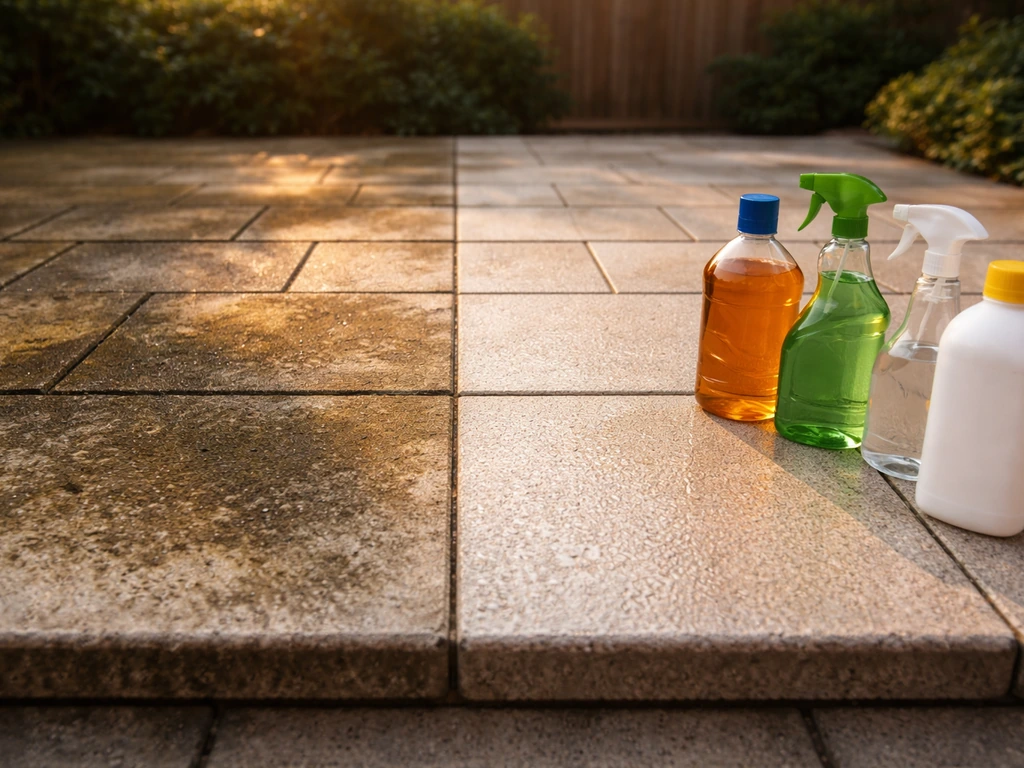
For most patios, a dedicated quaternary ammonium or benzalkonium chloride-based cleaner (like Wet & Forget Outdoor or Romabio Exterior Wash) is the best choice for killing moss and algae without damaging the surface. If you want faster, same-day results and don't mind scrubbing, a zinc sulfate monohydrate product like Moss Out is the most effective active ingredient for hard surfaces according to the manufacturer. If your patio is sensitive stone (sandstone, slate, limestone), skip anything acidic entirely and stick with a pH-neutral or quat-based formula. Which one wins for you depends on your patio material, how thick the growth is, and how much effort you want to put in today versus letting rain do the work over the next few weeks.
Best Patio Cleaner for Moss and Algae: Buyer’s Guide
Rhea Lang
4 Jun 2026
Moss or algae? What you're dealing with changes your approach
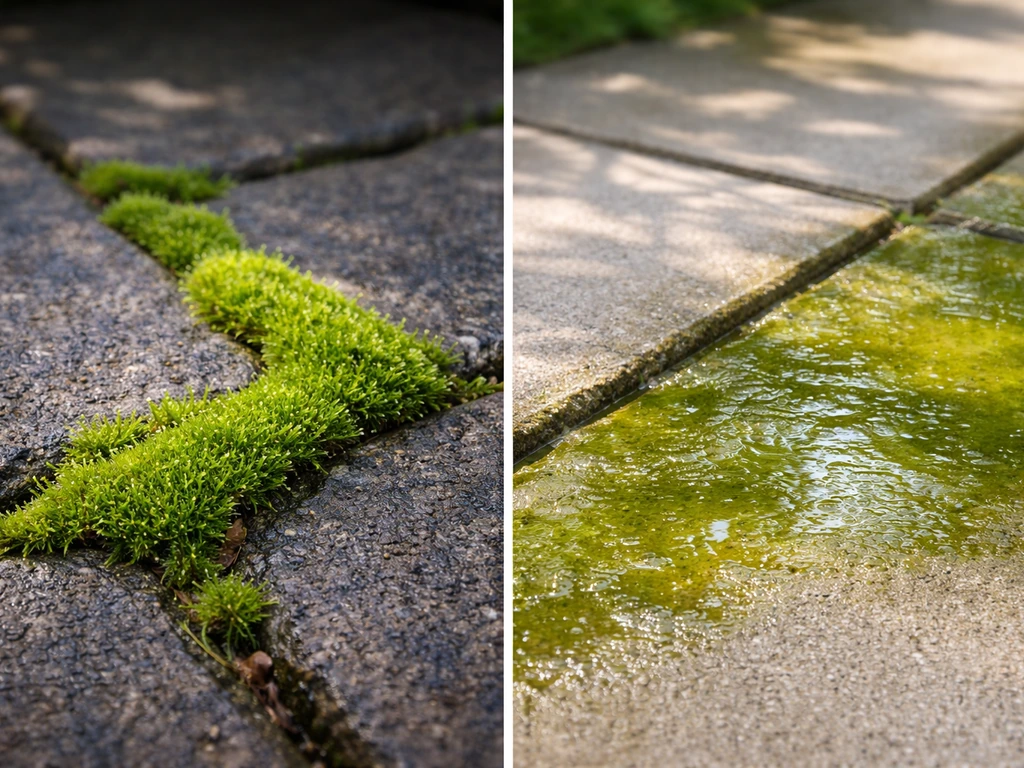
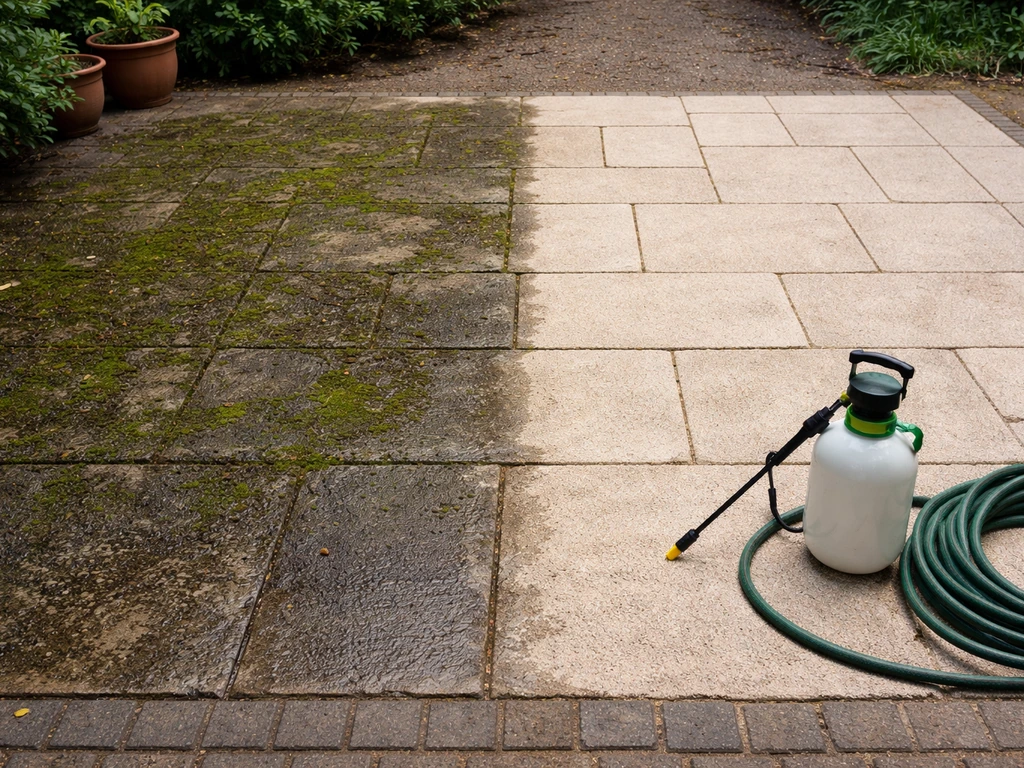
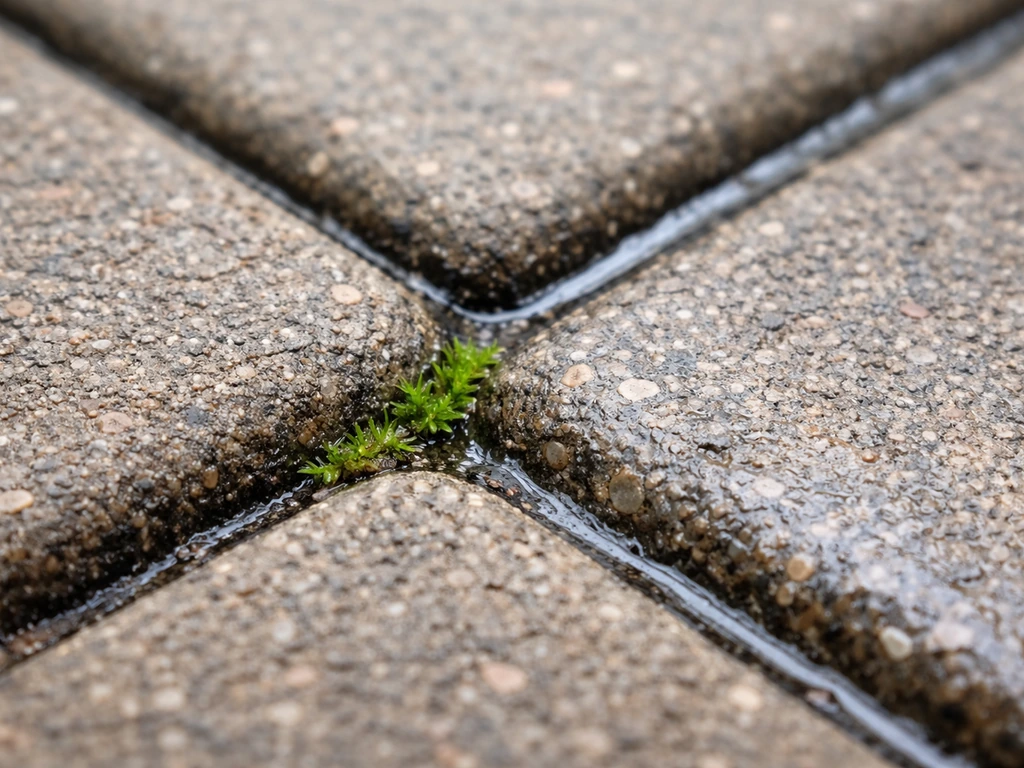
Moss is the thick, spongy green cushion that builds up in joints and shaded corners. It holds moisture, lifts pointing, and gets genuinely slippery. Algae is the thin, often slimy green or black film that spreads across flat surfaces after wet weather. You'll frequently find both on the same patio, especially in shaded or north-facing spots, but they respond slightly differently to treatment.
Algae is easier to shift. A diluted quat-based cleaner or even a good no-rinse spray will have it gone within a few days to two weeks in most cases. Moss is denser, so it needs either longer dwell time, some physical agitation after the product has done its work, or a stronger active ingredient. Very established moss clumps (the kind that have been growing for years) can take several months to fully break down with a slow-acting product, or they need scrubbing and re-treatment after the initial kill.
Your patio surface matters just as much as the type of growth. Concrete and brick can handle a wider range of cleaners, including stronger concentrations. Natural stone, especially calcite-based varieties like limestone, travertine, and marble, will etch from acids within seconds of contact. Sandstone and slate are porous and absorb cleaners quickly. Porcelain is non-porous and easiest of all to clean but needs gentler mechanical treatment to avoid surface scratching. Before you buy anything, identify your surface first.
The main cleaner types and when each one actually wins
Quaternary ammonium (quat) based cleaners
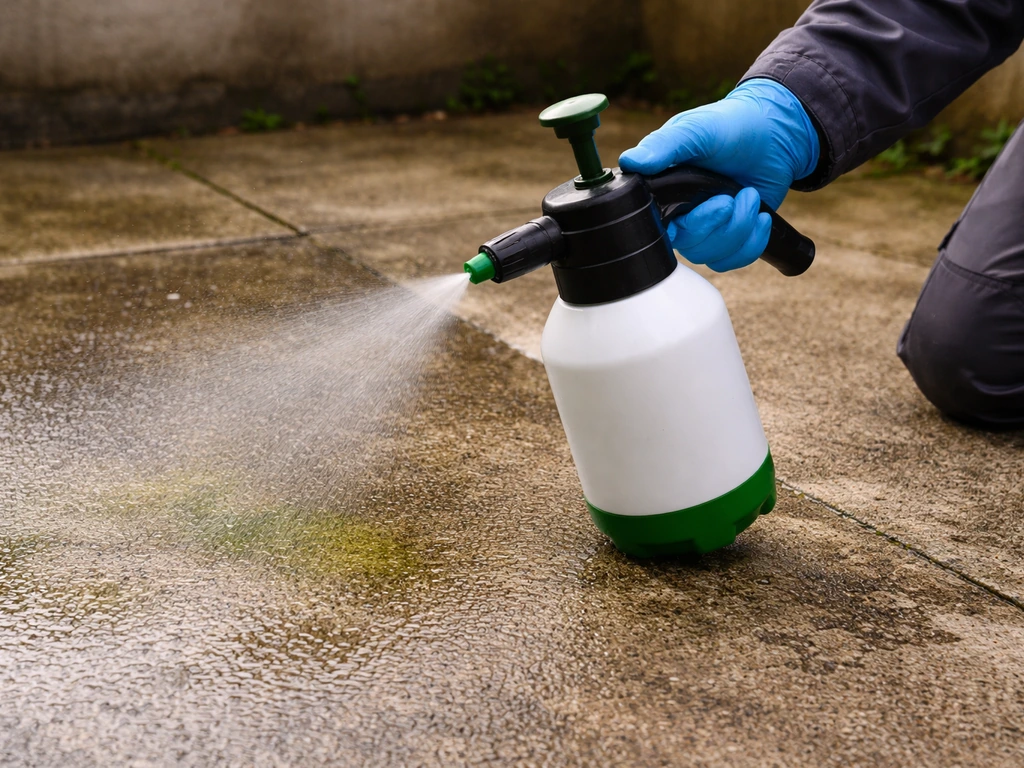
These are the workhorses for most patio situations. Products like Wet & Forget Outdoor and Romabio Exterior Wash are built around quat chemistry. They kill biological growth at the cell level, are generally pH-neutral or close to it, and are safe on almost every patio surface including natural stone. The trade-off is time.
You spray, leave it, and let wind and rain gradually break down and wash away the dead growth. Wet & Forget states that green growths like algae clean up within a few days to a couple of weeks in most cases, but heavier staining and established moss can take several months, and very long-established growth can take 6 to 12 months. That's not a product failure, it's just how slow-release biological cleaners work.
Once the growth is dead, it becomes brittle and loose, and rain gradually washes it away. If you want to speed things up, a light brush after a few weeks works well.
Zinc sulfate monohydrate cleaners
If killing moss fast on hard surfaces is the priority, zinc sulfate monohydrate (the active in Moss Out for Roofs and Walks) is the most effective option for that job without staining. It's specifically rated for hard surfaces including paths, drives, and patios. Apply it when moss is actively growing (late fall or early spring tends to give the best kill results), and it gets to work quickly. The label guidance is to repeat treatment annually or whenever new growth appears, which makes it a useful part of a yearly maintenance routine rather than a one-time fix.
Bleach-based and oxidising cleaners
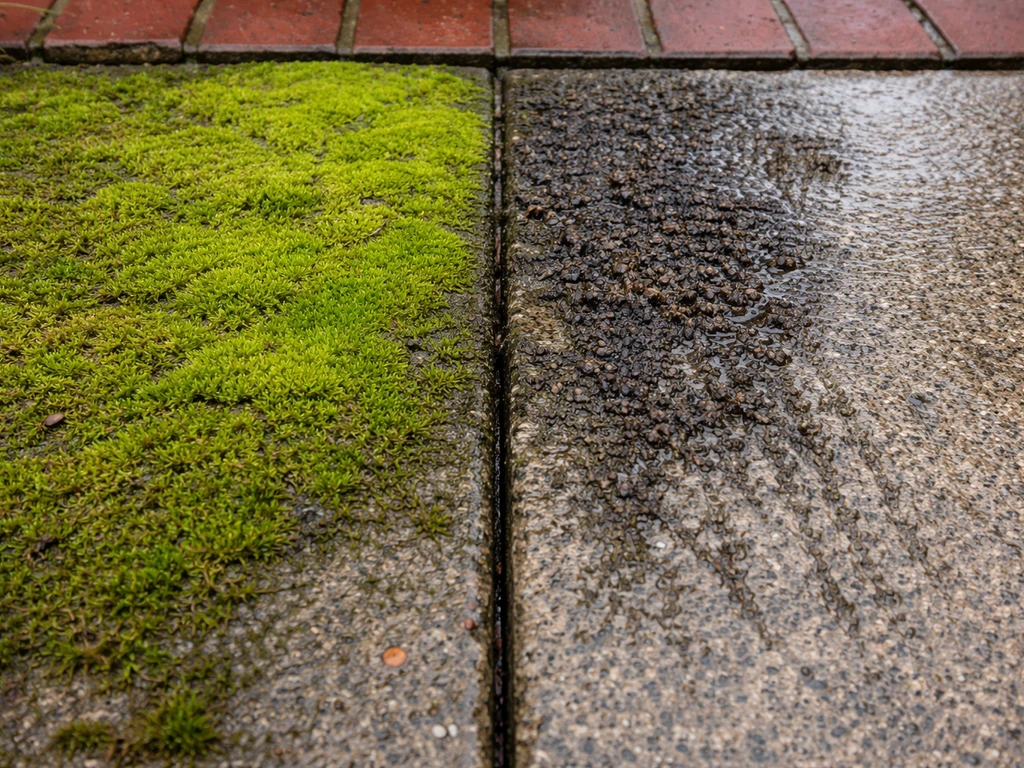
Sodium hypochlorite (household bleach diluted or patio-specific bleach products) will kill moss and algae quickly on concrete and hard brick. But there are real downsides. The NPS guidance on cleaning stone specifically warns that bleach-type oxidising cleaners can introduce salts into porous stone that migrate inward and cause decay over time. On concrete it's less of a concern, but on any natural stone, sandstone, or brick with lime mortar, it's risky.
Bleach also runs off into surrounding planted areas and can damage grass and plants if you're not careful. Wet & Forget also advises preventing spotting by spraying nearby plants and grass with water before applying Wet & Forget.
I'd keep bleach solutions as a last resort for concrete-only situations, not a go-to for a mixed or natural stone patio.
Acid-based cleaners
Avoid these entirely for moss and algae removal unless you are 100% certain you're working on acid-resistant stone or concrete and know exactly what you're doing. Calcite-based stones (marble, limestone, travertine, and even some sandstones) etch within seconds of acid contact. That etching is corrosion, it's permanent, and no amount of cleaning will reverse it.
The Natural Stone Stain Management Guide (Arizona Tile) notes that so-called “water spots” or “water rings” are often corrosion or etches caused by chemically active liquids, mostly acids, after contact time allows them to react water spots or water rings.
A quick test: put a drop of vinegar on a hidden spot. If it fizzes, the stone is acid-sensitive and acids are off limits. For algae and moss specifically, there's no reason to use acids anyway as quat-based products do the job without the risk.
Natural and homemade options
White vinegar, baking soda, and washing-up liquid solutions do get searched for a lot (and there's a whole separate guide on the best homemade patio cleaner if that's your route), but for moss and algae specifically, they're not the most reliable. Vinegar kills surface growth temporarily but can damage stone and doesn't provide any residual protection. Baking soda is too mild for established moss. If you're working on concrete or brick and want a gentler option, a hot water and washing-up liquid scrub combined with a stiff brush can shift light algae, but it won't stop it coming back quickly.
How to pick the right product for your situation
The "best" product is always context-dependent. Here's how to narrow it down quickly:
- Surface compatibility first: if you have natural stone (especially sandstone, slate, limestone, or marble), stick to pH-neutral quat-based formulas. Never use acids. Check the product label explicitly for your surface type before buying.
- Growth thickness: light algae film responds to almost anything. Thick, established moss needs either a zinc sulfate product for fast kill, or patience with a quat-based slow-release product plus follow-up scrubbing.
- Effort tolerance: if you want to spray and walk away, no-scrub products like Wet & Forget are designed exactly for that. If you want visible results this weekend, choose a faster-acting formula and plan to scrub.
- Pet and plant safety: quat-based products are generally safer around pets once dry, and Wet & Forget specifically notes that pre-wetting nearby plants before application and rinsing any accidental overspray protects them. Always check the label if pets or children will be on the surface soon after treatment.
- Coverage rate and dilution: Concrobium Mold Control should not be diluted and covers roughly 500 sq ft per gallon. Wet & Forget concentrate is diluted at 1 part product to 5 parts water for sprayer application. Know your area before buying to get the right quantity.
- Budget: concentrates that dilute down to 5 or 6 times the volume offer much better value per sq ft than ready-to-use sprays, especially for a whole patio.
Step-by-step: how to apply patio moss and algae cleaner properly
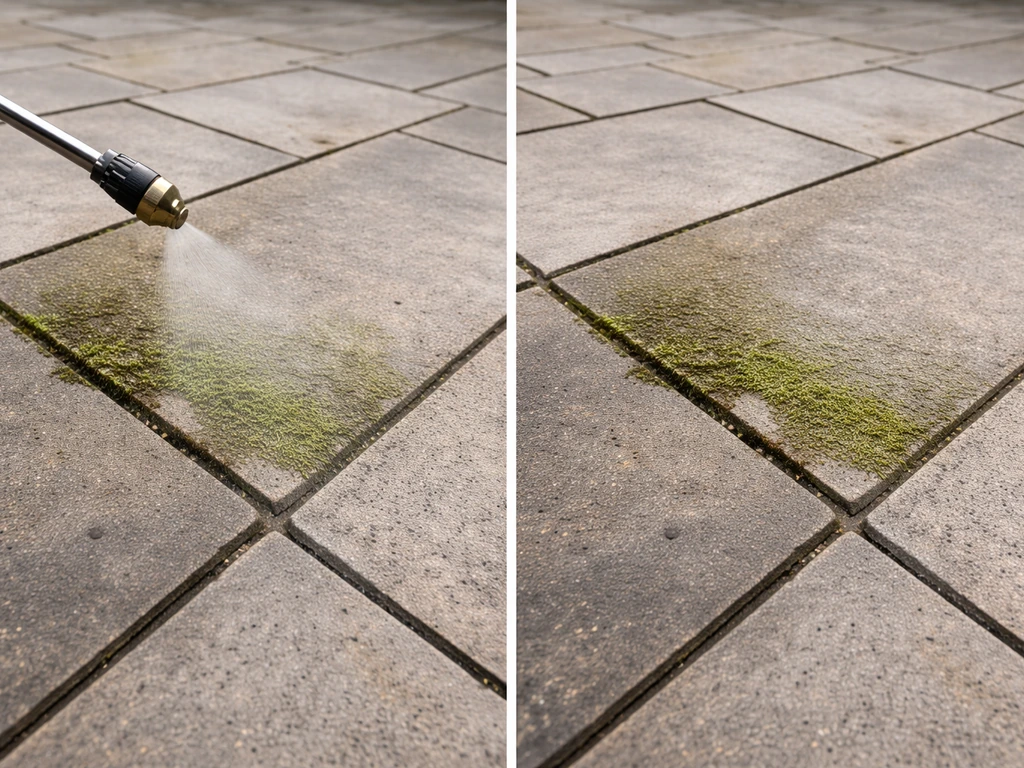
- Choose the right day. For no-rinse, leave-on products like Wet & Forget, apply to a dry surface in cool, overcast conditions. Do not apply if rain is forecast within 4 to 5 hours, as this washes the product off before it can work. Avoid very hot sunny days as rapid evaporation reduces dwell time and effectiveness. For lichen or stubborn moss, a slightly cloudy, still day gives the product more contact time.
- Prepare the area. Sweep off any loose debris, dead leaves, or loose moss clumps. This isn't absolutely necessary for slow-acting products, but it gives the cleaner direct contact with the growth surface rather than sitting on top of dead organic matter. Better contact means better results.
- Protect nearby plants and grass. Wet any plants or lawn adjacent to the patio with plain water before you start. This dilutes any overspray that lands on them. If you do get cleaner on plants, rinse immediately with clean water.
- Mix and apply. For concentrate products, follow dilution instructions precisely. Wet & Forget concentrate is 1 part product to 5 parts water. Concrobium should not be diluted at all. Apply evenly using a pump sprayer, making sure you wet the entire surface of the moss or algae growth, not just the surrounding patio. Direct contact with the growth surface is what makes these products work.
- Leave it. For no-scrub products, walk away. Don't rinse it off. The active ingredient needs to stay on the surface and work. For fast-acting products like zinc sulfate, check the label for any recommended dwell time before rinsing.
- Wait for results. Algae and light green staining typically clears within a few days to two weeks. Thicker moss may take several weeks to visibly die back. Heavy, black, or very long-established growth can take several months. Moss turning brown or grey is a sign it's working.
- Follow up with a brush or rinse. Once the growth is dead and brittle, a stiff brush (or pressure washer at low settings on tougher surfaces) makes it easy to remove. For slow-acting products, a scrub after the initial treatment cycle makes future maintenance much simpler, and you typically only need to do a full scrub once.
Surface-by-surface: what you can and can't do
| Surface | Safe cleaner types | Avoid | Key notes |
|---|---|---|---|
| Concrete | Quat-based, zinc sulfate, dilute bleach, most patio cleaners | Strong undiluted acids on coloured or exposed aggregate concrete | Most durable surface. Can handle stronger concentrations. Rinse well after bleach use. |
| Brick | Quat-based, zinc sulfate, dilute bleach | Acids if mortar joints contain lime. Strong bleach if coloured brick | Test on a small area first. Mortar joints are often more sensitive than the brick face itself. |
| Sandstone | pH-neutral quat-based only | Acids, bleach, high-alkaline cleaners | Highly porous and acid-sensitive. Absorbs cleaners fast. Use lower concentrations and test first. |
| Slate | pH-neutral quat-based, gentle neutral detergent | Acids, bleach, abrasive scrubbing pads | Porous and can delaminate if saturated. Apply sparingly and don't let cleaner pool on surface. |
| Limestone / Travertine | pH-neutral quat-based only | Any acid (including vinegar). Bleach on carved or detailed stone | Extremely acid-sensitive. Will etch within seconds. Always do the vinegar bubble test on a hidden area first. |
| Porcelain | Quat-based, neutral detergent, most proprietary patio cleaners | Abrasive scrubbers, wire brushes, high-pressure washer jets aimed at grout lines | Non-porous so cleaners sit on surface. Easy to clean but grout joints between pavers need care. |
One rule that applies to every surface: always do a patch test on a hidden or inconspicuous area before treating the whole patio. Even products labelled as safe for natural stone can react unexpectedly with certain sealers or mineral compositions. Five minutes of testing saves you from an irreversible mistake.
When to scrub or pressure wash after cleaning
Pressure washing is genuinely useful after a moss or algae treatment, but the timing and settings matter a lot. Using a pressure washer before the cleaner has killed the growth just blasts live spores across the patio and surrounding garden, which speeds up re-colonisation. Wait until the growth is visibly dead (brown, grey, and brittle) before pressure washing.
Pressure washer settings by surface
- Concrete: up to 2000 to 3000 PSI with a 25-degree fan nozzle is generally safe. Keep the nozzle moving and maintain at least 30 cm distance from the surface.
- Brick and block paving: 1200 to 1500 PSI maximum. Use a wide-angle (40-degree) nozzle and avoid aiming directly at mortar joints. High pressure strips pointing quickly.
- Sandstone and slate: 800 to 1000 PSI with a wide fan nozzle, or skip the pressure washer entirely and use a stiff hand brush instead. These surfaces are soft enough to be damaged by sustained high-pressure jets.
- Porcelain pavers: 1000 to 1500 PSI with a wide nozzle is fine for the paver surface. Avoid focused jets on grout lines.
- Limestone and travertine: hand brushing after treatment is strongly recommended over pressure washing. If you do pressure wash, keep it below 800 PSI with a very wide fan nozzle and minimal dwell time in one spot.
If you don't own a pressure washer, a stiff-bristled deck brush (not metal bristles) does a solid job on most surfaces once the growth is dead. On porcelain, a soft mop or cloth-head brush with water and neutral detergent is the recommended approach, not wire brushes or anything abrasive. On sandstone and slate, a medium-bristle brush is the safest option.
How to stop moss and algae coming back
Removing moss and algae without addressing why it grew there in the first place means you'll be doing this again in 12 to 18 months. Prevention is much less work than a full treatment cycle.
Reduce the conditions that favour growth
Moss and algae thrive in shade, moisture, and stillness. The most effective long-term fix is improving drainage and light. Trim back overhanging trees and shrubs to let more light and air movement onto the patio surface. Clear leaf debris regularly, especially in autumn, as decomposing leaves create the perfect damp, nutrient-rich environment for moss. Ensure water doesn't pool on the surface after rain. If your patio has low spots, re-levelling sections or improving sub-base drainage makes a real difference.
Annual maintenance spray
Once your patio is clean, an annual maintenance spray with a quat-based product is one of the easiest prevention strategies. Wet & Forget guidance specifically recommends a once-a-year maintenance spray to keep surfaces clean, and the wind and rain exposure between applications helps break down any early-stage growth before it establishes. Moss Out recommends repeating treatment annually or when new moss or algae is first visible, which is the right mindset: intervene early when the growth is thin rather than waiting until it's a thick mat.
Sealing porous surfaces
On porous masonry surfaces (sandstone, brick, concrete), applying a sealant or protective coat after cleaning significantly reduces regrowth. Romabio specifically recommends following treatment with their Mineral Shield product, an invisible protective coat, on porous masonry to help prevent algae and moss coming back. The principle applies broadly: sealed surfaces offer less grip for biological growth and are easier to clean at the next maintenance cycle. Make sure the surface is fully dry and clean before applying any sealant.
Keep an eye on joints
Paving joints are where moss takes hold first. Once moss roots (rhizoids) get into cracked or eroded pointing, they accelerate joint breakdown, which creates more habitat for more moss. Re-pointing deteriorated joints after cleaning stops this cycle. For block paving, kiln-dried sand swept into joints after cleaning and pressure washing helps close off the gaps that moss colonises.
A quick comparison of the main product approaches
| Approach | Best for | Speed | Effort | Surface safety | Regrowth protection |
|---|---|---|---|---|---|
| Quat-based (e.g. Wet & Forget, Romabio) | All surfaces, especially natural stone. Low-effort ongoing maintenance. | Slow (weeks to months) | Very low – spray and leave | Excellent across all surfaces | Good with annual reapplication |
| Zinc sulfate (e.g. Moss Out) | Hard surfaces (concrete, brick, path). Fast moss kill. | Fast (days) | Low – apply and rinse after kill | Good on hard surfaces, avoid natural stone | Annual reapplication recommended |
| Dilute bleach solution | Concrete only. Heavy staining. | Fast | Medium – scrub and rinse required | Concrete only. Risky on natural stone. | None – growth returns quickly |
| Pressure washing alone (no cleaner) | Light algae on concrete or brick | Immediate | High | Surface-dependent | Poor – spores spread and regrow fast |
| Neutral detergent + scrub | Light algae on porcelain or glazed surfaces | Fast | High | Good | None |
For most homeowners, the practical answer is to combine a quat-based spray for ongoing maintenance with a zinc sulfate product for any heavy moss situations on hard surfaces, and to seal porous stone after a full clean. If you're looking for the patio cleaner best suited to your situation, match the product type to the growth (moss vs algae) and your surface material first quat-based spray. That combination covers the removal, the prevention, and the minimal-effort upkeep that keeps a patio looking good year after year.
If you're also dealing with lichen (the crusty grey or orange growth that bonds tightly to stone), it needs a longer dwell time and often multiple treatments even with the best products. There's a separate detailed guide on the best patio cleaner for lichen that goes deeper on that specific challenge. Because lichen bonds tightly to stone, treatments often need longer dwell time and repeated applications even with the strongest patio cleaners best patio cleaner for lichen.
If you are choosing between options for moss and algae, this approach still helps you pick the best patio cleaner for your specific surface best patio cleaner for lichen. And if you want to explore the full range of patio cleaners beyond moss and algae, the broader best patio cleaner guide covers general cleaning for all surfaces and stain types.
FAQ
How long should I wait after spraying before I brush or pressure wash?
If the surface is still green, slimy, or springy, it is not fully dead yet, so treat again or extend the dwell time before any mechanical removal. A reliable sign to wait for is that the growth turns brown or grey and becomes brittle, then you can brush or pressure wash without spreading live growth.
Can I combine different patio cleaners (quat, bleach, vinegar, zinc sulfate) to make it work faster?
Do not mix quat-based cleaners with bleach or acids. Even if each is effective alone, mixing can reduce performance and increase residue risks on porous stone. If you already used a bleach or acidic cleaner recently, rinse thoroughly and wait until the patio is fully dry before switching to a quat or zinc sulfate product.
When should I seal porous paving joints after removing moss and algae?
For porous jointing like block paving and old brick mortar, sealants and protective coats can trap residues if you apply them too soon. Wait until the surface is clean, fully dry, and the growth is gone, then consider a maintenance schedule (annual quat spray) and apply sealant as the final step after a complete clean.
Will pressure washing after treatment improve results, or will it make moss come back faster?
Yes, but only after moss and algae have died. Pressure washing before the kill phase can blast live spores across the patio and surrounding plants, increasing re-colonization. Use moderate settings, keep the nozzle moving, and avoid aggressive angles on jointed or uneven pavers to prevent further erosion.
My patio keeps getting moss again quickly, what should I change besides the cleaner?
If moss is coming back within a year, it is usually a shade or moisture issue, or joints need maintenance. Focus on drainage, trimming overhangs, clearing leaf debris, fixing pooling, and re-pointing eroded mortar, then start earlier with a once-a-year quat maintenance spray to stop thin growth before it thickens.
What if the growth is not just moss and algae, like crusty black or orange patches?
If you see black or orange specks, it may be lichen or different biofilm stages, and those often require longer dwell time than moss or algae. Do a quick vinegar fizzle test only for stone sensitivity, and if the growth is crusty and tightly bonded, switch to a lichen-focused strategy rather than repeating a moss routine.
Is zinc sulfate the best choice if I have both heavy moss and algae on the same patio?
A zinc sulfate monohydrate product is best for thick, established moss on hard surfaces, but it is not a substitute for prevention. Treat when moss is actively growing (late fall or early spring), then follow with your regular maintenance approach (annual quat-based spray) and mechanical brushing after the moss is dead.
How do I patch-test a patio cleaner when I am not sure what my patio is sealed with?
If you are working on sealed porcelain or a patio with unknown sealers, always do a patch test because some sealers can react unexpectedly. After the patch test, apply to a small section first and check for streaking or dulling, then proceed at the label dilution and dwell time for the full area.
What is the best way to treat a small moss spot without affecting surrounding plants?
For very small areas, you can reduce waste and runoff by applying with a pump sprayer to controlled sections and using a stiff brush only after growth is visibly dead. Avoid spot-treating repeatedly on still-living moss, because incomplete kill often creates patchy regrowth.
How can I tell whether my recurrence is from incomplete kill versus a moisture problem?
If the treated area looks clean but returns soon, consider whether the surface is staying wet longer than before, for example due to clogged drainage channels or low spots that collect water. Fixing pooling and improving airflow typically reduces recurrence more than increasing chemical strength.
Next Article
Patio Cleaner Best Guide: Choose, Use, and Prevent Stains
Pick the best patio cleaner for mold, rust, grease or pet stains, use safely with or without pressure washing.