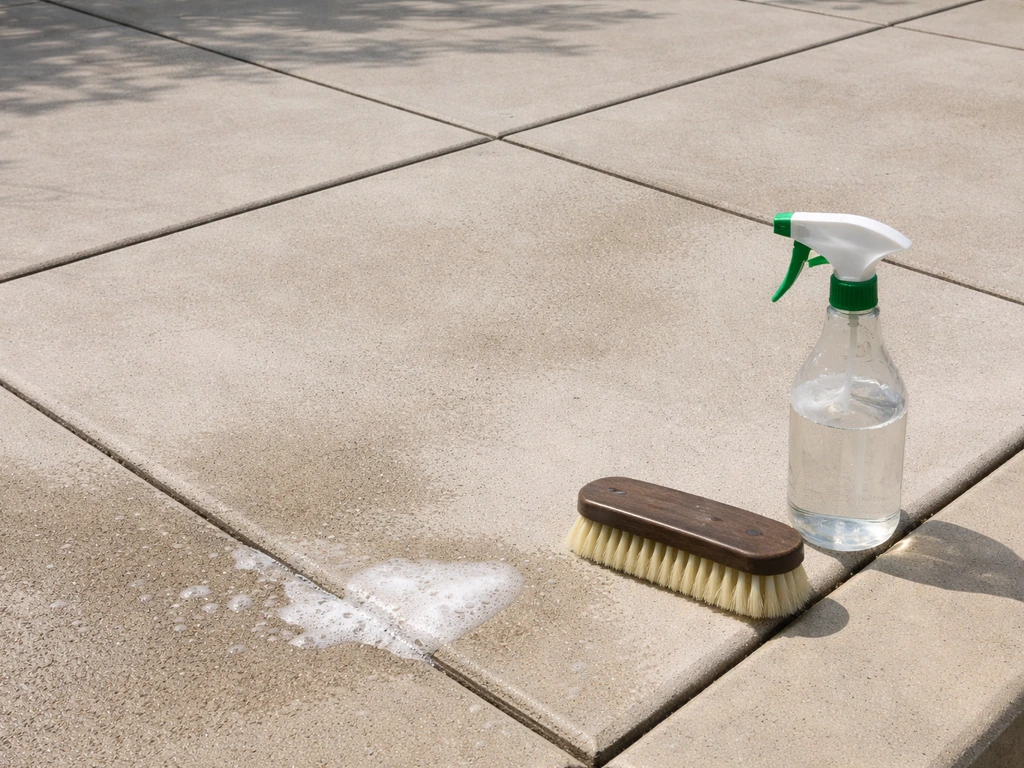
For most patio surfaces, a sodium hypochlorite-based cleaner (diluted bleach or a purpose-made biocide containing it) is the most effective thing you can use on lichen. Apply it diluted, let it dwell for 15 to 30 minutes, scrub with a stiff brush, and rinse thoroughly. If you have sandstone, slate, or other sensitive natural stone, swap to an oxygen bleach (sodium percarbonate) product instead, since chlorine bleach can damage softer stone over time. Pressure washing helps lift dead lichen afterward but should not be your first move, and on clay pavers or delicate stone you barely need any pressure at all.
Best Patio Cleaner for Lichen: What to Buy and How to Use
Rhea Lang
28 Jun 2026
Is that actually lichen? How to tell it apart from algae and moss
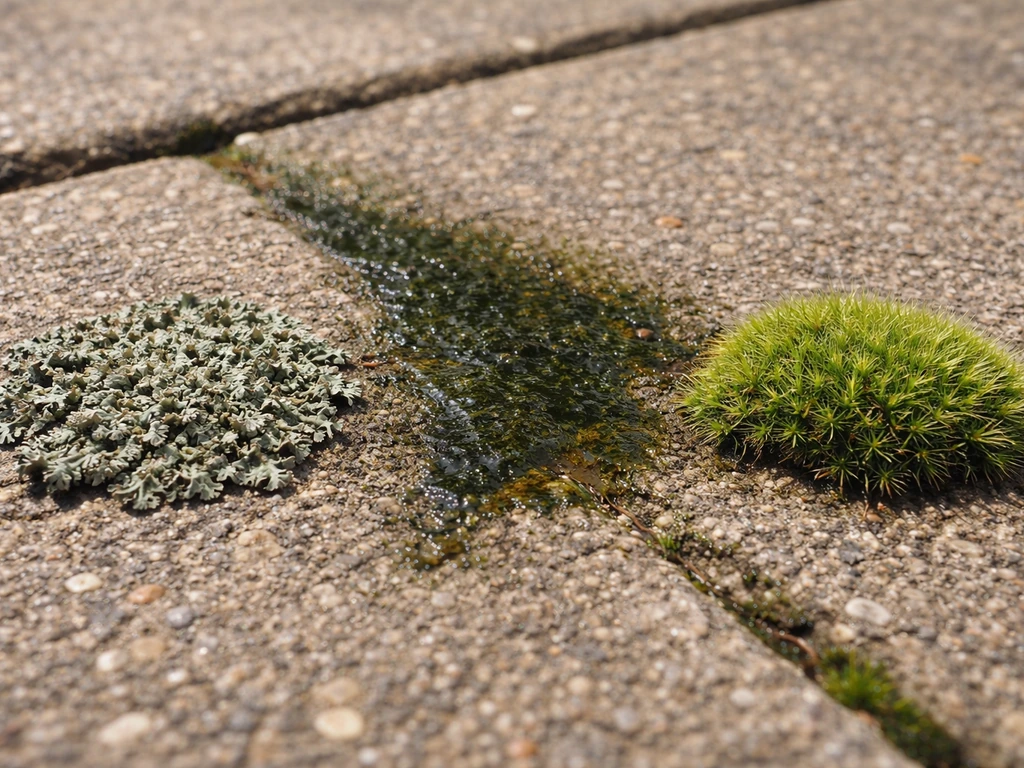
Getting this right matters because algae, moss, and lichen respond differently to cleaners. I have seen people scrub for an hour with the wrong product because they thought they had algae when they actually had lichen, and it just would not budge.
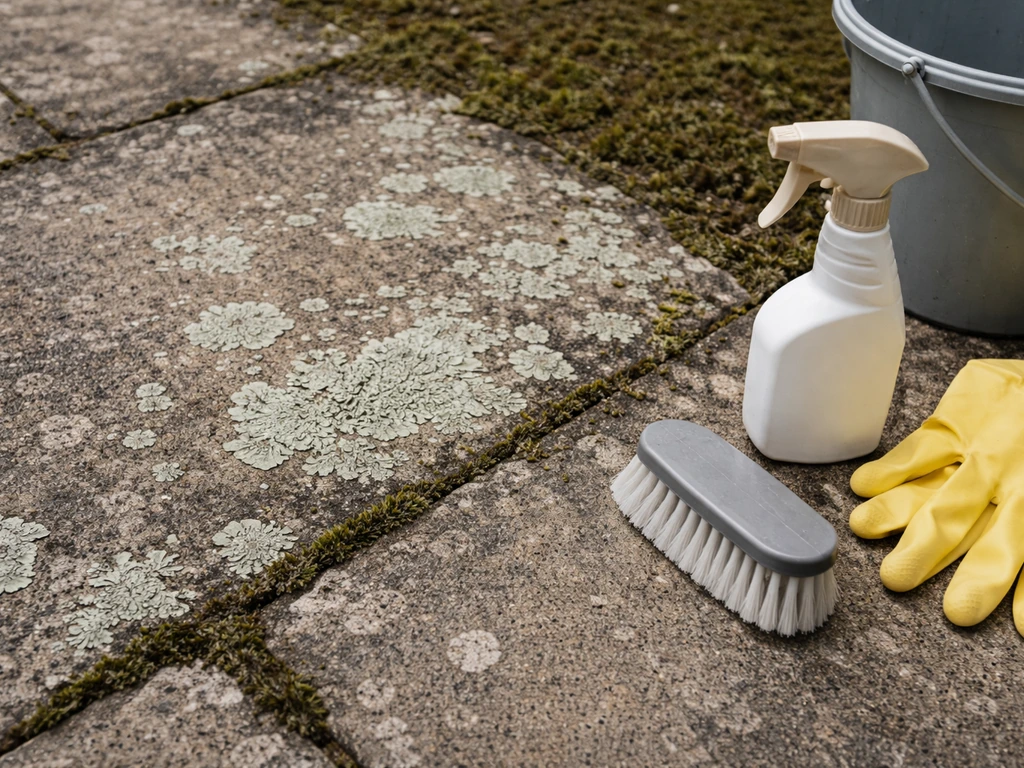
Lichen is a partnership between a fungus and an alga (or cyanobacterium), which is why it behaves so differently from a simple green film. Lichens are symbiotic partnerships between a fungus and an alga (or cyanobacterium), and their identification often relies on visible features such as color, texture, growth form, and reproductive structures. It comes in a few recognizable growth forms. Crustose lichen is the most common type you will find on patios: it forms a tight, paint-like crust that is almost impossible to lift with a fingernail and looks grey, orange, yellow, or white depending on the species. Foliose lichen has a leafy, lobed appearance and lifts slightly at the edges. Fruticose lichen is more shrubby or hair-like and is less common on horizontal paving. On stone or brick, you will usually be dealing with crustose types.
Algae is much easier to remove and looks quite different. It typically appears as a bright or dark green film, sometimes slimy or powdery. One thing that trips people up is Nostoc, a cyanobacterium that looks like a greenish jelly when wet and dries to a black, crusty patch. That one can look like lichen, but it responds well to standard algae cleaners. Moss is spongy and soft to the touch, grows in shaded damp spots, and pulls away from the surface fairly easily. Lichen, by contrast, is hard, dry, and bonded tightly to the stone. If you cannot get a fingernail under it and it has that crusty, painted-on appearance, it is lichen.
| Growth | Appearance | Texture | How it lifts | Best first cleaner |
|---|---|---|---|---|
| Lichen | Grey, orange, yellow, or white crust; leaf-like or shrubby patches | Hard, dry, bonded tightly | Very difficult, needs chemical dwell time | Sodium hypochlorite or sodium percarbonate biocide |
| Algae | Green film, powdery or slimy; black crust when dry (Nostoc) | Slippery or powdery | Fairly easy after soaking | Algaecide or diluted bleach |
| Moss | Green, spongy cushions | Soft and moist | Lifts easily by hand or brush | Standard patio cleaner or diluted bleach |
Best patio cleaners for lichen, broken down by surface type
There is no single best cleaner for every patio. If you are comparing options, this guide breaks down the best patio cleaner for common patio materials so you do not damage the surface. What works brilliantly on concrete can permanently damage sandstone. Here is what I recommend by surface, based on how each material handles the active ingredients involved.
Concrete and concrete pavers
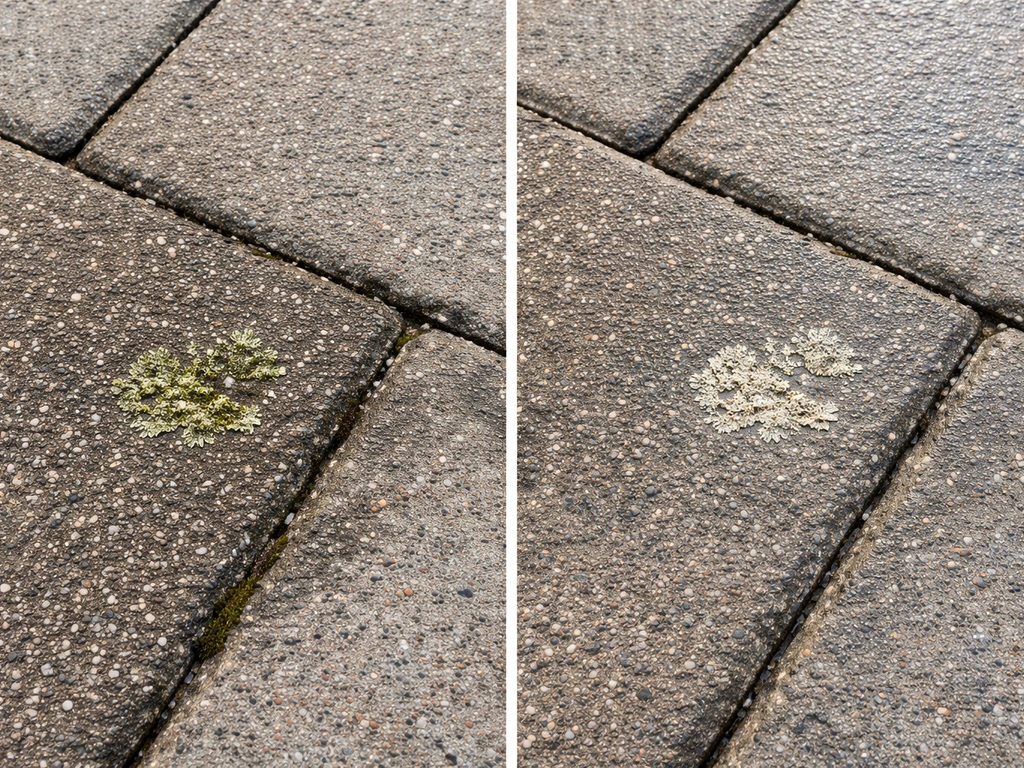
Concrete is the most forgiving surface to work on. A sodium hypochlorite solution (diluted household bleach at roughly 1 part bleach to 10 parts water, or a purpose-made biocide like Wet and Forget or similar) works extremely well here. For heavier colonization, a quaternary ammonium-based product is another solid option: these penetrate the surface and continue working after drying, which makes them good for prevention too. Apply, let it dwell 15 to 30 minutes, scrub with a stiff deck brush, and rinse with clean water. Avoid raw, undiluted acids on concrete, as these cause etching and long-term surface damage.
Natural stone (limestone, granite, travertine)
Natural stone needs a gentler approach. A mild bleach solution (well diluted, around 1:10) can be used to flush lichen from harder stones like granite, but you should always patch-test a hidden corner first. For limestone and travertine, I would lean toward oxygen bleach (sodium percarbonate mixed per the label) instead, since these stones are acid-sensitive and even mild chlorine products can cause surface marking over repeated use. Dwell for around 15 minutes, agitate gently, and rinse thoroughly with low pressure.
Sandstone
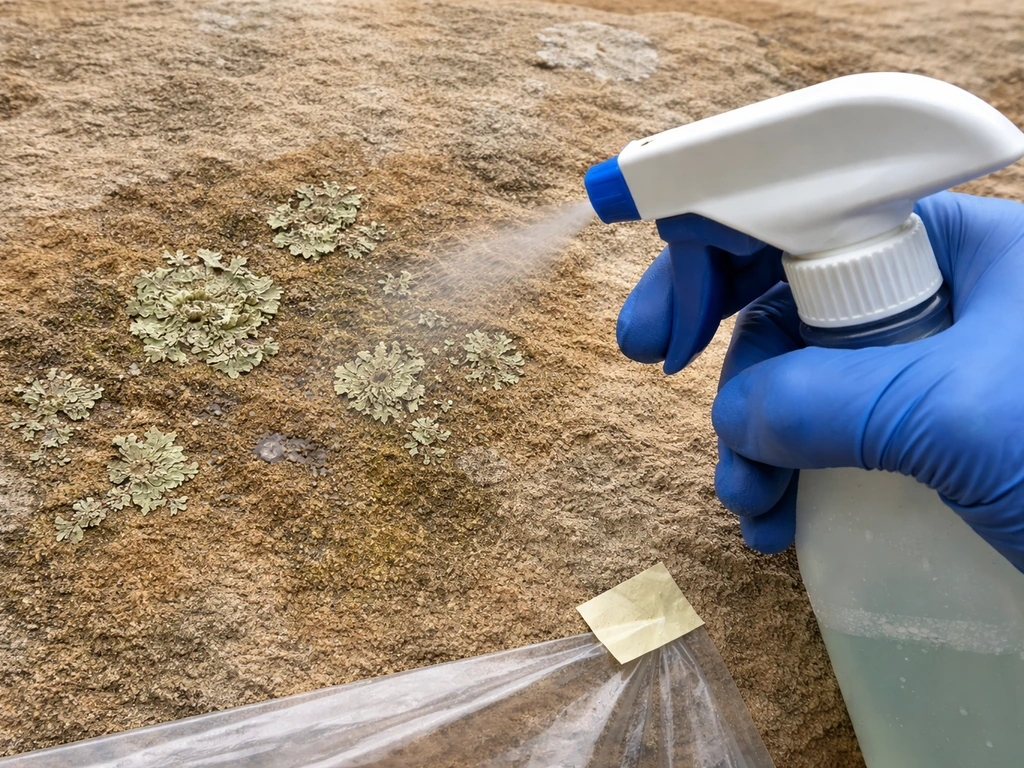
Sandstone is where you need to be most careful. Acid-based cleaners are essentially off the table, and even sodium hypochlorite bleach should be used cautiously, especially thick or gel-format products which are harder to remove and can stain or damage the surface. For early-stage lichen, a diluted sodium hypochlorite solution applied lightly and rinsed quickly is acceptable. For heavier growth, a sodium percarbonate-based cleaner is safer. Always test first, work on a cool cloudy day so the product does not dry before you can rinse it, and never leave bleach sitting on sandstone for extended dwell times.
Slate
Slate is relatively robust but can be scratched by aggressive scrubbing. A biocide-based cleaner (sodium hypochlorite diluted, or a proprietary product) works well. Avoid wire brushes or metal-bristle tools. A soft or medium nylon brush is enough. The key with slate is not using excessive pressure when rinsing, as some slate has naturally fine layers that can be undermined by repeated high-pressure washing.
Porcelain and ceramic tiles
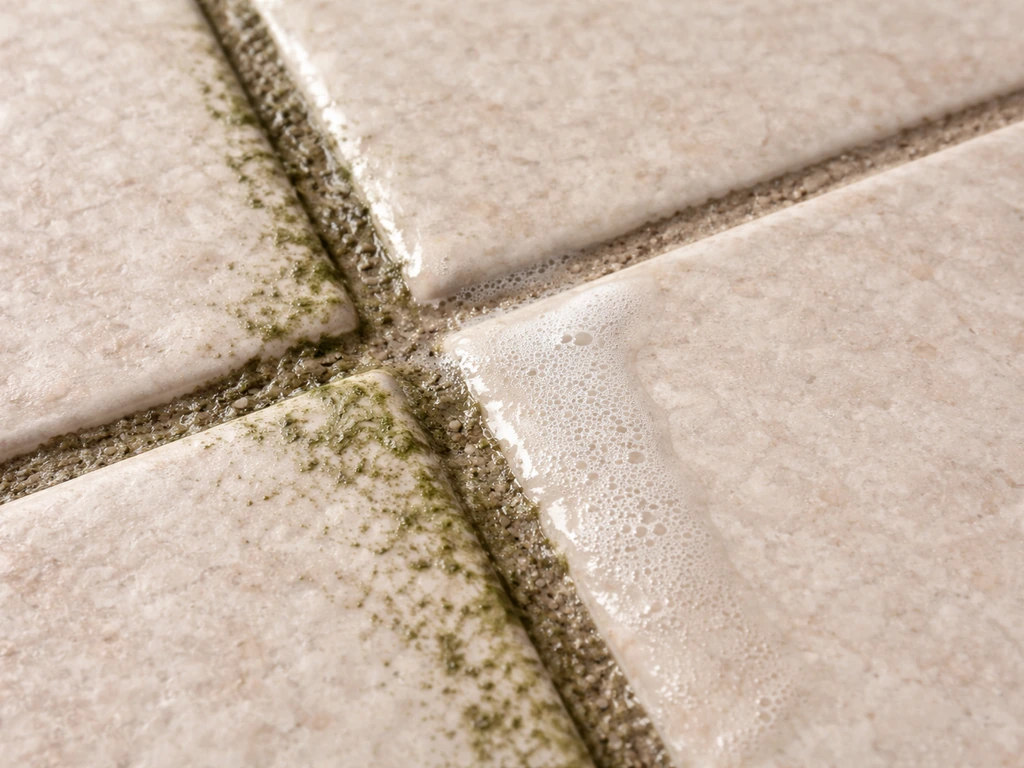
Porcelain and glazed ceramic are non-porous, so lichen has a harder time bonding, but it does still establish on the grouted joints and any textured surfaces. A diluted bleach solution or any standard algaecide works fine here. The main issue is the grout, which is porous and needs the same dwell time as the tile surface. A stiff brush worked into the grout lines makes a big difference. Avoid strong acids on grout.
Brick and clay pavers
Brick and clay pavers respond well to sodium hypochlorite biocides, but the mortar joints can be vulnerable to aggressive treatment. Use a well-diluted solution, dwell for 15 to 20 minutes, and rinse carefully. Excessive water pressure is the real enemy here, not the cleaner itself.
Chemical vs natural cleaners: which to use and how to apply them
Chemical cleaners (sodium hypochlorite and quaternary ammonium)
Sodium hypochlorite (bleach) is the most proven active ingredient for killing lichen on patios. It disrupts the biological partnership between the fungus and alga that makes lichen so resilient. The typical DIY dilution is around 1 part bleach (5 to 6% concentration) to 10 parts water, which works out to about 1. A patio-cleaner reviews guide on chlorine bleach use for lichen recommends a roughly 1:10 dilution (about 1.5 cups of 5 to 6% bleach in about 14 to 15 cups of water), with a short dwell time and immediate rinsing, plus patch-testing and label-following 1 part bleach (5 to 6% concentration) to 10 parts water. 5 cups of bleach in roughly 14 to 15 cups of water. Apply this to the affected area with a pump sprayer or watering can, allow it to sit for at least 15 minutes (30 minutes for thick, well-established lichen), scrub firmly with a stiff nylon brush, and rinse thoroughly with clean water. For softwashing, commercial operators use dilutions of around 1% to 6% active chlorine applied at low pressure and left to dwell for a similar period before rinsing.
Quaternary ammonium products (often sold as professional-grade hardscape biocides) are worth considering if you want longer-lasting protection. Some are applied and left to dry on the surface without rinsing, which means the active ingredient keeps working. These are particularly good if lichen keeps coming back in the same spot. Apply in the morning on a cool, dry surface, work from the bottom of any vertical surfaces upward to avoid streaks, and follow the product label on whether to rinse or leave in place.
Natural and low-tox alternatives (sodium percarbonate / oxygen bleach)
If you want a gentler option, particularly for sensitive stone or where runoff near plants is a concern, sodium percarbonate (oxygen bleach) is the best natural-leaning alternative. It breaks down into water and hydrogen peroxide, so it is less harmful to surrounding vegetation than chlorine bleach. Mix it per the label instructions, apply to the lichen-affected area, allow it to dwell for around 15 minutes, then scrub and rinse. Be aware: it is less aggressive on heavy lichen than chlorine bleach, and you may need to treat stubborn spots more than once. Some people ask about vinegar or other household acids. Avoid these on stone patios, especially limestone, sandstone, or anything calcareous. The acid reacts with the stone itself, not just the lichen.
Side-by-side comparison
| Cleaner type | Active ingredient | Best for | Dwell time | Rinse needed? | Sensitive stone safe? |
|---|---|---|---|---|---|
| Diluted bleach | Sodium hypochlorite | Concrete, granite, slate, porcelain, brick | 15–30 min | Yes, thoroughly | Avoid on sandstone/limestone |
| Oxygen bleach | Sodium percarbonate | All surfaces, especially sensitive stone | ~15 min | Yes | Yes |
| Quaternary ammonium biocide | Quat compounds | Concrete, hardscape prevention | Per label (some no-rinse) | Often no | Check product label |
| Commercial softwash fluid | Sodium hypochlorite (diluted) | Larger areas, professional results | 15–30 min | Yes | Avoid on soft/porous stone |
Pressure washing for lichen: when it actually helps
Pressure washing is best used after a chemical treatment, not instead of one. Here is why: lichen bonds tightly to the surface at a microscopic level. Blasting it with high pressure before treating it chemically can break the surface crust but leave the biological root structure behind, and it can also drive spores deeper into porous materials. Treat first, then use pressure to rinse and lift the dead growth.
For concrete, once the lichen has been treated and is visibly dying (often turning brown or white), a pressure washer set to around 3000 to 3500 PSI with a 15 to 20-degree fan nozzle will clear the debris effectively. Keep the nozzle moving and maintain a consistent distance of around 12 inches from the surface to avoid etching.
For clay pavers, brick, and mortared surfaces, this is where I have learned to be much more cautious. Excessive pressure blows out mortar joints and can cause long-term problems. Keep the pressure well below 500 PSI for these surfaces, use a wide 50-degree fan tip, and stay at least 12 to 18 inches from the surface. A medium-pressure rinse in the 100 to 400 PSI range is sufficient for most stone and brick after chemical treatment.
For sandstone, slate, and sensitive natural stone, I often skip the pressure washer altogether after a chemical treatment and just use a garden hose on a strong setting. The risk of surface damage from pressure simply is not worth it when a good soak and scrub achieves the same result.
Equipment, safety, and protecting your garden
What you need
- Stiff nylon deck brush or scrubbing brush (not wire bristle, which can scratch stone and leave rust marks)
- Pump garden sprayer or watering can for applying diluted solutions evenly
- Pressure washer with adjustable nozzles (15–20 degree for concrete, 40–50 degree for pavers and stone)
- Garden hose with a strong spray setting for sensitive surfaces
- Plastic sheeting or bin bags to cover nearby plants and pots during treatment
- Rubber or nitrile gloves, safety glasses or goggles, and old clothing
- Knee pads if you are working on a large area, trust me on this one
Personal protection
Always wear gloves and eye protection when working with bleach or biocide products. Bleach splashes on skin are irritating; in eyes they are genuinely dangerous. Wear old clothing because bleach will remove the colour from anything it touches. If you are using a pressure washer, never point the nozzle at yourself, pets, or other people. A 0-degree nozzle concentrates force enough to cause serious skin lacerations.
Protecting plants, grass, and pets
Bleach runoff is the main risk to the garden. Before you start, thoroughly wet the surrounding grass and plants with clean water, which dilutes any bleach that drips or runs off. Cover pots and nearby planting beds with plastic sheeting during application and rinsing. After you finish, flood the surrounding area with water again to dilute any residue. For quaternary ammonium products, check the label carefully since some are designed to remain on the surface and may have specific guidance about runoff and re-entry for children and pets. Never mix bleach with ammonia-based cleaners: the reaction produces toxic chloramine gas. Keep pets and children off the patio until it has been rinsed and is fully dry.
Step-by-step lichen removal: the full workflow
- Identify the growth. Use the visual guide above to confirm you are dealing with lichen, not algae or moss. If it is soft and spongy, treat it as moss. If it is a green slippery film, treat it as algae. If it is hard, crusty, and paint-like, proceed with the lichen workflow.
- Choose your cleaner based on the surface. Concrete and harder stone: diluted sodium hypochlorite or a commercial biocide. Sandstone, limestone, sensitive stone: sodium percarbonate (oxygen bleach). Check the product label confirms it is suitable for your surface material.
- Prepare the area. Wet surrounding grass and plants with water. Cover pots and beds with plastic sheeting. Put on gloves, safety glasses, and old clothes.
- Mix and apply. Dilute bleach approximately 1: 10 with water if using household bleach, or mix per label for commercial products. Apply liberally with a pump sprayer or watering can to all affected areas. Make sure every patch of lichen is well saturated.
- Let it dwell. Leave the product on the surface for 15 to 30 minutes. For thick, heavy lichen that has been there for years, go the full 30 minutes. You should see the lichen begin to change colour from grey or green to brown or white as it dies.
- Scrub. Work over the surface with a stiff nylon brush. On flat paving, use circular scrubbing motions. Pay extra attention to grout lines and the edges of each slab where lichen tends to establish first.
- Rinse. Flush the area thoroughly with clean water. A garden hose is fine for sensitive surfaces. A pressure washer at appropriate settings can be used on concrete and robust paving to help lift dead material.
- Assess and repeat if needed. Stubborn or very old lichen may need a second treatment after a few days. Particularly thick growth that has been on the surface for many years may take two or three treatments to fully clear.
- Flood the surrounding area. After you are done rinsing the patio, flood the adjacent grass and planting beds with clean water one more time to dilute any bleach residue.
One honest expectation to set: lichen that has been on a surface for several years will not vanish instantly, even with the right cleaner. The organism dies within the dwell period, but the physical crust can take a few weeks to fully break down and wash away with rain. In some cases, particularly on rough or heavily textured stone, you may see a faint stain or ghost mark for a few weeks after the growth has been killed. This fades with weathering. Patience matters more here than applying more and more product.
Aftercare and keeping lichen from coming back
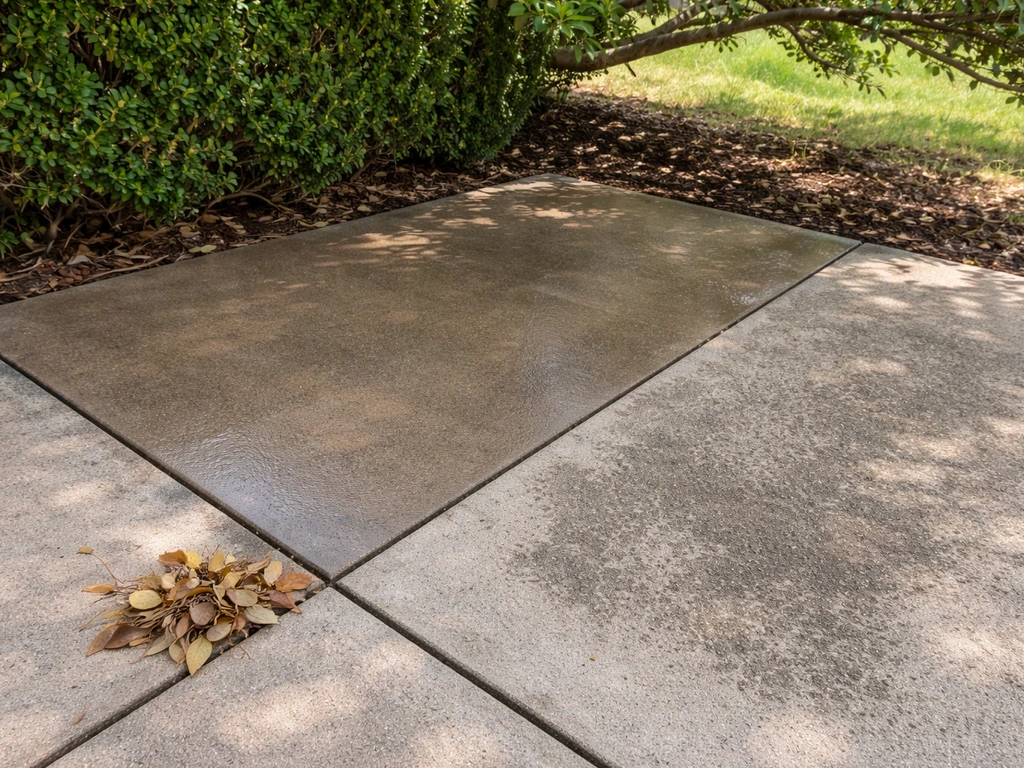
Lichen comes back when conditions stay damp, shaded, and undisturbed. The main long-term lever is reducing moisture and increasing airflow. Trim back overhanging trees or shrubs that keep one section of the patio in constant shade. Clear leaves and debris regularly, because decaying organic matter creates exactly the kind of damp, nutrient-rich microenvironment where lichen establishes fastest.
Sealing your patio is one of the most practical prevention steps, particularly for porous concrete, sandstone, and natural stone. A good patio sealer reduces the amount of moisture the surface absorbs, making it much harder for lichen (and algae and moss) to get a foothold. Most sealers are touch-dry within about 30 minutes and fully cured within 4 hours at temperatures above 20 degrees C. Do not seal a newly installed patio too quickly: for block paving and artificial stone, waiting at least 3 months before applying sealer is standard advice.
For ongoing maintenance, a quaternary ammonium-based preventative spray applied every 10 to 14 days during the growing season (typically spring and autumn in the UK, or wet seasons in the US) will significantly slow lichen regrowth. Some of these products are designed to be applied and left to dry without rinsing, which makes the routine application very quick. Alternatively, a once-or-twice-a-year treatment with diluted bleach or oxygen bleach, ideally in early spring before the growth season begins, will keep things manageable.
If you are also dealing with algae or moss alongside the lichen, the same approach covers all three, and the best patio cleaners for moss and algae overlap significantly with what works on lichen. The key difference is always the surface material: matching the right active ingredient to what your patio is made from is what separates a clean result from a damaged one.
FAQ
Can I reapply the patio cleaner if the lichen is not fully gone the same day?
Yes, but do it cautiously. Rerunning bleach-like products too soon can trap a soaked crust that then takes longer to break down. Wait until the dwell time has worked and you have rinsed, then reassess after drying. If it is still firmly crusted, spot-treat once more (and consider switching from chlorine bleach to oxygen bleach on limestone, travertine, and sandstone).
Should I pressure wash before using cleaner to lift the crust faster?
No. Lichen removal happens during chemical dwell and then rinsing over time, but a “bleach soak then immediately pressure wash” can defeat the goal by breaking the crust before the biological kill is complete. Treat first, scrub, rinse, and only then use pressure if appropriate for the surface (and keep the PSI and nozzle distance within the material-specific limits).
Which is better for lichen, oxygen bleach or chlorine bleach?
The safest choice depends on your surface and your goal. If you want fastest kill and you are on concrete or brick/clay, chlorine (sodium hypochlorite) is usually stronger. For acid-sensitive stones (limestone, travertine, sandstone) or where you want a more plant-friendly option, oxygen bleach (sodium percarbonate) is typically the better direction, especially for heavier or repeated issues.
How can I tell if what I have is lichen or algae/moss (so I use the right product)?
If it is true lichen, it should feel hard and “painted on,” and you should not be able to lift edges with a fingernail. If you can easily scrape off with a fingernail, it is more likely moss or loose algae residue. Also watch for texture differences, Nostoc can look jelly-like when wet and then become a black crust, which often responds more like algae.
What brush should I use, and is a wire brush ever okay?
Metal-bristle or wire brushes increase scratch risk, especially on slate and softer natural stones, and they can grind lichen into surface pores rather than removing it cleanly. Use nylon bristles for most stone, and reserve stiffer tools only for forgiving surfaces like plain concrete where you can tolerate abrasion.
What weather or timing makes the biggest difference for lichen treatments?
For bleach-based products, cloudy cool conditions help you manage dwell time so it does not dry on the surface. For best results, keep the surface wet for the full dwell window, then rinse thoroughly. On sandstone, thicker products also increase stain risk, so stick to light application and a fast rinse if you do use hypochlorite.
Do I always need to rinse after applying biocide or bleach?
Rinsing is important for chlorine bleach and for many biocides. For some quaternary ammonium products, the label may allow “apply and leave to dry” without a full rinse. Always follow the specific product instructions, because rinsing too early can reduce performance, and not rinsing when the label requires it can increase runoff risk.
How do I protect my lawn and plants from bleach runoff?
Because runoff is a big risk, pre-wetting is not optional if you care about plants and grass. Wet surrounding soil, cover nearby beds in plastic if possible, and rinse the treated area thoroughly. For sensitive areas, a garden hose rinse after scrubbing helps dilute any remaining active ingredient in place.
Can I mix or alternate cleaners like bleach and vinegar to get faster results?
Avoid mixing cleaners. Never combine bleach with ammonia-based products, and do not mix bleach with acids (including household vinegar) on or near the patio, because dangerous fumes can form and it can also increase corrosion and surface damage. If you switch products, rinse fully and let the area dry before the next application.
Why does lichen keep coming back even after I treat it?
Yes, lichen can return in the same spots if moisture and shade stay unchanged. Focus on drainage and airflow first, trim back overhanging growth, clear leaf litter regularly, and fix recurring dampness. If regrowth is frequent, use a preventative quaternary ammonium spray on the schedule recommended by the label.
When should I seal the patio relative to cleaning lichen?
Generally, you should avoid sealing right before treatment, because leftover residues and dead growth can end up trapped under a new seal. After you treat, scrub, rinse, and let the surface dry completely, then confirm it is clean and chalk-free before sealing. If the seal is applied too soon, it can reduce the long-term appearance and effectiveness.
What safety steps are most important, especially if I use a pressure washer?
Gloves and eye protection are a minimum. Use old clothing, protect nearby materials from splashes, and keep children and pets off the area until everything is rinsed and fully dry. If using a pressure washer, never use a narrow zero-degree nozzle, and keep the jet moving to avoid concentrated damage.
Next Article
Best Patio Cleaner Homemade Recipes for Every Surface
DIY patio cleaner recipes for concrete, pavers, stone, and porcelain to kill mold, algae, rust, grease, pet stains.