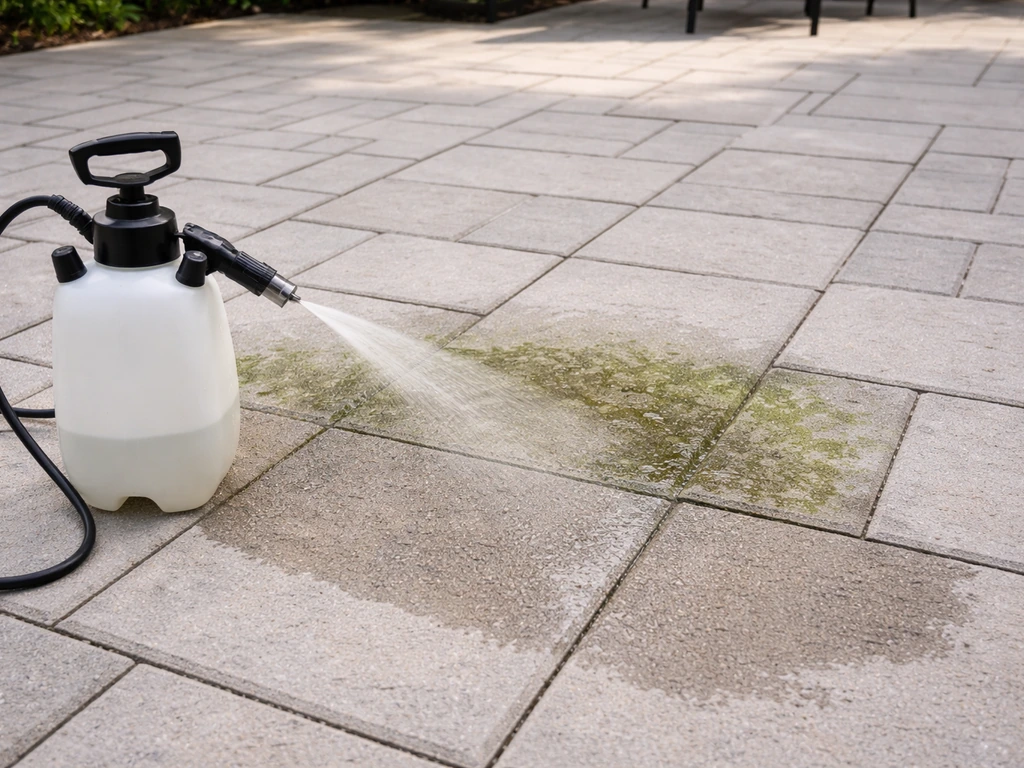
For most driveways and patios, a concentrated sodium hypochlorite-based cleaner (diluted to around 1–2% active NaOCl) or an oxygen-bleach (sodium percarbonate) product handles the vast majority of organic stains like mould, algae, and moss. For oil and grease on concrete, you want an alkaline degreaser first, then pressure-wash at 1,500–3,000 psi. For rust, oxalic acid at 1–3% dilution with a 10–30 minute dwell time is the go-to. Oxalic acid is widely recommended for rust removal from concrete and stone, but conservators advise testing on a hidden patch because acids can alter colour, etch calcareous stones (marble, limestone), and damage some sealants or nearby metal fixtures if concentration or contact time are not controlled, see Rust Stains on Concrete: Oxalic Acid, Chelators, and Safer Methods (craftingwithconcrete). The right choice depends on your surface type, your stain, and how much effort you want to put in, so this guide walks through all of it.
Best Patio and Driveway Cleaner: Top Picks & Surface Guide
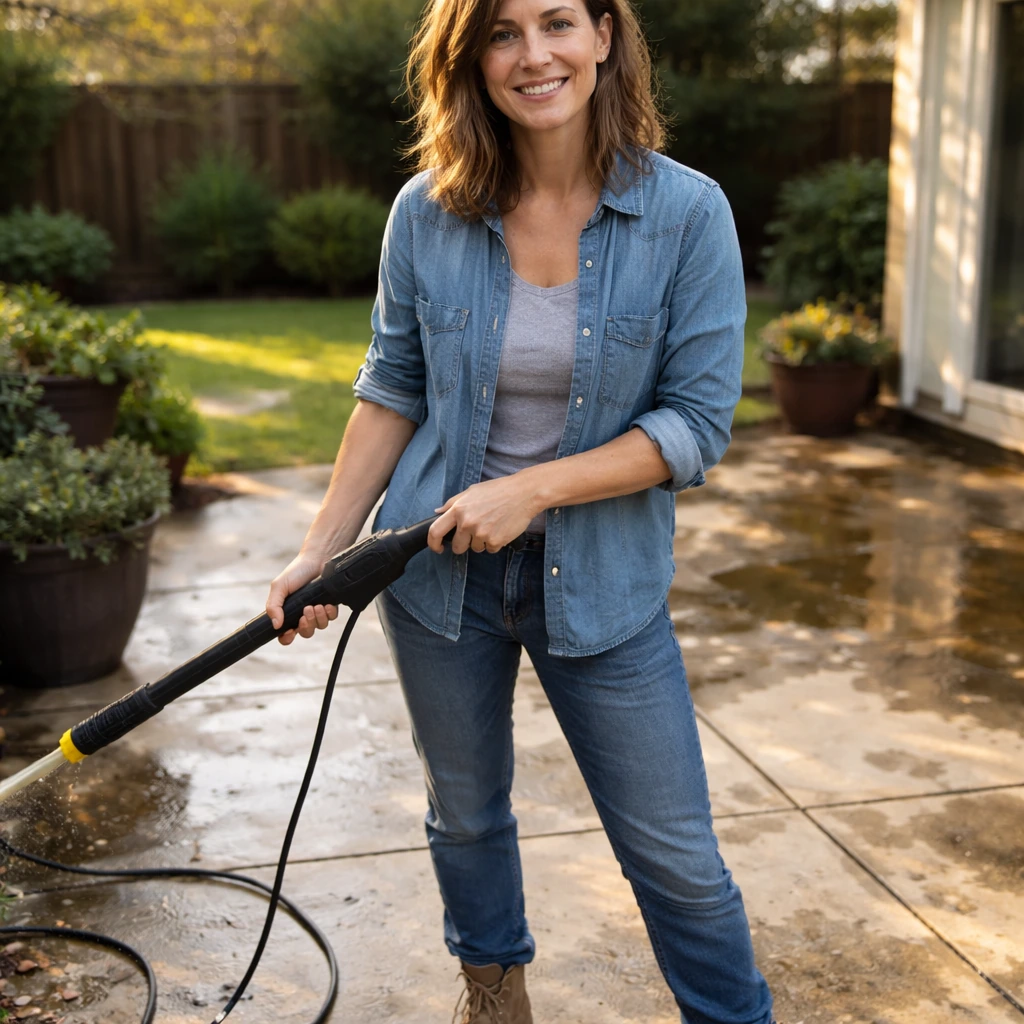
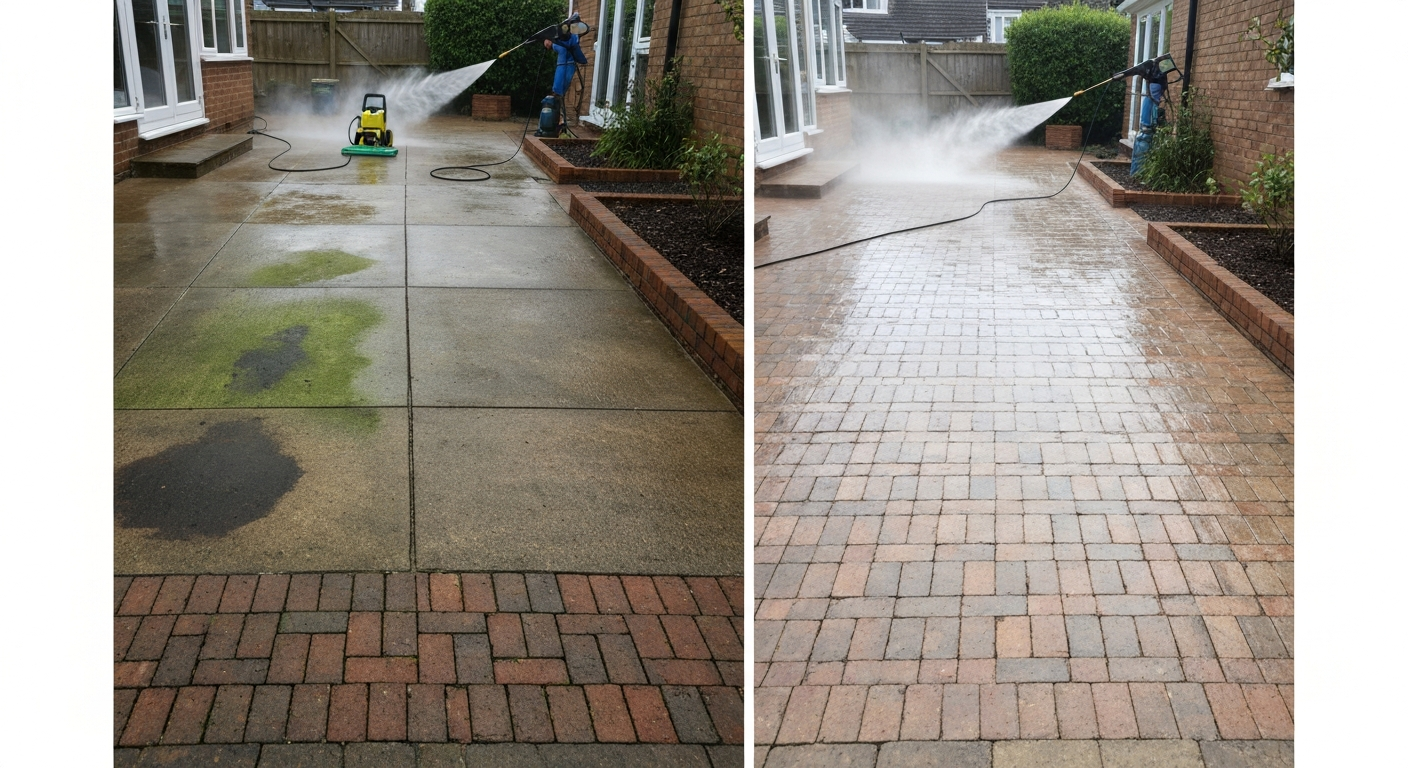
Who this guide is for and how to use it
This guide is for homeowners who want to clean a patio, driveway, or outdoor surface and actually get it right the first time. Whether you're dealing with a green algae-covered sandstone patio, a grease-stained concrete driveway, a mouldy brick pathway, or pet stains on porcelain tiles, the right product and technique depend heavily on your specific situation. I've tested products and methods across concrete, Indian sandstone, slate, brick, and porcelain surfaces over several years, and I'll share what genuinely works alongside the evidence-based guidance behind each recommendation.
Start with the buying checklist and the tested shortlist to find your product quickly. Then jump to the surface-specific or stain-specific section that applies to you. If you're unsure whether to use chemicals, a pressure washer, or natural solutions, the comparison section will sort that out. The equipment overview at the end helps you pick the right tools to go alongside whatever cleaner you choose.
Quick buying checklist: how to choose the right cleaner
Before you buy anything, run through these six questions. They'll eliminate most of the wrong choices immediately.
- What surface are you cleaning? Porcelain, sandstone, slate, brick, concrete, and natural stone all have different tolerances for acids, alkalis, and pressure. Acid-based cleaners will etch calcareous stones like limestone and marble. High pressure will damage friable sandstone.
- What is the primary stain? Organic growth (algae, mould, moss, lichen) responds to oxidising cleaners. Oil and grease need an alkaline degreaser. Rust needs an oxalic acid or chelating product. Pet stains and urine need an enzymatic cleaner with a long dwell time.
- Do you have a pressure washer? Some concentrated products are designed to be applied and rinsed with a pressure washer. Others work fine with a garden hose or stiff brush. Know your setup before you buy.
- Are there plants, pets, or drains nearby? Chlorine bleach products carry real aquatic toxicity risk and can scorch surrounding plant life. Oxygen-bleach products are significantly gentler. Check drain proximity and plan to avoid runoff.
- Is your surface sealed or unsealed? Sealed surfaces are more resistant to chemical penetration, but some aggressive cleaners or acids can strip sealants. Test on a hidden area first — always.
- What is your budget and cleaning frequency? A bulk sodium percarbonate powder costs a fraction of branded ready-to-use bottles and covers far more area. For one-off cleans, ready-to-use products are convenient. For regular maintenance, concentrate or powder wins on cost.
At-a-glance tested shortlist: top picks by use case
These are the product types and specific recommendations I'd point someone toward depending on their situation. I'll go into more detail on each category in the sections below.
| Use Case | Product Type | Top Pick / Best Approach | Notes |
|---|---|---|---|
| General patio (algae, moss, mould) | Sodium percarbonate (oxygen bleach) or dilute NaOCl | Patio Magic (concentrate) or Pro-Kleen Patio Cleaner | Safe for most surfaces; test on sandstone first |
| Driveway (concrete, tarmac) | Alkaline degreaser + pressure washer | Buster Tough Stain Remover or Maxiscrub Driveway Cleaner | Pre-apply degreaser, dwell 5–10 min, pressure wash at 2,000–3,000 psi |
| Rust stains (concrete/stone) | Oxalic acid cleaner | HG Rust Remover or Bar Keepers Friend (powder) | 1–3% dilution, 10–30 min dwell, rinse thoroughly |
| Natural stone patio (sandstone, slate) | Oxygen bleach or specialist stone cleaner | Lithofin KF Algae-Ex or sodium percarbonate mix | Keep pressure below 1,200 psi; wide-fan nozzle only |
| Porcelain patio tiles | pH-neutral or mild alkaline cleaner | LTP Porcelain Tile Cleaner or Fila Cleaner Pro | Avoid acids entirely; 25–40° nozzle at moderate pressure |
| Brick and block paving | Dilute bleach (0.5–1% NaOCl) or sodium percarbonate | Pro-Kleen 5-in-1 or Brintons Patio Cleaner | Repoint any damaged mortar before cleaning |
| Pet stains and urine | Enzymatic cleaner | Simple Solution Outdoor or Biokleen Bac-Out | 10–24 hr dwell on porous concrete; repeat as needed |
| Patio furniture | Mild detergent or specialist furniture cleaner | Fenwick's Outdoor Furniture Cleaner or diluted washing-up liquid | Avoid bleach on aluminium and powder-coated surfaces |
Best outdoor patio cleaner: overall recommendations
For most patios, an oxygen-bleach (sodium percarbonate) cleaner is my first recommendation. See the full best outdoor patio cleaner recommendations for tested top picks and detailed usage guidance. It handles algae, mould, mildew, and green growth effectively, it's far less aggressive toward surrounding plants and drains compared to chlorine bleach, and it works on the majority of common patio surfaces including concrete, brick, and most natural stones. Dissolve at roughly 4–6 oz per gallon of warm water for heavy organic build-up, apply with a watering can or pump sprayer, leave for 15–20 minutes, agitate with a stiff brush, and rinse. For maintenance cleaning, drop to about 2 oz per gallon.
For faster kill on severe green or black algae, a sodium hypochlorite-based product at around 1–2% active NaOCl (typically a 1:5 to 1:10 dilution of standard household bleach, or a ready-mixed concentrate like Patio Magic or Jeyes Fluid) delivers quicker results. The CDC recommends a 1:10 dilution of 5.25% bleach as an effective working solution, and soft-wash industry practice uses 10–30 minutes of dwell time before rinsing, depending on the surface and label guidance. I've used this method many times on heavily colonised brick and block paving with excellent results. Just protect your plants, rinse thoroughly, and never mix bleach with any acid or ammonia-based product.
Surface-specific recommendations
Concrete patios and driveways are the most forgiving surface. You can pressure wash at 1,500–3,000 psi, use alkaline degreasers for oil stains, and apply bleach or sodium percarbonate for organic growth. For grease, pre-apply an alkaline degreaser, let it dwell for 5–10 minutes, agitate with a stiff brush, and pressure wash with good water flow (aim for at least 1.5–2.0 GPM). For older or porous concrete, drop the pressure and pre-wet the surface first to avoid blasting out aggregate.
Indian sandstone and natural riven sandstone need more care. The GSA technical guidance recommends starting at 100–400 psi for initial cleaning and not exceeding 400–600 psi for rinsing, with a high water flow rate of 3–4 GPM. UK conservation practice and BS 8221 guidance suggest keeping jet pressures below 1,200–1,600 psi for these stones, using wide-fan nozzles (25–40°) and maintaining a stand-off distance of at least 30–40 cm. I learned the hard way that a 15° nozzle at close range will etch the surface of softer Indian sandstone permanently. Always start on a hidden area, and consider a specialist stone cleaner like Lithofin KF Algae-Ex rather than straight bleach if you're at all uncertain.
Porcelain patio tiles are dense and largely non-porous, which makes them relatively easy to clean but also unforgiving of acid cleaners, which can etch the surface glaze and dull the finish permanently. Use pH-neutral or mildly alkaline cleaners, a 25–40° pressure washer nozzle at moderate pressure (around 1,200–1,500 psi), and avoid any product containing hydrochloric or oxalic acid unless you are specifically targeting a confirmed rust stain in a test area first.
Slate patios sit somewhere in between. Soft or friable slate is vulnerable to high pressure, so keep it below 1,200 psi and use a specialist or oxygen-bleach cleaner rather than chlorine bleach, which can discolour certain slate types over time. Hard Welsh slate handles moderate pressure better, but the same wide-nozzle, controlled stand-off approach applies. A specific guide covering patio mould and algae, including treatment timing and seasonal approach, goes into more depth on this. For a focused comparison of products and treatment timing, see our guide to the best patio mould cleaner.
Stain-specific solutions
- Algae and green growth: sodium percarbonate or dilute NaOCl (0.5–2%), 15–30 min dwell, rinse thoroughly. Reapply a biocidal treatment or sealant to slow regrowth.
- Mould and mildew: same approach as algae; increase concentration slightly for black mould. Allow longer dwell time on porous surfaces like brick and mortar joints.
- Moss: a biocidal bleach-based product works well, but physical removal with a stiff brush first reduces product load. Contact time of 20–30 minutes before rinsing is standard.
- Rust stains: oxalic acid at 1–3% concentration (up to 5–10% for stubborn stains on concrete). Apply, monitor dwell time (10–30 min), and rinse immediately and thoroughly. Do not use on marble, limestone, or calcareous stones as it will etch them. Test first.
- Oil and grease: alkaline degreaser, pre-applied before pressure washing. Agitate with a stiff brush. Hot-water pressure washers significantly outperform cold-water machines on thick grease.
- Pet urine and organic odour: enzymatic cleaner applied wet and kept wet for 10–24 hours on porous concrete. May need two or three applications for old or deeply penetrated stains.
Best patio furniture cleaners: quick picks
Patio furniture cleaning is a different job to cleaning the ground surface beneath it, and the products don't always overlap. The primary mistake I see is people reaching for a bleach-based patio cleaner and applying it to powder-coated aluminium or synthetic rattan, bleach degrades many coatings over time and will eventually cause discolouration and surface damage. The safest universal approach for furniture is a warm water and mild detergent solution (regular washing-up liquid works fine for routine cleaning), applied with a soft cloth or sponge and rinsed off. For deeper cleans, a specialist outdoor furniture cleaner like Fenwick's Outdoor Furniture Cleaner or Armor All Outdoor Furniture Cleaner is formulated to lift grime without attacking coatings or plastics.
For teak and hardwood furniture, use a teak cleaner or oxalic-acid-based wood cleaner to restore colour and remove weathering greyness, then re-oil after drying. For aluminium frames, avoid any acid-based product. For plastic or resin wicker, a diluted oxygen-bleach solution applied briefly, then rinsed, handles mould and green algae without the harshness of chlorine bleach. If you want deeper guidance on this topic, a dedicated guide covering the best patio furniture cleaner options covers specific products for each material type in much more detail.
Best outdoor patio mops: top models and mop vs brush
Outdoor mops are underrated tools for applying and working in liquid cleaners on flat patio surfaces. They cover ground faster than a scrubbing brush, are easier on your back, and certain designs hold enough liquid to keep a sodium percarbonate or bleach solution wet on the surface for its full dwell time. For specific model recommendations and buying advice, see our guide to the best outdoor patio mop for picks suited to different surfaces and budgets. The best outdoor mops for patio use are those with stiff, durable microfibre or PVC strip heads, robust aluminium or fibreglass handles (plastic handles snap under scrubbing pressure), and a head that can be wrung out or replaced when worn.
Top choices I've used include the Leifheit Clean Twist M Ergo (excellent for applying cleaner and working it into textured surfaces), the Vileda SuperMocio 3 Action XL (good coverage on large flat areas), and for heavy-duty use, a deck scrub brush mop like the ones made by Deck Boss or Swobbit, which have stiff bristles for working product into rougher concrete and block paving. A full guide to the best outdoor patio mop options breaks down the field in more detail, including which head designs suit different surface textures.
The question of mop vs brush comes down to surface texture and task. On smooth porcelain or polished concrete, a mop applies and collects liquid efficiently. On heavily textured or riven surfaces like Indian sandstone or riven slate, a stiff-bristle deck brush gets into the surface grain far better and does more mechanical work on embedded grime. For block paving with deep joints, a narrow grout brush or hand scrubber is needed to get into the gaps regardless of what you use on the flat faces. In practice, I use both: a pump sprayer to apply the cleaner, a stiff brush to agitate, and a mop or squeegee to move diluted residue toward a drain before final rinsing.
Chemical cleaners vs natural solutions vs pressure washing
These three approaches are not mutually exclusive, the best results almost always combine elements of all three. But understanding what each does well (and where it falls short) helps you plan your clean without wasting money or damaging your surface.
| Approach | Best For | Limitations | Typical Cost | Environmental Impact |
|---|---|---|---|---|
| Chlorine bleach (NaOCl) | Fast kill of algae, mould, moss; heavy organic growth on concrete and brick | Toxic to plants and aquatic life if not rinsed; can damage some coatings and natural stones; do not mix with acids | Low (diluted from household bleach) | High — prevent all runoff to drains and waterways |
| Oxygen bleach (sodium percarbonate) | Organic stains on most surfaces; safer around plants and drains; gentler on stone | Slower acting than chlorine bleach; less effective on severe black mould without agitation | Low-medium (bulk powder is very cost-effective) | Low — breaks down to water, oxygen and washing soda |
| Alkaline degreaser | Oil, grease, and heavy traffic grime on concrete and tarmac driveways | Limited effectiveness on organic growth; needs thorough pressure-wash rinse | Low-medium | Medium — dispose of oily rinse water responsibly |
| Oxalic acid cleaner | Rust stains on concrete, stone and brick | Etches calcareous stones; requires careful handling and PPE; neutralise and rinse thoroughly | Low-medium | Medium — neutralise before disposal |
| Enzymatic cleaner | Pet urine, organic odour, old organic stains on porous surfaces | Requires long dwell time; multiple applications for old stains; not effective on inorganic stains | Medium-high | Low — biodegradable enzymes |
| Pressure washing (water only) | Surface dirt, loose debris, pre-rinsing, post-chemical rinsing | Does not kill biological growth; can spread algae spores; can damage soft stone at high pressure | Low (if you own a machine) | Low — water only |
| Natural / vinegar-based solutions | Light maintenance cleaning; mild surface grime | Acetic acid (vinegar) etches calcareous stones and mortar; minimal biocidal efficacy vs. commercial products | Very low | Low, but acid runoff still problematic near masonry |
My recommendation for most homeowners: use sodium percarbonate as your baseline cleaner, add a dilute chlorine bleach solution only when you have severe or fast-spreading algae and moss, and save the oxalic acid and alkaline degreasers for specific stain problems. Pressure washing supports all of these, it pre-rinses the surface, removes loose debris, helps work product into the surface, and provides the final flush that removes dissolved contaminants. Used without chemicals, a pressure washer alone will remove surface dirt but leave biological growth alive in the pores of the material, and it will regrow within weeks.
On the natural solutions front: I've seen a lot of DIY recommendations for white vinegar on patios and driveways. I'd steer you away from it on anything except porcelain or glass. Acetic acid attacks mortar joints in brick paving, etches sandstone, and will gradually erode calcareous stones. It also has minimal biocidal effect on algae compared to an oxidising cleaner. Save the vinegar for your salad dressing.
A note on Rob Parker's cleaner
Rob Parker's Best Patio Cleaner has picked up a dedicated following in the UK, particularly among people who've had disappointing results with supermarket-brand patio cleaners. From what I've tested and researched, it sits in the sodium hypochlorite and surfactant category, with a formulation designed for ease of application and good dwell performance on British patio materials (sandstone, slate, concrete, block paving). A full breakdown of Rob Parker's Best Patio Cleaner is worth reading if you're specifically considering it, as it covers dilution ratios, surface compatibility, and honest user results in detail.
Equipment overview: what to buy alongside your cleaner
Pressure washers
For most homeowners, a cold-water electric pressure washer in the 1,400–2,000 psi range with a flow rate of at least 1.5 GPM is sufficient for patio and driveway cleaning. Brands like Kärcher (K4, K5, K7 series), Nilfisk, and Sun Joe all produce reliable machines at different price points. For heavy driveway work with thick grease or oil, a petrol-powered machine at 2,500–3,000 psi or a hot-water machine makes a real difference, the heat helps emulsify oils where cold water can just push them around. Whatever machine you use, the nozzle angle and stand-off distance matter as much as the pressure rating. A 0° (red) pencil nozzle concentrates all the force in a tiny point and will gouge or etch stone and concrete permanently. Use a 25° or 40° fan nozzle for surface cleaning, maintain at least 20–30 cm stand-off on hard surfaces and 30–40 cm on softer stone, and always sweep with the grain of the material.
Surface cleaners
A rotary surface cleaner attachment (like the Kärcher T-Racer or similar) is one of the best accessories you can add to a pressure washer for flat surface work. It spins two jets under a containment dome, cleaning evenly without the streaking you get from a hand-held lance. It also significantly reduces overspray and splash, which matters a lot when you're working near plant beds or fences. For a typical 30–50 square metre patio, a surface cleaner attachment saves significant time compared to sweeping with a lance.
Brushes, squeegees and mops
A stiff-bristle deck scrub brush on a long handle is essential for agitating chemical cleaners into porous surfaces and mortar joints. Choose one with a head width of at least 30 cm for efficiency on large areas, and with polypropylene or union fibre bristles rather than PVC if you're working with bleach-based products, as PVC degrades faster with repeated bleach exposure. A squeegee or outdoor mop is useful for gathering rinse water and moving dissolved residue toward a drain rather than letting it soak back into the surface or run off sideways. For application, a garden pump sprayer (5–10 litre capacity) or a watering can with a rose head gives even, controlled coverage of liquid cleaners over large areas without wastage.
Safety and PPE
This is worth saying plainly: concentrated bleach, oxalic acid, and alkaline degreasers are genuinely hazardous chemicals. OSHA HazCom standards and chemical SDS documentation consistently require chemical-resistant gloves (nitrile or neoprene), splash goggles or a face shield, waterproof footwear, and an impermeable apron when handling concentrates or spraying with powered equipment. High-pressure injection injuries from pressure washers are a documented medical emergency, the jet can penetrate skin without leaving an obvious wound, so never point a pressure washer at yourself or anyone else, and wear impermeable boots. Never mix bleach with acids (including vinegar or oxalic acid cleaners) or ammonia, this can generate chlorine gas or chloramines. Check your product SDS before mixing or diluting anything, and always work in a well-ventilated area.
Aftercare and maintenance
Once your patio or driveway is clean, applying a biocidal or algaecidal treatment helps slow the return of green growth, most patio sealants include this as part of their formulation. For natural stone, apply a breathable impregnating sealer (not a film-forming sealer, which traps moisture) after the surface has dried fully, typically 24–48 hours after cleaning in dry weather. Re-clean annually or biannually depending on shade exposure and rainfall levels in your area. Shaded patios in damp UK climates will green up within one season without a biocidal aftertreatment. On driveways, a re-application of alkaline degreaser spot-treatment every few months for oil drips is far easier than waiting for the stains to set deep into the concrete.
FAQ
Which cleaners are best overall for patios and driveways by use case (mould/algae, grease, rust, pet stains) and surface (concrete, stone, brick, sandstone, slate, porcelain)?
Top evidence‑based picks by use case: - Organic growth (mould, algae, moss): sodium hypochlorite (bleach) soft‑wash at ≈0.5–2% NaOCl for rapid kill; oxygen‑bleach (sodium percarbonate) for gentler/plant‑safer repeat maintenance. Works on concrete, brick, porcelain, most stone (test first on calcareous stone). - Grease/oil: alkaline/degreaser (proprietary concrete degreasers or caustic detergent) with agitation, followed by hot‑water or pressure rinse. Best for concrete and well‑sealed stone/driveways. - Rust/iron stains: oxalic‑acid based rust removers (1–3% typical) or commercial chelators; test first on coloured or calcareous stone. - Pet urine/organic odours: enzyme cleaners (extended dwell, repeated applications) on porous concrete, grout, and pavers. - General heavy dirt/traffic grime: pressure washer with detergent (alkaline or oxygen bleach depending on stain); concrete can accept higher pressures, fragile sandstone/slate need low‑pressure/soft‑wash or wide‑fan nozzles. Note: Rob Parker’s cleaner (if labelled as a masonry/patio product) can be evaluated against the above classes — treat as a proprietary blend and test for surface compatibility. See internal product reviews and how‑to guides on Patio Cleaner Reviews for specific brand testing and shortlists.
What dilution and contact times should I use for each chemical cleaner?
General practical guidance (always follow product label and test a small hidden area): - Sodium hypochlorite (household bleach ~5–6%): soft‑wash dilutions ~1:10 to 1:5 (≈0.5–2% NaOCl); contact 10–30 minutes depending on growth severity, then rinse. - Oxygen bleach (sodium percarbonate powder): maintenance ≈2 fl oz/gal (≈½–1% active), heavy ≈4–6 fl oz/gal; contact 10–20 minutes then scrub and rinse. - Alkaline degreaser: follow label; typical working dilutions are ready‑to‑use to 1:10 concentrate; contact few minutes, agitate and pressure‑rinse immediately. - Oxalic acid rust remover: ≈1–3% solution for most stains, monitor 10–30 minutes, rinse thoroughly and neutralize if necessary. - Enzyme/pet cleaners: use full strength per label; allow extended wet contact (hours; often 8–24 hrs) and repeat for deep penetration. Always avoid over‑long contact on sensitive stone; rinse and neutralize as recommended.
What pressure washer settings, nozzle types and techniques should I use on different surfaces?
Pressure‑washing rules: - Nozzle & angle first: avoid 0° pencil nozzles. Use 25–40° wide‑fan nozzles for masonry and delicate surfaces. - Concrete/driveways: PSI commonly 1,500–3,000+ and 1.5–3.0 GPM for heavy grime; use narrower fan (15–25°) for stubborn spots with care. - Porous/soft stone (sandstone, friable slate, some reclaimed brick): start low (100–400 psi pre‑wet), then medium (≈400–600 psi) with wide fan and 12–24 in stand‑off; keep nozzle moving to avoid etching. - Pavers/porcelain: moderate pressure with fan nozzle; porcelain tiles often resist higher pressure but grout can be damaged. - Technique: pre‑wet area, apply detergent downhill/top to bottom, allow dwell as label directs, agitate with a stiff brush on pavers/concrete, then rinse with steady sweeping motion, maintaining consistent distance. Test small area first.
How do I choose between chemical cleaning, soft‑wash and pressure washing?
Decision flow: - Start with the least aggressive: broom and water + scrubbing. - For biological growth on porous/vertical/fragile masonry use soft‑wash (bleach‑based low‑pressure application) to kill spores with minimal mechanical force. - For heavy oil/grease or hardened dirt on durable concrete use pressure washing (possibly hot‑water and degreaser). - For delicate/historic masonry, consult conservation guidance and avoid abrasive/high‑pressure or strong acids. Consider surface porosity, age, and previous sealants; always test and combine chemical pre‑treatment with suitable pressure settings rather than relying on pressure alone.
What safety, PPE and environmental precautions should I follow when using these cleaners?
Essential safety practices: - PPE: chemical‑resistant gloves, splash goggles or face shield, impermeable footwear, apron, and hearing protection for pressure washer operators. For sprays/aerosols consider respiratory protection. - Chemical hazards: never mix bleach with acids or ammonia (produces chlorine gas/chloramines). Follow SDS requirements and label instructions. - Contain runoff: avoid discharge to storm drains or natural watercourses; use absorbents, berms, or collect and neutralize rinse water if contaminants (chlorine, heavy oils) present. - Disposal: follow local hazardous waste rules for concentrated residues; dilute neutralized rinse water per local guidance only if permitted. - Pressure‑washer injury prevention: keep clear exclusion zone, never point wand at people/animals; seek immediate medical attention for injection injuries.
How should I treat specific stains (mould/algae, grease/oil, rust, pet stains) step‑by‑step with recommended dilutions and techniques?
Step‑by‑step recipes: - Mould/Algae/Moss (porous masonry): 1) Sweep/loosen debris. 2) Apply sodium hypochlorite mix 1:10–1:5 (0.5–2% NaOCl) with low‑pressure sprayer; allow 10–30 minutes dwell. 3) Agitate with stiff brush where needed. 4) Rinse with wide‑fan nozzle at safe distance. Repeat for stubborn regrowth. - Grease/Oil (driveway concrete): 1) Absorb fresh spills with cat litter/sawdust. 2) Apply alkaline degreaser per label (often concentrate 1:5–1:10 or ready‑to‑use). 3) Agitate with stiff bristle brush and let sit minutes. 4) Pressure‑wash with hot water if available or high‑flow cold water; repeat for deep stains. - Rust: 1) Wet area. 2) Apply oxalic acid solution ≈1–3% (follow product instructions). 3) Allow 10–30 minutes, monitor. 4) Scrub lightly and rinse thoroughly; neutralize with baking soda rinse if recommended. - Pet/Urine: 1) Remove surface debris. 2) Saturate with enzyme cleaner (full strength) and ensure extended wet contact (hours). 3) Blot/air dry; repeat for deeply penetrated odours. Always test first.
Best Patio Mould Cleaner: Products, Use, Safety, Prevention
Find the best patio mould cleaner, pick by surface and active ingredient, use safely with step-by-step, prevent regrowth