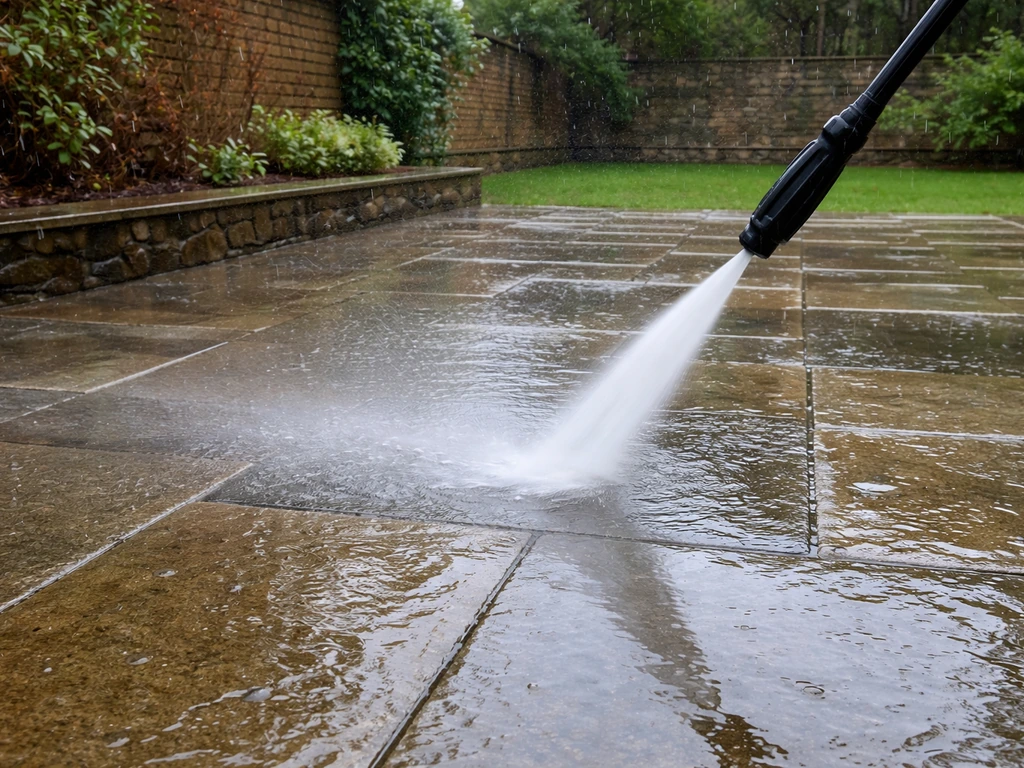
For most patios, a canister steam cleaner in the 1500W range with a tank of at least 40 oz, a steam temperature above 212°F, and a decent brush attachment set is the right buy. It will clear mold, algae, moss, mildew, light grease, and general grime from concrete, pavers, brick, and most natural stone without chemicals. It won't fully dissolve heavy oil stains or rust on its own, and it needs to be used carefully on softer stones and sealed surfaces. If you match the machine to your surface and your grime type, steam cleaning is one of the most effective and satisfying ways to get a patio looking new again.
Best Steam Cleaner for Patio: How to Choose and Use It
Rhea Lang
10 Jun 2026
What a patio steam cleaner actually does (and where it falls short)
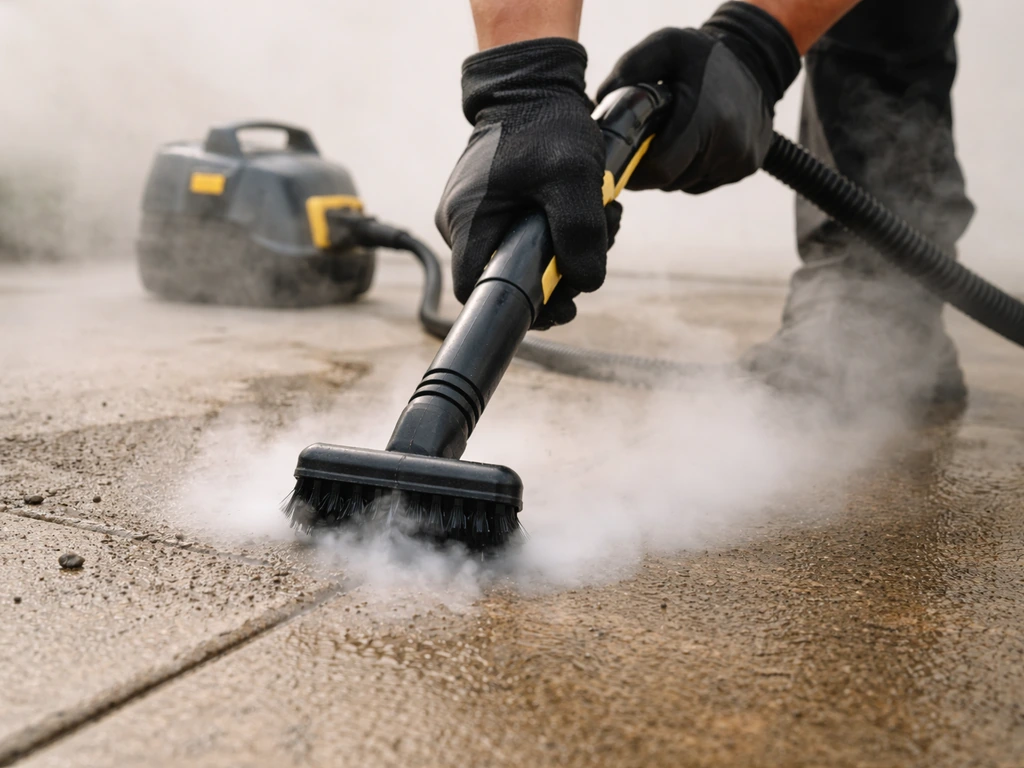
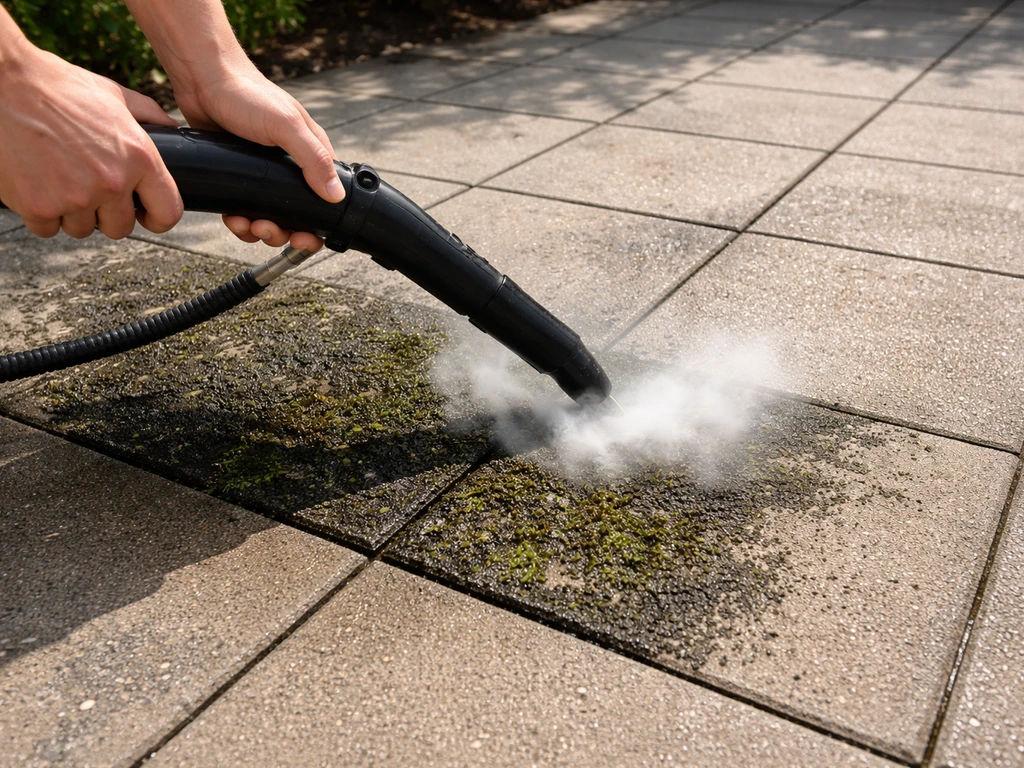
A steam cleaner works by superheating water to at least 212°F (100°C) and blasting that steam through a nozzle or brush head. The heat loosens dirt, kills mold spores and algae on contact, and lifts organic growth from the surface without needing bleach or other chemicals. For outdoor use, this is genuinely powerful: steam cuts through that black-green biofilm (algae, mold, mildew) that makes patios slippery and ugly, and it gets into grout lines and textured surfaces where a brush alone won't reach.
That said, steam has real limits you need to know before you buy. Greasy residues from barbecue fat or engine oil may not fully lift with steam alone. The heat softens and loosens grease, but dissolved particles can remain on the surface, so heavy oil contamination usually needs a degreaser pre-treatment first. Rust stains are a similar story: steam won't chemically break down iron oxide, so you'll still need an acid-based rust remover for those orange patches. And steam won't physically remove large debris, moss clumps, or thick lichen growth. Clear that by hand or with a stiff brush before you start steaming.
- Mold, mildew, algae, and moss: steam kills and lifts effectively
- General dirt, mud, and grime: clears well on most surfaces
- Light grease and food residue: manageable with the right brush and technique
- Heavy BBQ grease or oil stains: needs degreaser pre-treatment, steam alone won't finish the job
- Rust stains: steam won't remove them, use a dedicated rust remover
- Thick lichen or embedded moss root systems: scrape first, then steam
- Deep-set paint or sealant: steam can soften old sealants, which is a risk on some surfaces
Choosing the right steam cleaner for your specific patio surface
This is the part most buying guides skip over, and it's the most important part. Steam at high heat and pressure behaves very differently on concrete versus sandstone versus polished porcelain. Getting this wrong can etch a surface, strip a sealant, or open up grout lines. Here's how to think about it by material.
Concrete and exposed aggregate
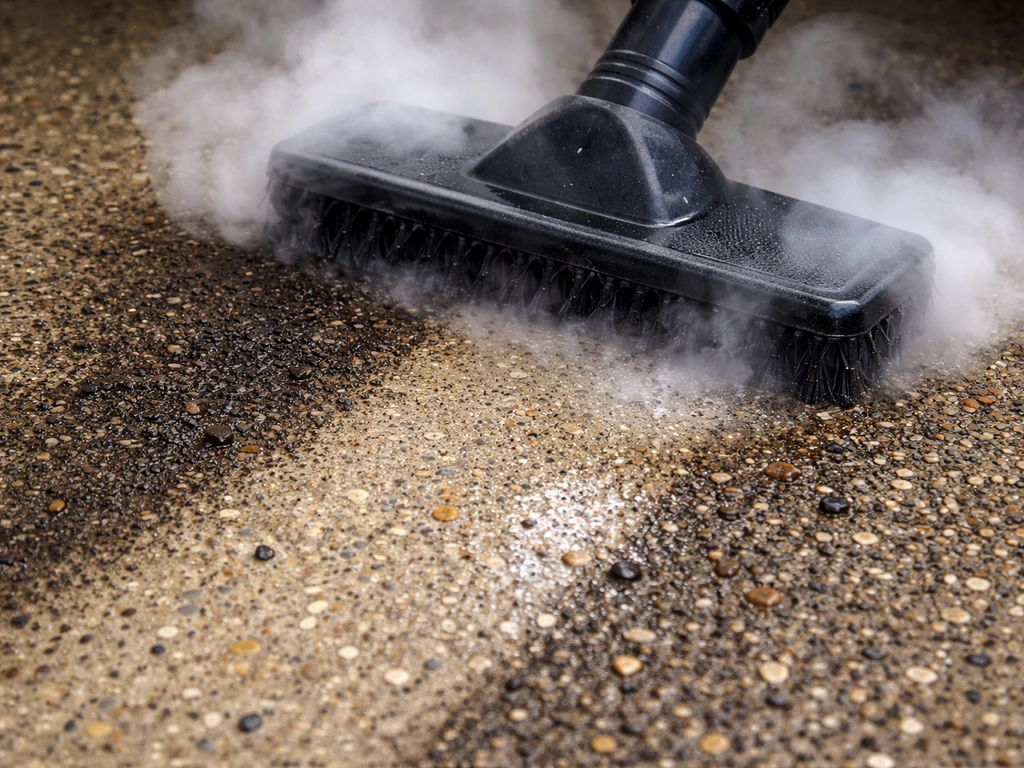
Concrete is the most forgiving surface for steam cleaning. You can use high heat and a firm brush attachment without much risk of damage. The main concern is sealed concrete: if your patio has a penetrating or topical sealer, prolonged steam in one spot can soften or lift it. Keep the steamer moving, and re-seal after cleaning if needed. For exposed aggregate, use a round brush rather than a flat nozzle to get between the stone pieces.
Clay brick and concrete pavers
Both handle steam well. The bigger issue with pavers is the joints. Polymeric sand can be dislodged by high-pressure steam aimed directly into the gap, so angle your nozzle across the joint rather than straight down into it. Clay brick is porous and absorbs moisture, so work in sections and let areas dry before walking on them. If you're planning to re-seal after cleaning (which I'd recommend for pavers), check out Techniseal's guidance on using a pre-seal cleaner and waiting until the surface is fully dry before any sealer goes down.
Natural stone: sandstone, limestone, and flagstone
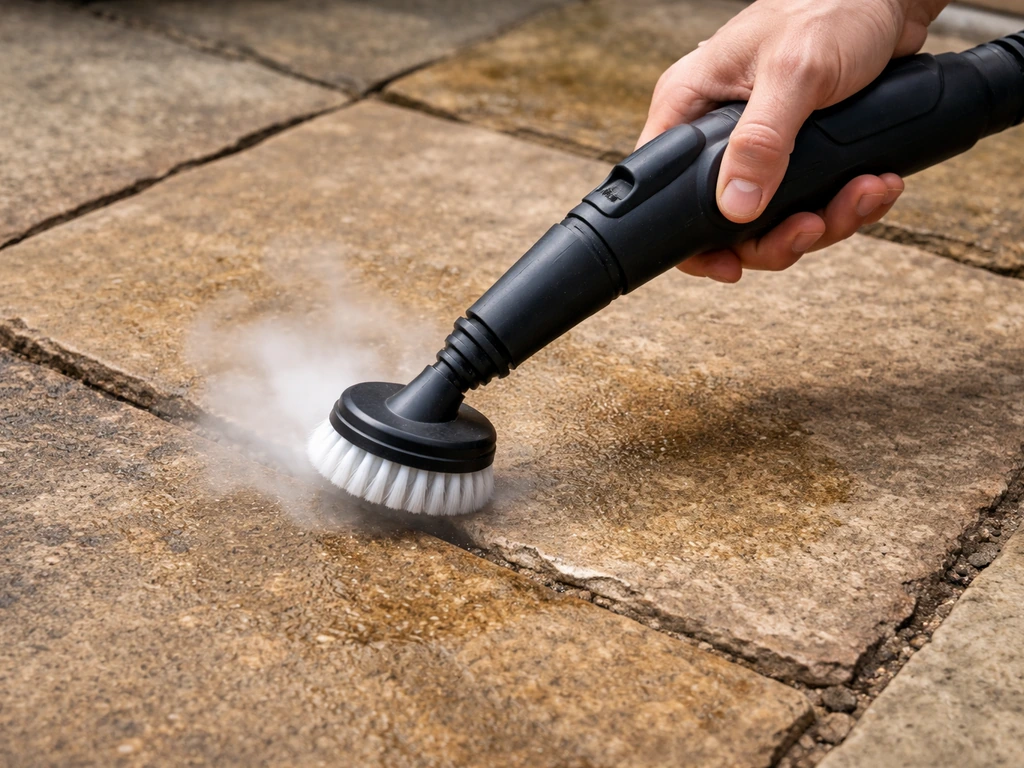
These are the surfaces where you need to be careful. Sandstone and limestone are soft and porous. Too much heat concentrated in one area, or an abrasive brush attachment, can scratch or erode the surface. Use a lower steam setting, keep the head moving constantly, and stick to soft nylon brush attachments. Never use a jet nozzle directly on sandstone or limestone. Also check whether your stone is sealed before you start: prolonged steam can strip water-based sealants from natural stone, leaving it unprotected.
Slate
Slate is generally durable but it has a natural layered structure that can flake if steam is forced into existing cracks or weak points. Medium heat settings work fine. Use a flat brush rather than a concentrated jet nozzle, and avoid any areas where the slate is already visibly splitting. Steam is actually excellent for slate patios because it clears the algae that makes slate dangerously slippery without the mechanical force of a pressure washer that could chip the edges.
Porcelain and ceramic tiles
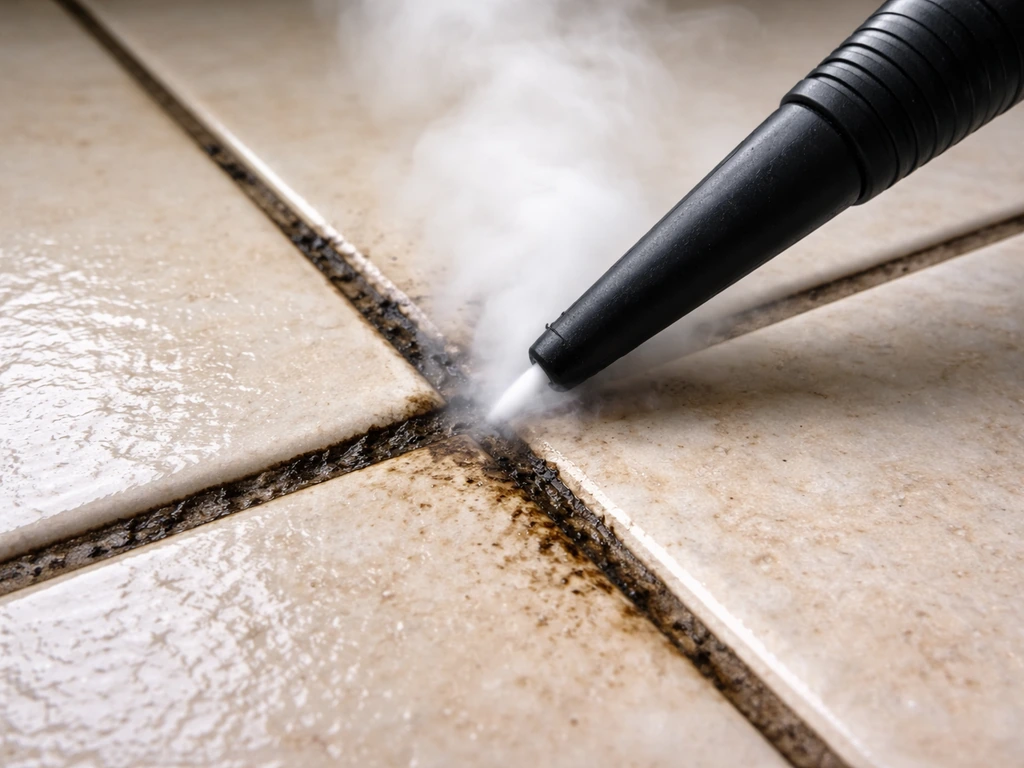
Porcelain itself is very dense and handles steam well, but the grout between tiles is where the action is. Steam does a great job clearing black mold from grout lines using a narrow brush or jet nozzle attachment. The risk here is cracked or loose tiles: steam can work moisture into hairline cracks and loosen adhesive underneath. Check tiles are all firmly bonded before you start. For porcelain and natural stone grout, an alkaline cleaner like STONETECH KlenzAll works well as a follow-up for anything the steam doesn't fully shift from deep grout lines.
What to look for when buying a patio steam cleaner
There are a handful of specs that actually matter for outdoor patio cleaning. Everything else is mostly marketing.
Steam temperature
You want steam produced at above 212°F (100°C). Most decent machines hit this or go higher. For example, Dupray's steam cleaners reach around 293°F (145°C), which gives noticeably better kill rates on mold and algae than basic models that just hit boiling point. Higher temperature also means the steam is drier, which leaves less residual moisture on your patio surface.
Heat-up time
For outdoor jobs, you don't want to stand around waiting. The McCulloch MC1275 takes about 8 minutes to heat up, which is typical for a canister-style machine. The Karcher SC 3 EasyFix gets to steam in around 30 seconds, which is a genuine advantage if you're doing a quick session rather than a full-day clean. If you're planning a long job anyway, heat-up time matters less.
Tank size and continuous run time
For a full patio, you need a tank of at least 40 oz. The McCulloch MC1275's 48 oz tank gives about 45 minutes of continuous steam, which covers a small to medium patio in one fill. If you have a large patio or plan a full deep clean, look for machines with a continuous fill design or a separate top-up tank so you're not waiting for the unit to cool before refilling. Having to stop mid-job is frustrating and slows you down.
Hose and cord length
Outdoors, you're moving around a lot. A short power cord is genuinely limiting. The MC1275 has a 15-foot power cord, which is workable but means you're probably using an extension lead for a full patio. Check the combined length of the hose from the machine to the cleaning head too: this affects how far you can reach without dragging the unit. For large patios, longer is always better.
Accessories and attachments
This is where the value really varies between machines. For patio cleaning you specifically want: a large floor/surface brush for flat areas, a small round brush for grout lines and joints, and a jet nozzle for blasting grime out of cracks and crevices. The MC1275 ships with 18 accessories including a dedicated steam jet nozzle, which is useful. Check that any machine you're considering includes these three attachment types at minimum. Machines that ship with only a floor mop head and nothing else are useless for detailed patio work.
Safety considerations for outdoor use
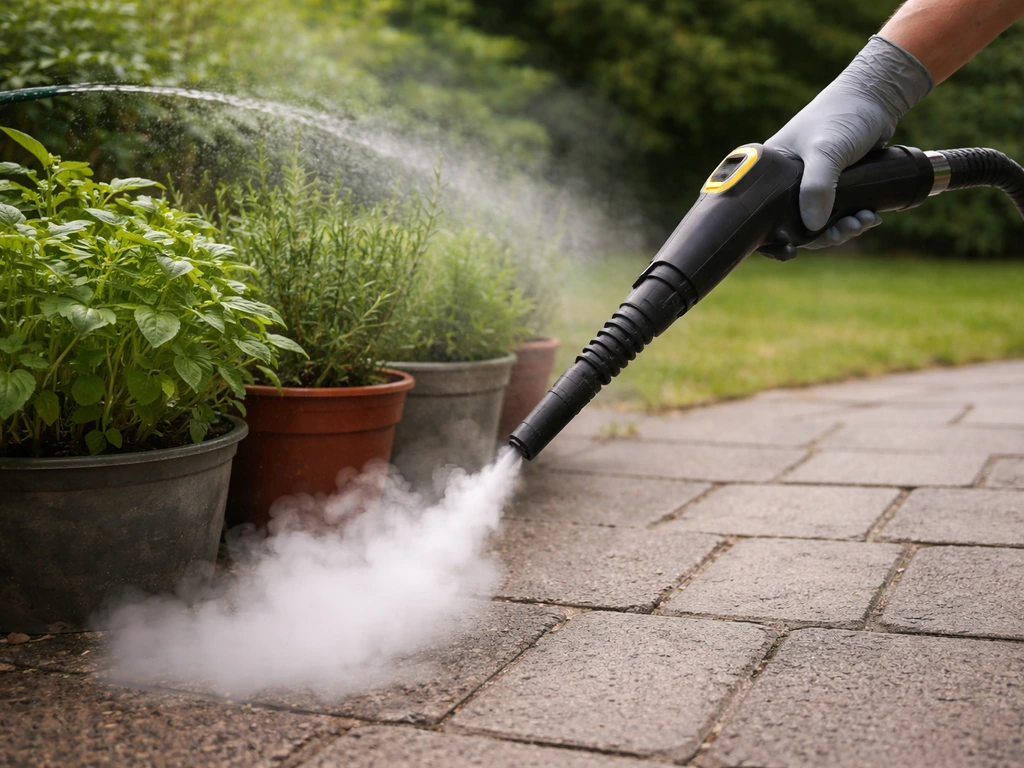
A few things that matter more outdoors than indoors. First, protect your plants: steam and any chemical pre-treatments you use can damage foliage. Wet & Forget Outdoor Spaces also advises flushing nearby plants and foliage with water before applying product to help protect landscaping [protect plants by wetting them before you use steam](https://www. wetandforget.
com/wet-and-forget-outdoor-spaces. html). Wet down plants and surrounding grass before you start, and redirect steam away from beds. Second, the wet surface after steaming is slippery: don't let anyone walk on freshly steamed patio stone until it's had a few minutes to drain.
Third, electric steam cleaners and outdoor moisture are a combination to respect: don't use in rain or standing water, and make sure your extension lead is rated for outdoor use with a proper IP rating. If you want to clean in bad weather, it helps to wait until the rain has stopped and the patio is dry before using an electric steam cleaner clean in the rain with a steam cleaner.
Finally, avoid using steam on sealed surfaces for extended periods in one spot: the heat can lift sealants.
Handheld, canister, or wet/dry steamer: which type works best outdoors
| Type | Best for | Tank size | Run time | Portability | Patio verdict |
|---|---|---|---|---|---|
| Handheld | Spot cleaning, grout lines, corners, furniture | Small (10-20 oz) | 10-15 min | Excellent | Too small for full patio cleaning, great for finishing work |
| Canister | Full patio cleans, multiple surface types, heavy grime | Large (40-60 oz) | 30-45 min | Good (wheeled) | Best all-round choice for patios |
| Wet/dry steam mop | Flat surfaces, moderate dirt, regular maintenance cleans | Medium (25-40 oz) | 20-30 min | Good | Great for flat tile/porcelain, limited on textured or uneven surfaces |
For most homeowners cleaning a full patio, a canister steamer is the right choice. The large tank, long hose, wheeled base, and broad accessory compatibility make it purpose-built for this kind of work. Handheld units are a useful addition if you already have a canister for the main surfaces, since they're nimble enough to work into corners, around furniture legs, and along edges.
Wet/dry steam mops work well for flat porcelain or smooth tile patios that don't have complex grout lines or heavily textured areas, and they're cheaper, but they're the wrong tool for a heavily contaminated or uneven surface. BISSELL markets the [PowerSteamer 2685B](https://www. bissell. com/en-ca/product/powersteamer-heavy-duty-3in1-steam-mop-handheld-steamer-for-indooroutdoor-use-2685B.
html? bvstate=pg%3A13%2Fct%3Ar) as blasting away dirt, grime, grease, stains, and mold across a wide variety of indoor and outdoor surfaces.
How to steam clean your patio: surface by surface and stain by stain
Here's the practical how-to. The general order of operations is always the same: clear loose debris first, pre-treat stubborn stains, steam in sections with the right attachment, then rinse and let dry. What changes is the attachment, heat setting, and any pre-treatment needed per surface or stain type.
Mold, algae, and moss
This is where steam genuinely earns its place. Scrape or brush off any thick moss growth first, then work the large floor brush across the surface in overlapping passes. When you use jet wash patio tips, keep the nozzle moving and avoid concentrating the spray on grout or soft stone to prevent damage.
For algae and mold, slow steady passes work better than rushing: you want the heat to dwell long enough to kill the spores rather than just physically shift the growth. On textured concrete or brick, use a circular scrubbing motion while the steam is flowing. On smoother surfaces like porcelain or slate, straight overlapping strokes are fine. For mold in grout lines, switch to the narrow round brush attachment and work along the grout channel.
After steaming mold-heavy areas, a quick wipe-down with a cloth removes the dead residue more thoroughly than letting it dry in place.
Grease and BBQ fat
For light grease, start with the floor brush on high heat and make slow circular passes. For heavier grease (the kind that's baked on around a barbecue station), apply an alkaline degreaser to the area first and let it sit for five to ten minutes, then follow up with steam. The degreaser breaks the bond, steam flushes it out. Without the pre-treatment, you'll spread the grease around more than you'll remove it. On natural stone, use a stone-safe alkaline product rather than a generic kitchen degreaser, which can discolor or stain porous materials.
Rust stains
Steam alone won't touch rust. Apply an oxalic acid-based rust remover to the stain first, following the product's dwell time instructions, then rinse and follow with steam to flush the residue and clean the surrounding area. Never apply acid-based products to natural stone like limestone or sandstone: the acid will etch the surface. On those materials, you'll need a specialist stone-safe rust remover or accept the stain.
Pet stains and odors
Steam is effective at neutralizing organic odors because the heat breaks down the compounds causing the smell. For urine stains on concrete or pavers, rinse the area with water first to dilute the concentration, then steam the area thoroughly with a floor brush. For sealed or polished surfaces, be cautious: prolonged steam on pet stain areas can drive the moisture deeper if there's any cracking in the sealer. An enzyme-based outdoor cleaner applied first, left to work, and then rinsed before steaming gives much better odor removal than steam alone.
General settings guide by surface
| Surface | Heat setting | Best attachment | Key tip |
|---|---|---|---|
| Concrete | High | Large floor brush or jet nozzle for cracks | Keep moving on sealed areas |
| Clay brick / concrete pavers | High | Floor brush, round brush for joints | Angle nozzle across joints, not into them |
| Sandstone / limestone | Low to medium | Soft nylon round brush | Constant motion, never dwell in one spot |
| Slate | Medium | Flat floor brush | Avoid concentrating steam on cracks or edges |
| Porcelain tile | High | Floor brush for tiles, narrow brush for grout | Check tiles are bonded before starting |
| Flagstone / mixed natural stone | Medium | Soft brush, switch to jet nozzle for gaps | Test a small area first if stone origin is unknown |
Best picks by patio size and grime level
Rather than a ranked list of every machine on the market, here are practical best-for recommendations based on what you're actually dealing with. Prices and exact availability shift, so use these as a starting framework when you're comparing machines.
- Small patio (under 20 sq m), light to moderate grime: A compact canister like the Karcher SC 3 EasyFix is ideal. Fast 30-second heat-up, easy to maneuver, and solid enough for regular mold and algae maintenance cleaning. Good choice if you're doing a seasonal tidy-up rather than a heavy-duty rescue clean.
- Medium patio (20-50 sq m), moderate to heavy mold/algae/moss: The McCulloch MC1275 is the benchmark here. The 48 oz tank, 45-minute run time, 18 accessories including a jet nozzle, and 1500W output cover this job well. It's been a reliable workhorse for years and the accessory set means you're equipped for every surface type.
- Large patio (over 50 sq m), heavy grime or multiple surface types: Look at the Dupray Neat or Neat Plus range. Higher steam temperatures (around 293°F) do a noticeably better job on deeply embedded mold and grease, and the build quality is suited to longer sessions. The investment is higher but it's worth it if you're managing a serious cleaning project or want a machine that lasts years.
- Budget pick for spot treatment and maintenance: Any handheld steam cleaner in the 1000-1200W range works for grout lines, corners, and maintenance passes between full cleans. The BISSELL PowerSteamer models are widely available and competent for this role, with marketing pointing to outdoor surface use as an intended application.
- Best for porcelain tile patios specifically: A wet/dry steam mop with a large pad head and a separate narrow grout tool attachment. Fast, easy, and effective on flat glazed surfaces where you don't need the heavy-duty gear of a full canister system.
When steam cleaning isn't enough
There are situations where steam is the wrong tool or an insufficient one. Very heavy organic growth that's been left for years often needs a biocide spray first, left to work over several days, before steam can shift what remains. Deeply embedded oil contamination (driveways, areas under barbecues) may need a proper alkaline degreaser and then a pressure wash rather than steam. For rust that's spread across a large area, a rust treatment applied to the whole surface followed by a rinse is more practical than spot-steaming. And if your patio surface is in poor condition, cracked tiles, crumbling grout, loose pavers, steam can accelerate the damage by working moisture into weak points. Fix the structural issues before cleaning.
Pressure washing is faster for large flat surfaces and for shifting thick coatings of dirt and algae quickly, though it carries its own risks of damaging grout and dislodging sand from paver joints. If you're weighing up steam versus pressure washing for your specific situation, the key difference is that steam kills biological growth at the root (reducing regrowth time) while pressure washing physically removes it.
For most patios that have been neglected, a pressure wash to clear the bulk followed by steam for the detail work and grout lines is a strong combination. If you decide pressure washing is the bulk step for your patio, follow a clear how to jet wash a patio approach so you can remove grime safely without damaging the surface.
If you do go the pressure-washing route, focus on the right nozzle, keep the distance consistent, and work in sections to avoid gouging your patio surface pressure wash.
Keeping your patio clean after steaming
The reason algae, moss, and mold come back is almost always moisture and shade. Steam cleaning gives you a clean slate, but without some follow-up habits, you'll be back to the same problem in a season. Here's what actually makes a difference long term.
- Seal after cleaning: once the patio is clean and fully dry, apply an appropriate sealer for your surface type. For pavers, a Techniseal-type pre-seal cleaner followed by a paver sealer reduces porosity and slows biological regrowth significantly. For natural stone, a surface-specific product like an Aquaguard-type cleaner and re-sealer keeps the stone protected and easier to clean in future. Always let the surface dry completely before sealing.
- Apply a preventative biocide: products like Wet and Forget (or equivalent patio biocide treatments) can be sprayed onto a clean dry patio surface after steaming. They work slowly over weeks but prevent algae, moss, and mold from taking hold. Wet plants nearby before spraying any biocide and direct spray away from borders.
- Improve drainage: if puddles sit on your patio after rain, you'll always have algae. Check that your patio has adequate fall toward drainage points, and clear any blocked drainage gaps in paving joints.
- Clear debris regularly: leaves, soil, and organic matter sitting on the surface are the fuel for mold and algae. A quick sweep every week or two removes the growth medium before it becomes a problem.
- Do a light steam or rinse every season: rather than leaving it until the patio needs a full deep clean, a 20-minute steam pass each spring and autumn keeps biological growth from establishing. It's much less work than a full annual rescue clean.
With the right machine, the right attachment for your surface, and a bit of regular maintenance afterward, a patio steam cleaner earns its place as one of the most useful tools you can buy for outdoor upkeep. It does take a little more time than blasting everything with a pressure washer, but the results on grout lines, biological growth, and textured surfaces are consistently better, and there's far less risk of damaging what you're cleaning.
FAQ
Can I use the best steam cleaner for patio to remove standing water stains or tide marks?
Steam works best on organic growth and general grime, but it cannot “lift” minerals that have dried into the surface. For water or mineral tide marks, try a manufacturer-approved cleaner for mineral deposits first, then steam for residue removal. If the stain is white and crusty, treat it as limescale, not a dirt stain.
What should I do if my patio has a sealant, and I do not know whether it is sealed?
When seal type is unknown, do a small hidden test area first with a short pass and keep the head moving. If you notice streaking, a cloudy look, or tackiness, stop and reassess, because prolonged dwell can soften topical sealers. For porous sealers, you may need to reseal after steaming if the surface looks drier or darker than before.
How do I avoid damaging paver joints when steaming a patio?
Use the nozzle angled across the joint rather than blasting straight down into gaps. Also keep your steaming passes lighter at first, then increase only if the joint stays intact. If polymeric sand dislodges, dry replacement sand and proper activation (as specified by the product) is usually needed, because steam can reduce the bonding.
Is steam safe for joints and grout if my tiles are older or already cracked?
Steam can push moisture into existing hairline cracks, which may loosen weak tiles or failing adhesive. Before you start, press on nearby tiles and check for rocking or hollow spots. If tiles move or grout crumbles under a light touch, repair first, then steam later for biological cleanup.
Will a steam cleaner kill mold and algae but still leave the surface black?
Yes, it is common for black or brown staining to remain after the spores and living algae are killed. For lingering discoloration, a follow-up alkaline cleaner for grout and masonry often lifts the residue, then steam can be used to flush loosened debris. In some cases, you may need a targeted stain remover for masonry rather than more steam dwell time.
Do I need to rinse the patio after steam cleaning?
Often you should, especially for grout lines and degreased areas. Steam can loosen residue that dries back into dusty film if you leave it to air dry. A quick wipe or light rinse after steaming, then letting the patio fully dry, helps prevent re-deposit and reduces slippery residue.
What is the best way to handle heavy grease around barbecue zones?
Do not rely on steam alone for baked-on grease. Use an alkaline degreaser, keep it within the dwell time on the label, then steam to flush the softened material away. If you see spreading or smearing, pause, remove the loosened residue with a cloth or brush, then continue.
Can I use steam cleaner on rust stains on natural stone like limestone or sandstone?
Avoid acid-based rust removers on soft natural stone because etching is a real risk. If rust is on limestone or sandstone, use a stone-safe rust remover specifically formulated for that surface, or consider professional treatment for deep stains. After treatment, steam can help flush and clean the surrounding area, but only after the correct chemical step is done.
How long should I wait before letting people walk on the patio after steaming?
Let the surface drain and cool for several minutes, then check dryness by feel and look. Grout and textured areas can stay damp longer, and steam condensate can make the patio slippery. If it is still damp, wait longer rather than attempting to dry by walking.
Is it okay to steam clean during or right after rain?
For electric steam cleaners, avoid use in rain or standing water, and use outdoor-rated extension cords with proper safety ratings. Even right after rain, the patio may be fully saturated, which increases slip risk and can make grime harder to lift. Wait until rain has stopped, the patio is dry to the touch, and the area is safe to work.
How can I tell if my steam cleaner’s temperature is actually high enough for patio growth?
Do not judge only by marketing terms like “hot steam.” Look for stated steam temperatures (around boiling at 212°F is the baseline, higher is better for algae and mold kill rates). If your unit has adjustable settings, start at a higher setting for biological growth and reduce only when you see any surface dulling or potential sealant softening.
What maintenance should I do on the steam cleaner between patio sessions?
Use clean water for less mineral buildup, and empty or follow the manufacturer’s instructions after use so mineral residue does not clog nozzles. Check the brush and jet nozzle for debris, then rinse them after cooling. If you notice weak steam output or uneven spraying, descale the unit before the next outdoor job.
When is steam cleaning the wrong tool compared with pressure washing?
Steam is weaker on thick, heavy coatings and large areas that need rapid mechanical removal. If there is deep, embedded grime under barbecue zones, or if you need to remove substantial layers quickly, a pressure wash followed by steam for detail and grout lines can be more efficient. If grout is already failing or pavers are loose, fix those issues first because moisture and cleaning pressure can accelerate deterioration.
Next Article
Can You Jet Wash a Patio in the Rain? Safety and Results
Learn if you can jet wash a patio in the rain, how to stay safe, and how wet surfaces affect cleaning results.