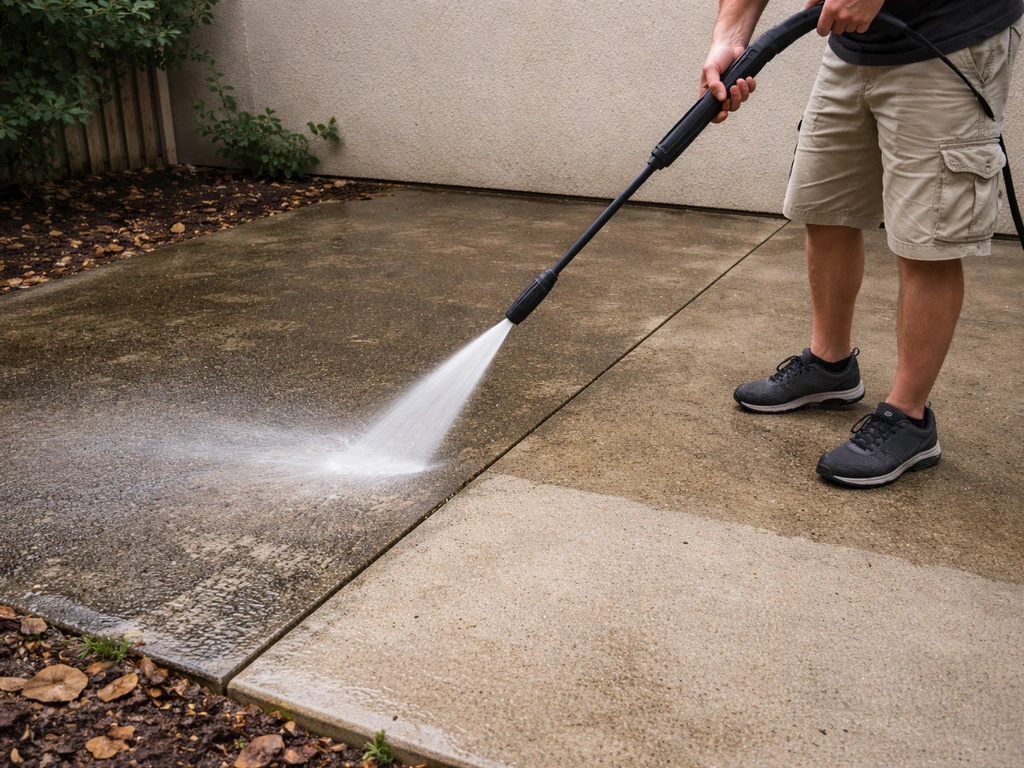
Yes, you can jet wash a patio in the rain, but only under specific conditions and with serious caveats. Light drizzle with a petrol-powered or battery-powered pressure washer? Generally fine. Pouring rain with a corded electric pressure washer plugged into an outdoor socket? That's where things get genuinely dangerous. The honest answer is that rain alone isn't the problem, but the combination of standing water, electrical connections, slippery surfaces, and diluted cleaning products can turn a routine patio clean into a hazard. Here's exactly how to decide whether to go ahead, pause, or wait. If you want faster results, follow these pressure washing patio tips when deciding timing, power source, and safety steps.
Can You Jet Wash a Patio in the Rain? Safety and Results

Rhea Lang
3 Jun 2026
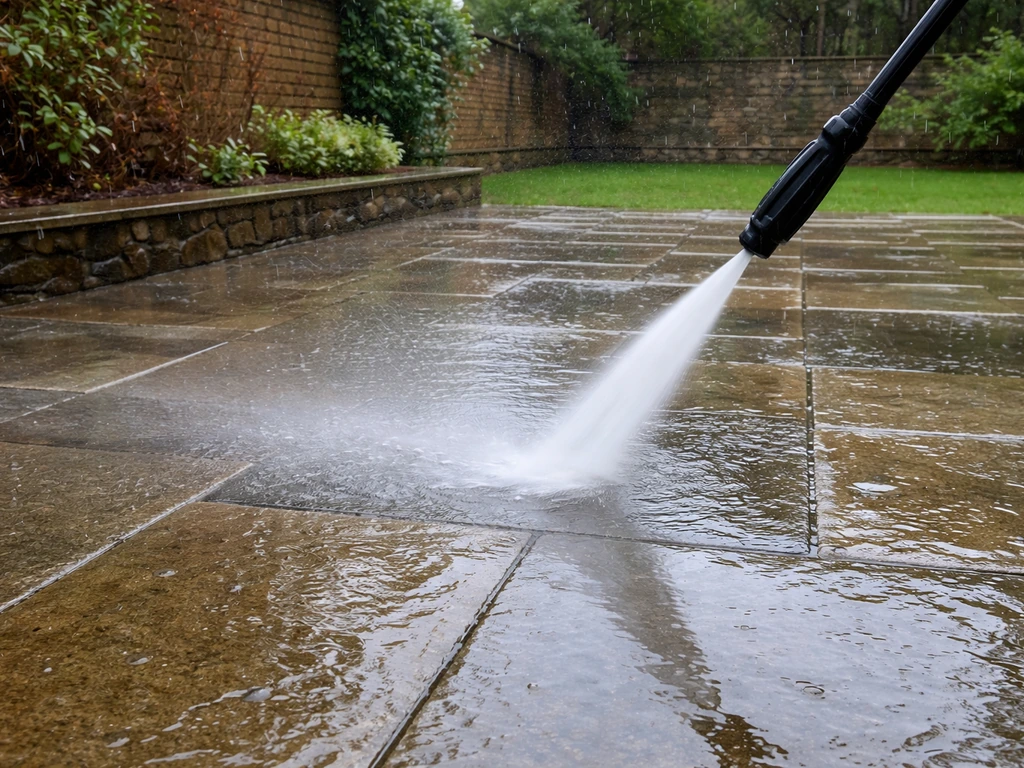
When it's safe and when it isn't
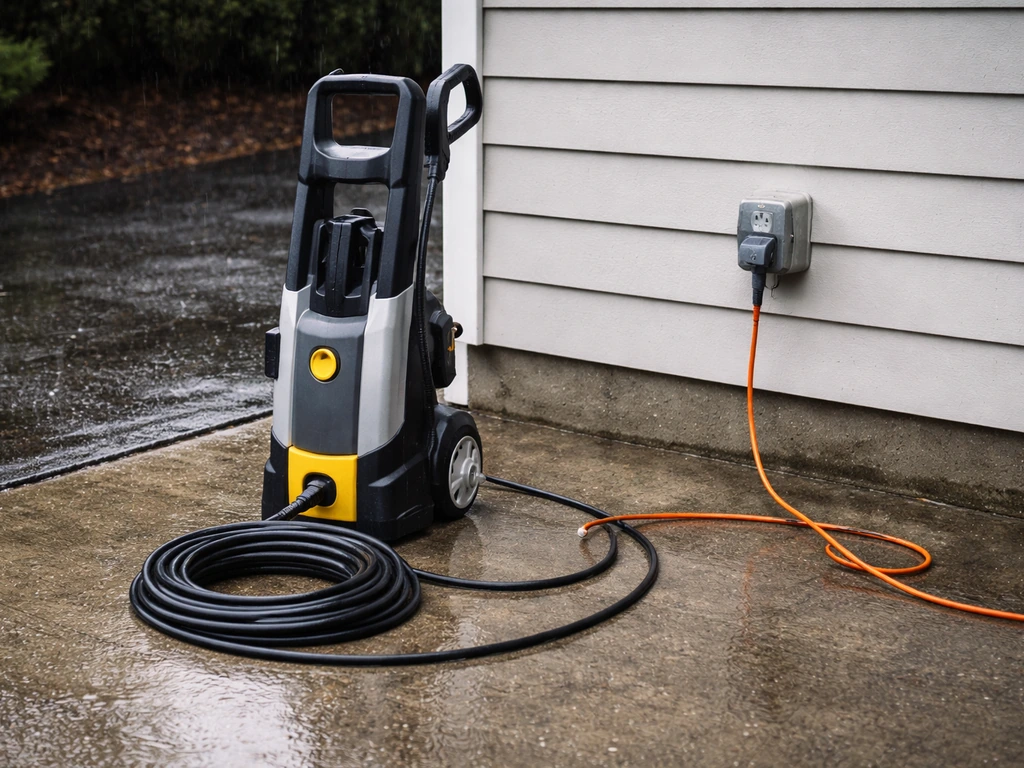
The biggest variable is your power source. Cordless (battery) pressure washers and petrol pressure washers carry far lower electrical risk in wet weather compared to corded electric models. DEWALT's own instruction manual explicitly states: 'Do not expose pressure washers to rain or wet conditions. ' That's not just boilerplate, it reflects a real risk.
If you're running a corded electric washer, any cable connections sitting in puddles, any damp extension cord, or any outdoor socket without a watertight cover becomes a shock risk. The CDC flags that electric shock is a genuine danger if a pressure washer isn't used correctly in wet conditions, and they specifically warn that if you need an extension cord, it must be rated for wet locations with the connection kept well clear of standing water.
Here's the practical line I draw. Light rain with no puddles, a GFCI-protected outdoor outlet with a watertight cover, and a properly rated cable: low risk, acceptable to proceed carefully. Heavy rain, pooling water near connections, no GFCI protection, or any doubt about your socket housing: stop, go inside, and reschedule. It's not worth it. A dirty patio can wait a day; an electric shock cannot be undone.
| Scenario | Risk Level | Recommendation |
|---|---|---|
| Cordless/battery pressure washer, light rain | Low | Safe to proceed with standard caution |
| Petrol pressure washer, any rain | Low (no electrical risk) | Safe, watch for slippery footing |
| Corded electric, GFCI outlet, watertight cover, light drizzle | Moderate | Proceed carefully, check connections stay dry |
| Corded electric, heavy rain, puddles near cord | High | Stop immediately, reschedule |
| Corded electric, no GFCI, any wet conditions | Very high | Do not proceed |
Safety first: equipment, electricity, traction, and runoff
Beyond the electrical side, rain creates two more problems people underestimate: traction and runoff. A wet patio surface is already slippery. Add the kick-back from a pressure washer lance and you've got a genuinely awkward situation, especially on smooth or algae-covered stone. Wear non-slip, waterproof footwear. Keep your weight balanced and never reach awkwardly across a wet surface to hit a far edge.
Runoff is the other issue most homeowners don't think about until it causes a problem. Pressure washing wastewater, especially when it contains detergents, algae treatments, or anti-mold chemicals, must not flow into storm drains, gutters, or drainage channels. Portland Bureau of Environmental Services guidance says pressure washing wastewater containing pollutants like soap, paint, or other chemicals must not flow into the stormwater system and may violate city code [detergents, algae treatments, or anti-mold chemicals](https://www. portland.
gov/bes/preventing-pollution/prevent-pollution/pressure-washing-rules). Multiple municipal authorities including Sacramento County, the City of Lathrop in California, and Portland's Bureau of Environmental Services explicitly prohibit pressure washing wash water from entering the stormwater system, and violations can result in real penalties. In rain, contaminated runoff can spread further and faster than you expect. Plan where your wastewater will go before you start, and never assume rain will just dilute and disperse it harmlessly.
- Use a GFCI outlet with a watertight housing for any corded electric washer outdoors
- Keep all cord connections elevated and well away from puddles or surface water
- Wear non-slip footwear rated for wet surfaces
- Check your wind direction: rain driven sideways by wind can affect your visibility and your footing
- Plan your wastewater route away from storm drains and drainage channels
- Never use an extension cord that isn't rated for outdoor/wet locations
Does rain actually help or hurt cleaning results?
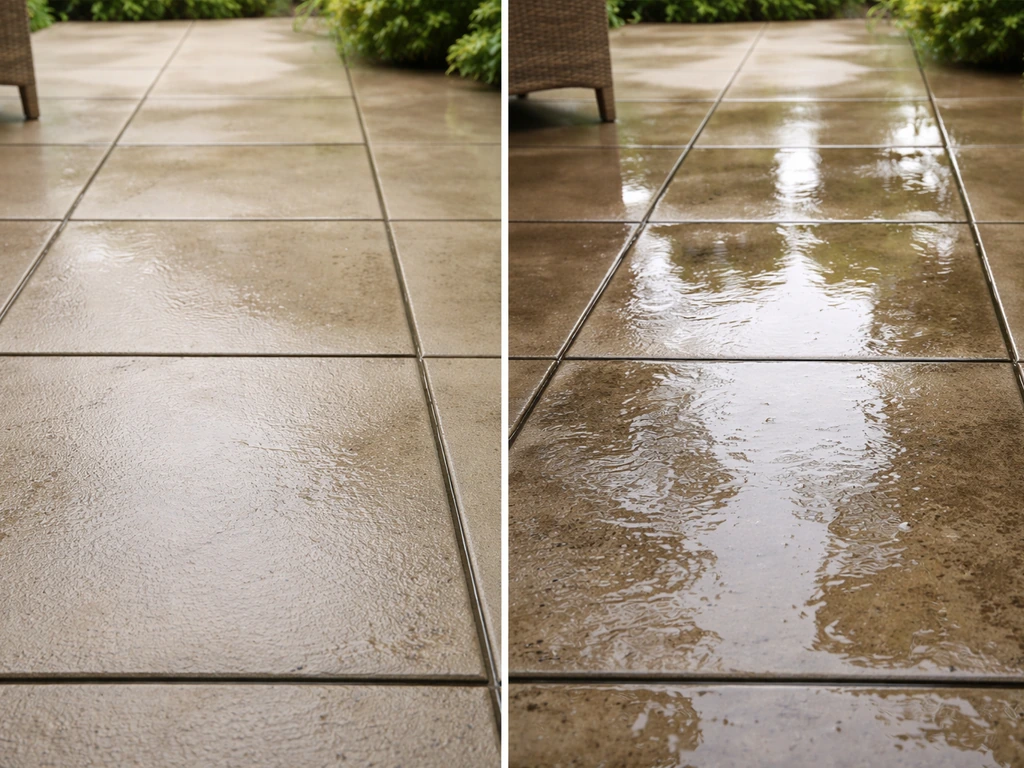
It's a mixed picture. Light rain before you start can actually loosen surface dirt slightly and keep dust from kicking up, which sounds helpful. But heavy rain or a waterlogged surface creates real problems for chemical cleaning products. Most patio detergents and anti-mold treatments are designed to dwell on a surface for a set time (usually 5 to 15 minutes depending on the product) before rinsing. If it's raining during that dwell period, the product gets diluted and washed off prematurely, and you lose most of its effectiveness. This is particularly relevant for algae and moss treatments, which need contact time to actually break down the growth.
Rain also makes it harder to see what you've actually cleaned. Wet surfaces all look similarly dark, so you can't easily judge whether a patch is clean or just wet. I've gone over sections twice in the rain thinking I missed them, only to find in the dry light that they were perfectly clean the first time. If you're using a patterned or wide-fan nozzle sweep, mark your sections mentally or physically so you don't waste time doubling back.
The bigger concern is post-wash drying. Sealing or treating a patio after cleaning requires the surface to be dry, sometimes for 24 to 48 hours. If you clean in the rain, you'll be waiting considerably longer before you can apply any sealant, weed killer in joints, or sand replacement. If that follow-up step matters to you, factor the weather forecast into your whole plan, not just the cleaning day.
How rain affects your surface: material by material
Different patio materials react very differently to pressure washing in wet conditions, and rain can amplify the risks of getting it wrong.
Concrete
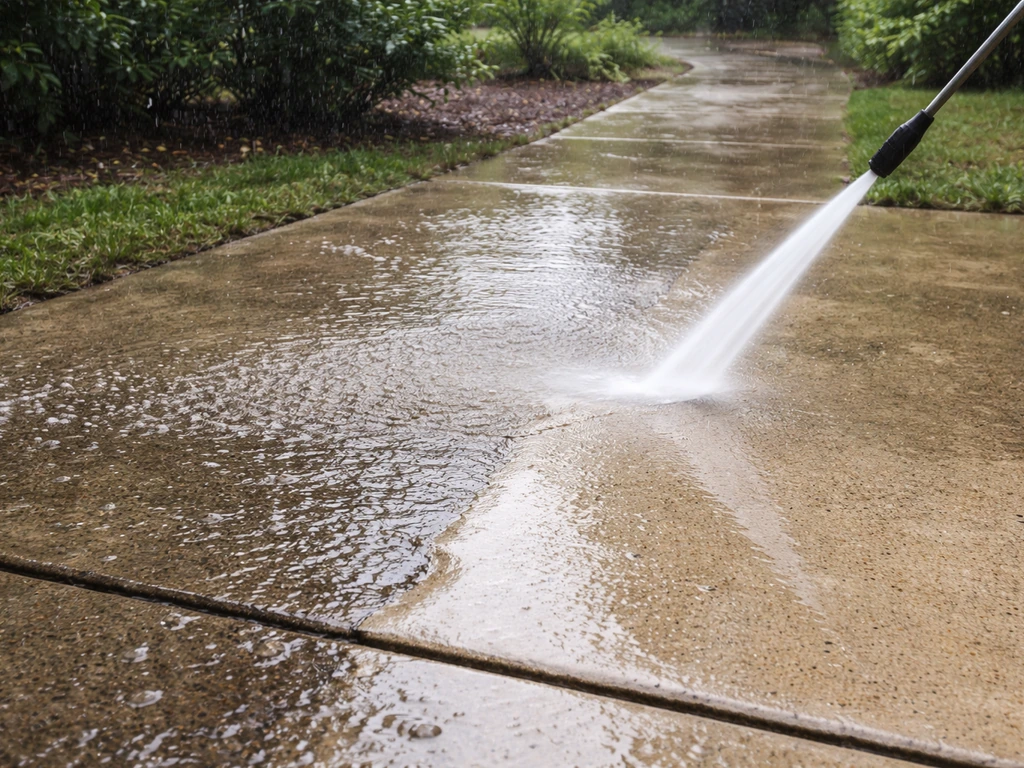
Concrete is the most forgiving material for wet-weather washing. It handles high pressure well and additional surface water doesn't change the risk profile much. The main concern is runoff carrying concrete residue and any cleaning chemicals away from your property. Keep pressure at 1500 to 2500 PSI and use a 25-degree or 40-degree nozzle for general cleaning. Avoid 0-degree nozzles on concrete, rainy day or not.
Natural stone (including sandstone and slate)
This is where you need to be careful. Sandstone and slate are porous and relatively soft. In wet conditions, they're already saturated, and high pressure can force water deeper into the stone, potentially causing surface spalling or cracking if it then freezes (less relevant in summer, very relevant in early spring or autumn). Keep pressure below 1200 PSI for sandstone, use a wide-angle nozzle (40 degrees), and keep the lance at least 30 cm from the surface. Rain won't directly damage these stones during washing, but it makes the surface wetter, which can reduce your cleaning effectiveness and make it harder to see the results.
Brick
Brick is fairly robust but the mortar joints are the weak point. Wet conditions don't increase the risk much unless you're using very high pressure directly on the joints. Keep to 1500 to 2000 PSI and angle the lance to hit the surface rather than blast directly into the mortar. In rain, watch for loosened mortar debris washing into drains.
Porcelain
Porcelain is non-porous and handles wet weather well, but it gets extremely slippery when wet. This is less about the pressure washer damaging the surface (porcelain can take pressure up to 2000 PSI without issue) and more about your footing while cleaning it. Take extra care stepping around the area as you work. Use a 25-degree nozzle, and keep a consistent sweeping motion to avoid streaking.
Adjusting your technique for wet conditions
Rain doesn't require a completely different approach, but a few adjustments make a real difference to the outcome.
- Drop your pressure by about 10 to 15 percent compared to dry-day settings: the surface is already wet and loosened dirt needs less force to shift
- Use a 25-degree or 40-degree nozzle rather than a turbo or 0-degree nozzle to reduce the risk of etching soft stone in unpredictable wet conditions
- Keep the lance moving in consistent overlapping passes at about 30 cm from the surface to avoid streaking (wet conditions make streaks more visible once the surface dries)
- Work in sections and rinse each section thoroughly before moving on, so rain doesn't carry dirty water back over cleaned areas
- Avoid working uphill: water and debris will wash back toward you and over already-cleaned sections
- If you're using a detergent injector, apply it and wait the full dwell time under a temporary shelter if possible, or use the product on a dry spell between rain showers
Streak prevention is worth a specific mention. Wet surfaces dry unevenly, and if you're washing in inconsistent rain, some sections will dry faster than others and you'll see streaking from minerals and detergent residue. The fix is to rinse every section thoroughly with a wide-angle nozzle before rain does it for you unevenly. Think of your final rinse pass as the most important pass you make.
Tackling common patio problems when it's wet outside
Mold, algae, and moss
These are the most common reasons people reach for the pressure washer in the first place, and rainy weather is exactly the condition that makes them worse. Pressure washing alone will physically remove algae and moss, but without a chemical treatment to kill the spores, regrowth happens fast, often within weeks. The problem in rain is that biocide and anti-algae products need dwell time: apply, wait 5 to 15 minutes, then rinse.
Rain during that window washes the product off before it's done its job. The workaround is to apply treatments on a dry interval, even a 20-minute gap between showers, let it dwell, then jet wash the residue. These jet wash patio tips also apply when you are trying to remove algae, moss, and everyday grime safely in wet weather.
If you can't get a dry window, skip the chemical step for now, physically blast off the growth with the pressure washer, and come back with treatment products on a dry day.
Rust stains
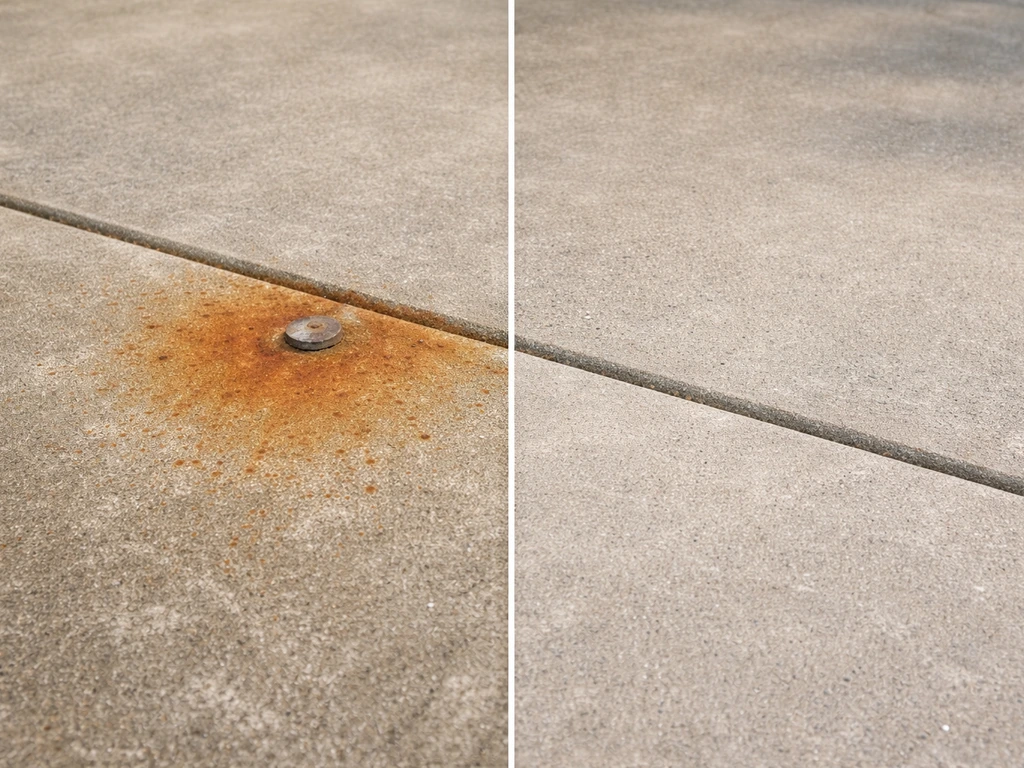
Rust stains on concrete or stone come from metal furniture, plant pots, or fixings left in contact with the surface. Pressure washing alone won't shift them well, you need an oxalic acid-based cleaner or dedicated rust remover. Rain is genuinely unhelpful here because it dilutes and disperses the cleaner before it can penetrate. If you have rust stains to deal with, treat them on a dry day and let the product dwell properly, then rinse with the pressure washer.
Grease and oil
Grease from BBQs and cooking stations is hydrophobic, meaning water doesn't dissolve it, including rain. You need a degreasing detergent applied directly to the stain, scrubbed in, then pressure washed off. Rain makes this messier but doesn't fundamentally change the process. Apply the degreaser, give it a few minutes, then blast it off. The risk in rain is the greasy runoff spreading further, so contain it where you can.
Pet stains
Pet urine stains are best dealt with using an enzymatic cleaner before pressure washing. Rain doesn't neutralize urine odor or the uric acid crystals in the stone, and a quick pressure wash in the rain often just spreads the residue. Apply the enzymatic product first on a dry patch, let it work (at least 10 minutes), then rinse. If you can only manage a pressure wash today in the rain, it will reduce surface staining but the odor will likely return once the patio dries.
Your decision checklist and next steps
If you're standing at the back door right now trying to decide whether to go ahead, run through this quickly.
- What's your power source? Battery or petrol: generally safe to proceed in light rain. Corded electric: check the next three points before doing anything.
- Is your outdoor socket GFCI-protected with a watertight cover? If not, stop.
- Are there puddles or standing water near your cable connections? If yes, stop.
- Is the rain light drizzle or heavy? Heavy rain: stop and reschedule. Light drizzle: proceed with caution.
- Is it windy enough to affect your balance or push rain sideways onto electrical connections? If yes, stop.
- Do you need to apply chemical treatments (algae killer, biocide, degreaser, rust remover) today? If yes, wait for a dry interval of at least 20 to 30 minutes to apply and dwell. If you can't get one, skip chemicals today and reschedule treatment.
- Do you plan to seal or sand joints after cleaning? If yes, check the forecast: you'll need 24 to 48 hours of dry weather after washing before applying any treatment.
- Are you clear on where your wastewater will drain? Make sure it's not heading toward storm drains, gutters, or drainage channels.
If you must wash today and the conditions pass the checklist above, here's the contingency plan: use your widest safe nozzle (25 or 40 degrees), keep pressure slightly lower than your usual dry-day setting, work in small sections from the furthest point back toward your exit so you're not stepping on cleaned areas, rinse each section as you go with a sweeping final pass, and accept that chemical treatments will need a follow-up visit on a dry day. You'll get a solid physical clean today even in drizzle, just not the full biocide-treated result you'd get in good weather. If you do go ahead in drizzle, see how to powerwash a patio for the right technique, nozzles, and safe workflow.
If you want to go deeper on pressure washer technique and nozzle selection for different patio surfaces, the guides on how to jet wash a patio and tips for pressure washing patio cover both in much more detail. And if you're weighing up whether a steam cleaner might sidestep some of these wet-weather concerns, that's also worth a look as a comparison option for certain surface types. If you want a non-pressure-wash alternative, compare options like the best steam cleaner for patio surfaces.
FAQ
Can you jet wash a patio in light rain if you’re using a corded electric pressure washer?
If you have any choice, wait until the surface is only lightly damp, not waterlogged. Even when rain is “light,” the real issue is whether puddles form near the wand, hose connections, or the extension cord ends. If you do proceed, use a GFCI-protected outdoor outlet and keep all connections off the ground.
Will patio cleaning detergent work if it’s raining while the chemical is supposed to sit?
Not always. If your detergent requires dwell time (commonly 5 to 15 minutes), rain during that window can dilute it and reduce results. A practical workaround is to apply chemical only during a dry interval, then rinse after dwell time when rain eases.
Is it safe to jet wash in the rain if my patio drains to the street or storm drain?
Yes, but choose your approach based on runoff control. If wastewater could reach storm drains, gutters, or channels, stop and reschedule. Rain can carry suspended dirt and chemical residue farther than expected, so plan a containment method (for example, directing wash water to an approved collection route) before you start.
What’s the safest way to use an extension cord when jet washing outside in rainy weather?
Cover the outlet and keep the plug and any cord joints well above the likely water line, then use a cable rated for wet locations. Most importantly, never run cords through shallow standing water, and avoid “one more pass” if you cannot keep connections clear.
How long should I wait after jet washing in the rain before I seal or apply weed killer in joints?
Yes, but not until the surface has fully dried. Many follow-up steps, like sealing or joint weed control, require a dry substrate and sometimes 24 to 48 hours. If you clean in rain, schedule drying time first, then do the treatment, otherwise it can fail or spread unevenly.
Do I need to change my nozzle and pressure settings when I jet wash in rain?
Using a narrower nozzle in the rain increases slipping risk from kickback and can worsen streaking or etching on some materials. For most wet-weather situations, use the widest safe nozzle you can (commonly 25 or 40 degrees) and keep pressure slightly lower than your dry-day setting.
Is jet washing in the rain more risky for sandstone or slate because of freezing?
It depends on material, but rain often increases the chance of freeze damage in early spring or autumn. For porous stone like sandstone and slate, high pressure when the stone is saturated can drive water deeper, then later freezing can contribute to spalling or cracking. Keep pressure lower and use wide angles, and avoid washing right before a freeze period.
How can I tell if my patio is actually clean or just wet when I jet wash during rain?
You generally can, but it can leave a misleading “clean” look because wet surfaces darken. The safe workflow is a final rinse pass per section and then reassess after drying. If you’re unsure you hit the area, wait for it to dry before repeating high pressure on the same spot.
What should I do if I’m jet washing to remove algae or moss but rain starts during treatment dwell time?
If the goal includes killing algae or moss, rain can make the chemical step unreliable due to dwell time loss. The decision aid is simple: if you cannot get a dry gap for dwell time, physically remove growth with the washer today, then return for treatment on a dry day.
Can you jet wash grease stains (BBQ, cooking station) when it’s raining?
Prefer not to. Rain can spread grease and odors because many grease issues are hydrophobic and require targeted degreaser dwell on the stain. If you’re forced to do it in rain, apply degreaser first on a dry surface if possible, keep runoff contained, then rinse after the stain has had a few minutes.
If I jet wash in the rain to deal with a pet urine stain, will the smell go away?
Avoid relying on a quick pressure wash in rain for pet urine. Urine odor and residue can persist because cleaning chemistry must reach and act on the material. Best practice is to apply an enzymatic cleaner first during a dry window, let it dwell, then rinse. If you only wash today, expect odor return as it dries.
What’s the quick checklist before I decide to start jet washing in rainy conditions?
Don’t assume “rain dilutes it safely.” The right move is to pre-plan where the wastewater goes, especially if there are nearby drains, gutters, or channeling. If you cannot keep wash water out of the storm system, pause and wait for a safer weather window.
Next Article
Tips for Pressure Washing Patio: Concrete to Porcelain Guide
Pressure wash patio tips by surface, from concrete to porcelain, with safety prep, nozzle settings, and stain-specific c