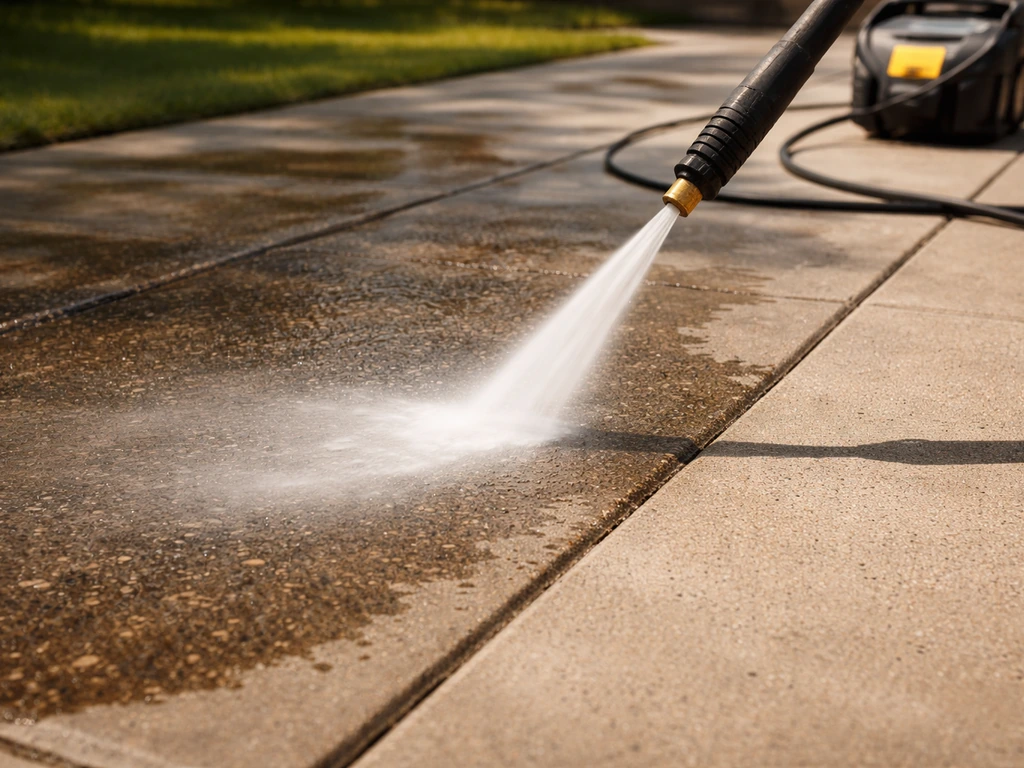
The best time of year to clean a patio is late spring, typically April into early May, or early autumn around September. In both windows you get mild temperatures, manageable humidity, and enough dry hours in a row to let cleaning products work properly and surfaces dry fully before rain rolls back in. If you're reading this in June, you're actually in a solid position right now: growth is visible, temperatures are above the threshold most chemical cleaners need, and you can realistically find a two-day dry spell to work with.
Best Time of Year to Clean a Patio for Best Results
Rhea Lang
6 Jun 2026
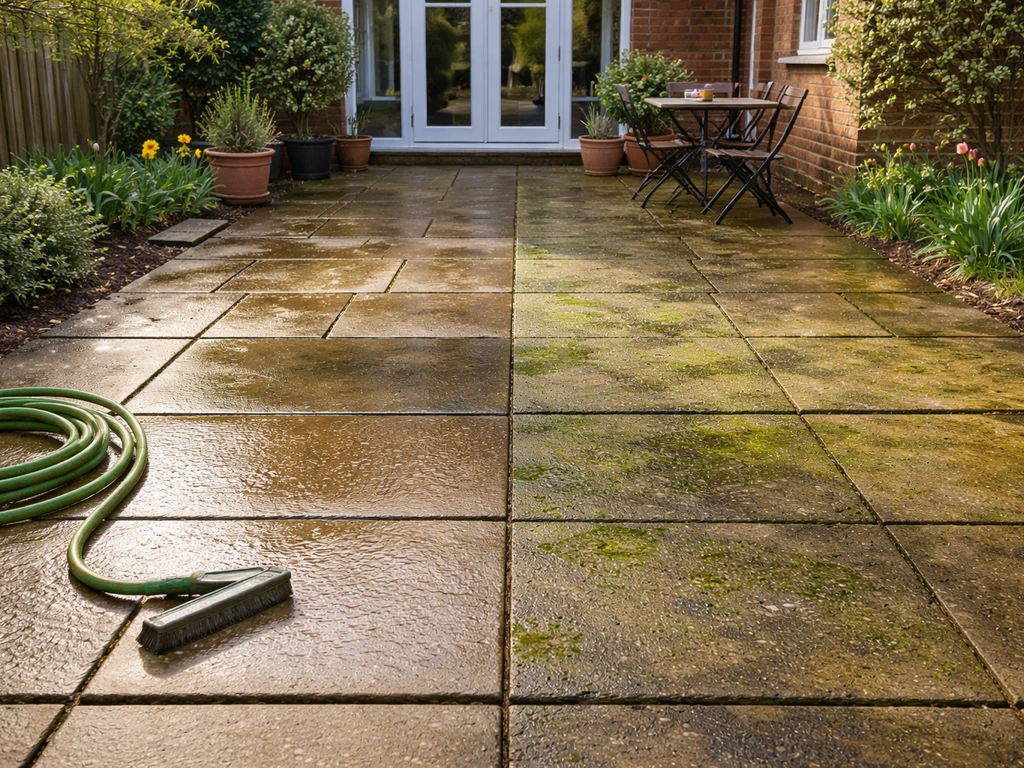
Why seasonal timing actually matters
Patio cleaning isn't just about scrubbing; it's about getting the surface clean and keeping it that way. Clean in the wrong season and you'll fight algae regrowth within weeks, end up with streaks from product drying too fast, or find that sealer won't cure properly because the ground is still cold and damp. The season affects everything from how well a chemical cleaner penetrates moss to whether your patio is dry enough to seal within a reasonable timeframe.
Spring is the most important cleaning window for most UK patios. Over winter, damp conditions encourage algae, moss, and general grime to build up steadily. By April, growth is clearly visible, but temperatures are still mild, which means cleaning products can dwell on the surface without drying out too quickly in harsh sun. Cleaning now also means your patio is ready before you actually want to use it.
Early autumn, around September, is the second-best window for the same reasons: summer heat has passed, the surface isn't waterlogged, and there's usually enough warmth left for thorough drying before the cold sets in. Winter cleaning is a last resort. Freezing temperatures, saturated surfaces, and short drying windows make it risky for most methods and almost pointless for sealing.
If you want the safest routine, check the weather and follow a sensible schedule for jet washing, then leave enough dry time before using or sealing the patio risky for most methods and almost pointless for sealing.
How temperature, humidity, and rain change your results
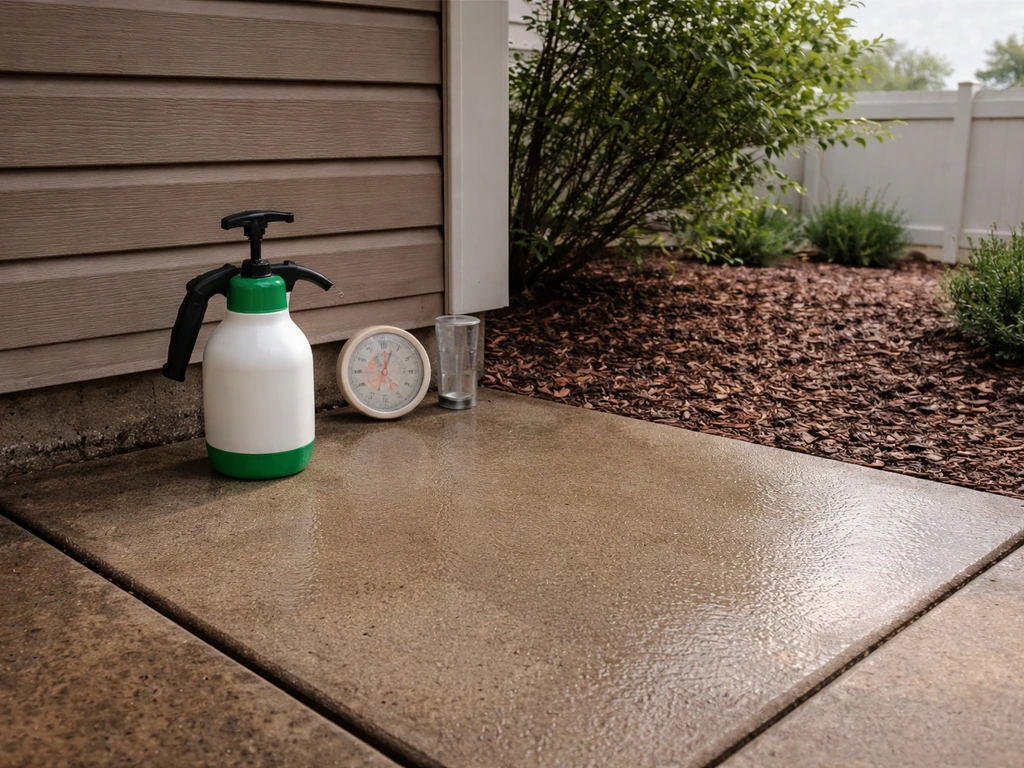
Temperature affects how chemical cleaners behave. Most biocidal patio cleaners work best above 8°C to 10°C. Below that, the active ingredients slow down, meaning you won't get the contact-time performance the label promises. Pureseal Services specifically flag a "mild, frost-free day above 8°C" as the minimum for jet washing, and that's a reasonable baseline for chemical cleaning too. In early June that's rarely a problem, but in March or late October it's worth checking.
Direct intense sunlight is more of an issue than most people expect. I've made the mistake of applying a patio cleaner on a bright, hot afternoon and ending up with patchy results because the product dried on the surface before it had time to work properly. The Yell blog flags this directly: strong sun causes streaking, and rain washes products away before they can work. The ideal cleaning day is overcast, dry, and mild, not blazing sunshine and not drizzle.
Humidity matters most if you're planning to seal after cleaning. High humidity slows sealer curing and can leave surfaces cloudy, a problem that's difficult to fix after the fact. Pureseal's sealing guidance recommends avoiding application within 48 hours of jet washing unless the surface has had full sun and strong wind the entire time. On a typical mild, breezy spring day with no rain forecast, you're usually safe to seal 48 to 72 hours after cleaning.
The rain rule is simple: you need at least two full days of dry weather minimum after cleaning. GardenUK recommends this specifically, and it's backed by the drying requirements of virtually every patio sealer on the market. Rain landing on a recently cleaned, unsealed surface doesn't just get it wet again; it can bring contaminants back to the surface and in some cases trigger efflorescence, where salts migrate outward as moisture moves through the slab.
Best timing by patio material
The right time to clean also depends on what your patio is made of. Some materials are more vulnerable to freeze-thaw damage, others need longer drying windows, and a few require gentler methods that work better in specific conditions.
| Material | Best Season | Key Timing Notes |
|---|---|---|
| Concrete | Spring or early autumn | Avoid cleaning if frost is expected within 24 hours. Touch dry in 4–6 hours, full sealer cure in 24–48 hours. |
| Natural stone (general) | Spring or early autumn | Allow thorough rinsing and drying time. Use low pressure (under 300 psi) to protect mortar joints and avoid forcing water into the stone. |
| Brick | Spring | Vulnerable to efflorescence if cleaned when saturated. Wait for a dry spell after winter before cleaning. Avoid high pressure on older pointing. |
| Sandstone | Late spring (May) | Very porous and slow to dry. Never clean before extended rain forecast. Needs longest drying window before sealing: 4–7 days after pressure washing. |
| Slate | Spring or early autumn | Frost-sensitive. Never clean in freezing conditions. Responds well to chemical cleaners but needs gentle pressure rinsing to avoid surface damage. |
| Porcelain | Any dry season | Least porous, fastest drying. Use low-to-medium fan pressure when rinsing. Can usually be cleaned and sealed within a shorter window than natural stone. |
Sandstone deserves a specific mention because it's the most forgiving surface to get wrong. It soaks up moisture deeply and dries slowly, which means if rain arrives within a day or two of cleaning, you can end up with water marks, salt staining, or incomplete sealer curing. If you have sandstone, pick a period with at least four or five dry days ahead, not just two. Bondall's guidance, for example, recommends a 4–7 day wait after high pressure cleaning before sealing, and for a porous stone like sandstone that's genuinely the safer call.
Porcelain, on the other hand, is the easiest material to work with across seasons because it's non-porous. You can clean it in conditions that would be risky for sandstone or brick, as long as temperatures are above freezing and you're using a fan nozzle rather than a pinpoint jet. Ideal Home's guidance on porcelain tiles specifically flags low-to-medium fan pressure to avoid surface damage, which is worth keeping in mind year-round.
Mold, algae, moss, and rust: when to tackle each one
Algae and moss
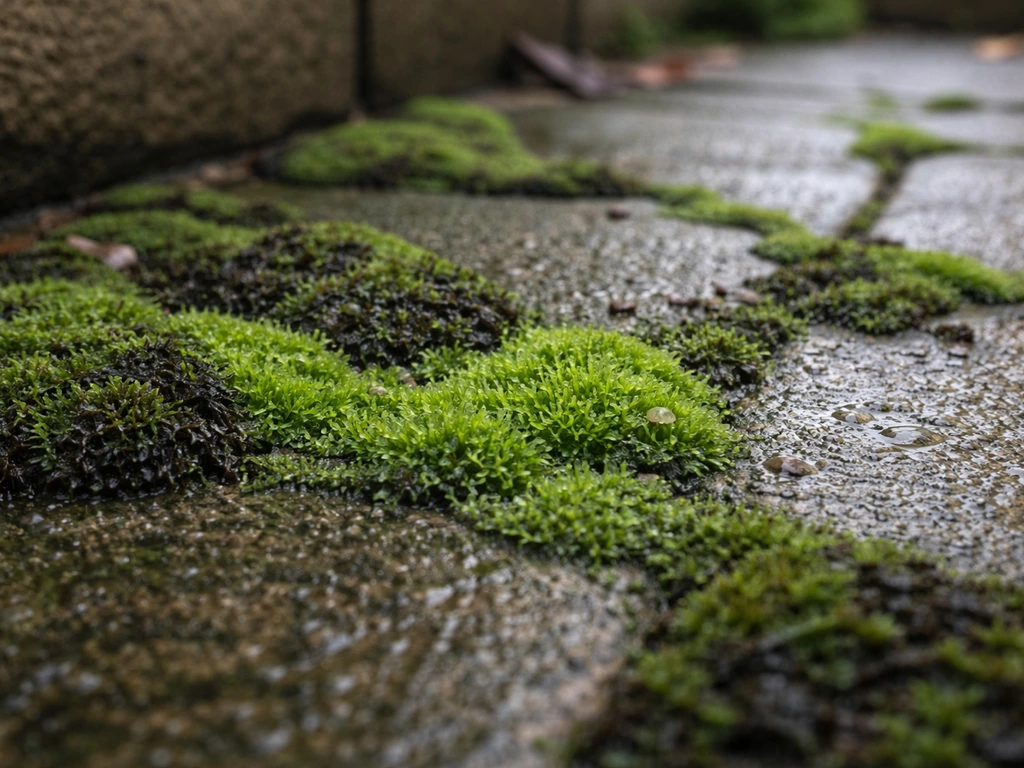
blank" rel="noopener noreferrer">Algae and moss thrive in damp, shaded conditions, and they build up steadily through autumn and winter. By spring, the growth is well-established and highly visible, which makes it the ideal time to tackle it. Temperatures above 8°C allow biocidal treatments to work effectively, and the drying conditions are usually good enough to prevent immediate regrowth if you rinse and dry properly. blank" rel="noopener noreferrer">A standard product like PATIO PRO from Dynamic Chemicals calls for wetting the whole area evenly, a 15-minute contact time, then rinsing immediately with a low-pressure hose. That kind of process needs a still, dry, overcast day to work as intended: windy conditions dry the product unevenly, rain dilutes it before the 15 minutes are up.
The key mistake people make with moss and algae is cleaning just before a wet spell. You remove the growth, but within a couple of weeks the spores remaining in the surface recolonise in the damp conditions. Cleaning in spring before the warmest, driest months gives you the longest window before regrowth kicks in.
Mold and black spot
Mold is best addressed in early spring or early autumn, with the same dry-spell requirement as algae. The important difference is drying time. Mold can return quickly on surfaces that stay damp, so you need genuinely good drying conditions after treatment, ideally two full days of dry, mild weather with some wind. Avoid cleaning for mold in late autumn or winter when drying windows are short and overnight condensation keeps the surface moist.
Rust stains
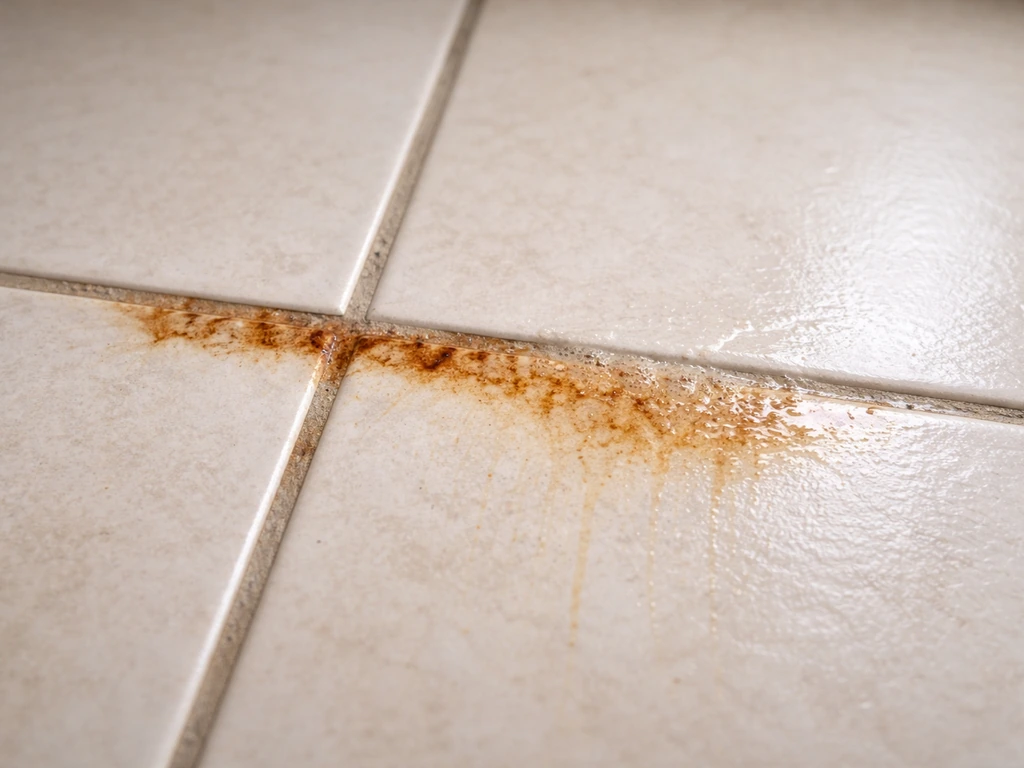
Rust responds to acid-based treatments and doesn't behave like biological growth in terms of seasonal timing. The main consideration is temperature: acid cleaners work best above 10°C and shouldn't be used near freezing. A dry, mild spring or summer day is ideal. The bigger risk with rust treatment is rinsing. NPS preservation guidance and GSA procedures both emphasise thorough rinsing after any chemical cleaning to remove residual cleaner, which means you need a day dry enough for the surface to be properly rinsed and then allowed to dry before foot traffic.
Grease and pet stains
Grease and organic stains like pet urine are less weather-dependent than biological growth, but warm temperatures help degreasers penetrate more effectively. Late spring through summer is the practical window, not because these stains are seasonal, but because the warmer surface temperature activates cleaners faster and drying is quicker. The real constraint is the same as everything else: avoid cleaning if rain is due within 24 hours, because runoff from grease cleaners can be harmful to garden plants and soil, and you want the area fully dry before it gets used again.
Matching your method to the day
The method you use shouldn't just be based on the stain or material. It should also match the day's conditions. Here's how to think about it practically. That timing guidance also helps you plan the best time to jet wash a patio for cleaner results best time to jet wash patio.
- Scrubbing with a stiff brush and soapy cleaner: Works in almost any dry conditions above 5°C. Least weather-sensitive method, but you still need a dry surface to assess results and to avoid slipping on a wet scrub.
- Chemical cleaners and biocides: Need still, overcast, dry conditions above 8°C. Avoid windy days (product dries unevenly) and bright sun (product dries too fast and streaks). Avoid if rain is due within the contact/dwell time window.
- Pressure washing / jet washing: Best on a cool, overcast, dry day. Avoid windy conditions that carry spray. Avoid below 5°C, especially if any sealer application is planned afterward. Thorough rinsing is critical: GSA pressure washing procedure specifically requires rinsing to remove all residual dirt and cleaner after the job.
- Natural solutions (vinegar, bicarbonate): Temperature-sensitive like chemical cleaners. Work better in warmer conditions, best reserved for spring and summer.
If you're deciding between chemical cleaning and pressure washing, the condition of your surface should guide you as much as the season. Pressure washing on older brick or sandstone with loose mortar can damage joints and force water into the surface, especially at pressures above 300 psi. GSA guidance sets that as a ceiling even for professional cleaning of masonry. For delicate or older materials, a chemical soak and gentle rinse often gives better results with less risk than a pressure washer.
The related question of the best time to pressure wash specifically, versus other methods, is covered in more depth elsewhere on this site, but the short version is: the same seasonal and weather rules apply. If you're also planning chemical cleaning, the best time to clean patio UK follows the same seasonal and dry-spell logic.
Pressure washing specifically also follows the same seasonal and weather rules, so timing it right helps prevent streaks and fast regrowth best time to pressure wash. If you’re trying to learn how often to pressure wash your patio, treat the schedule like a seasonal and weather-dependent routine rather than a fixed date pressure wash specifically.
If you want a quick answer for when to power wash patio instead of using other methods, spring and early autumn are usually the safest bets. Spring and early autumn, overcast and dry, above 8°C.
Prep and aftercare timing you can't skip
Before you start
- Clear the patio completely. Remove furniture, pots, and any debris. Sweep away loose moss, leaves, and dirt the day before if possible.
- Pre-wet the surface with plain water before applying any chemical cleaner. This protects porous surfaces from absorbing the chemical too fast and prevents product from drying in patches.
- Water down plants and borders around the patio thoroughly before you start, and ideally cover them with a tarp or sheeting. Chemical runoff, especially from biocides and degreasers, can damage or kill plants and harm soil biology.
- Check the forecast. Confirm you have at least two dry days ahead before you commit to chemical cleaning or pressure washing. If sealing afterward, check for four to seven dry days depending on your surface material.
After cleaning
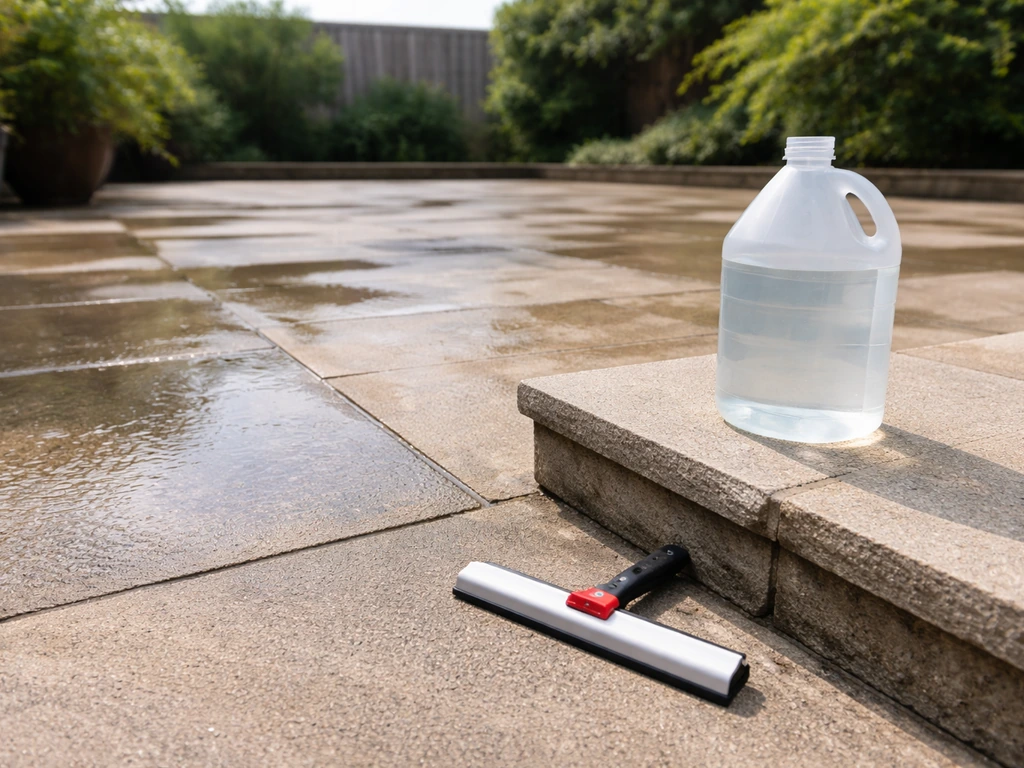
Rinsing matters more than most guides suggest. Residual cleaner left on the surface can cause streaking, damage the surface over time, and prevent sealer from bonding correctly. Rinse thoroughly until the runoff runs clear, then leave the surface to dry completely before any foot traffic or sealing.
Drying and sealer curing timelines vary by product, but here are the practical benchmarks to plan around: most sealers are touch dry in 4–6 hours but need 24–48 hours before foot traffic and full trafficking. For a practical answer to how long pressure washing takes, you should plan around surface size, the level of grime, and your rinsing and drying time afterwards how long does it take to pressure wash a patio.
Bond It's block paving sealer specifies 24 hours before any foot traffic and 48 hours after a dry spell for complete cure. Bostik Pave Seal requires at least 48 hours of complete drying. For pressure-washed sandstone or porous concrete, Bondall recommends waiting 4–7 days after high-pressure cleaning before sealing. One hard rule that CHC Pressure Washing reinforces: never let freshly sealed concrete or stone freeze within 24 hours of application.
Check the forecast before you start, not just when you finish.
If you want your clean patio to stay cleaner for longer, applying a sealer in the right conditions is the most important aftercare step. It reduces the foothold for algae and moss, makes future cleaning faster, and protects porous surfaces from staining. But a sealer applied in the wrong conditions (damp surface, high humidity, frost risk) does more harm than good. Better to wait for the right window than rush it.
Your practical next-step checklist for right now
It's early June, which is a genuinely good time to clean your patio. Here's how to make the most of it. As a general rule, pressure wash your patio when the weather is dry and mild, then allow the surface to dry fully before using it again how often to pressure wash patio.
- Check your 5-day forecast. Find a window with at least two consecutive dry days, ideally with mild temperatures and low wind. Overcast is better than full sun for chemical application.
- Identify your patio material and match your drying expectations to it. Porcelain: 48 hours is usually enough. Concrete and brick: 48–72 hours before sealing. Sandstone or porous stone: aim for 4–7 days of dry weather before applying any sealer.
- The day before: sweep thoroughly, remove loose moss by hand or with a stiff brush, and soak surrounding plants and borders.
- Cleaning day: pre-wet the surface, apply your chosen cleaner in still, overcast conditions, respect the full contact time (15 minutes minimum for biocidal treatments), then rinse thoroughly until runoff is clear.
- Identify what you're cleaning. Algae and moss: biocidal cleaner with thorough rinsing. Rust: acid-based treatment above 10°C with careful rinsing. Grease or pet stains: degreaser, warmer day preferred, rinse and dry before foot traffic.
- If you're sealing, wait for the full recommended drying window for your surface type, confirm no frost is forecast within 24 hours of application, and check humidity: high humidity will cloud some sealers.
- Keep furniture and plant covers off the surface until fully dry and cured.
FAQ
What should I do if rain is predicted the day after I plan to clean?
If rain is forecast within 24 hours, skip the treatment day, because many cleaners need uninterrupted contact time and rain can wash active ingredients off early. If rain is only expected after you have rinsed, focus on rinsing first, then protect the surface from becoming re-wet for the minimum two-day dry window.
Can I clean my patio outside of late spring or early autumn, like in March or October?
Yes, but only if the patio stays above freezing and dry enough for rinsing and then drying. The safer approach is to clean in a mild window with at least 8°C during work hours, use lighter dosing to avoid residue, and delay any sealing until the surface has fully dried and the cure window matches the product instructions.
Will cleaning right before a wet spell still work to remove algae or moss?
For biological growth, cleaning just before rain often reduces regrowth but does not prevent it, because spores and organisms remain. Your best bet is to time the cleanup so you get a still dry, overcast-to-mild day for application and at least two full days of dry weather after rinsing.
How can I tell if my patio is dry enough to seal after cleaning?
For sealing, do not rely on “surface dry to the touch” as your only signal, because sealer can fail to cure properly if trapped moisture remains. Plan for the product’s full cure time, allow 24 to 48 hours before foot traffic for most sealers, and check that humidity and dew risk are low during the night after application.
What weather conditions are most likely to cause streaks after I clean?
Mild, damp, cloudy weather can look fine for scrubbing, but it can increase streaking and cloudy finish if chemical residues dry unevenly. The practical rule is overcast and mild is ideal, drizzle is not, and windy days make product dwell time inconsistent.
What should I do if my patio looks patchy or streaked after cleaning?
If you notice patchiness or residue, re-rinse thoroughly with a low-pressure hose once the cleaner has had time to dwell as required, then let the surface dry fully before deciding on any second treatment. Avoid applying more sealer over cloudy residue, because it can lock in the problem and reduce adhesion.
Why do I sometimes get white marks or efflorescence after cleaning and rain?
If you see salt-like white marks after cleaning, treat it as possible efflorescence rather than simple dirt. You generally need to allow extended drying (often longer than the standard two days) and ensure the surface is fully rinsed, then postpone sealing until the marks stop appearing.
How do I choose between chemical cleaning and pressure washing for older brick or sandstone?
For older or fragile masonry, reduce pressure and use a fan pattern, because high-pressure jets can force water and loosen mortar, leading to future staining. If the patio has failing joints or flaking surfaces, start with chemical soak and gentle rinse rather than high-pressure washing.
Is rust removal timed differently than algae or mold?
Yes, but rust is usually safer to handle with acid-based cleaners, not biocides, and it still depends on temperature. Keep to dry, mild conditions above 10°C, and rinse very thoroughly because leftover acid can damage surrounding surfaces and interfere with any later sealer bonding.
Can I combine treatments (like biocide and stain treatment) in the same day?
If you plan to use a patio cleaner plus a biocide, avoid stacking products too close together. A common mistake is applying without matching contact time, then sealing immediately, which can trap residue and slow curing, especially in high humidity.
Does the two-day dry rule change for porous stone like sandstone?
If you have sandstone or other porous stone, extend your dry window to reduce water marks and improve sealer curing, often aiming for 4 to 7 dry days depending on how the surface behaves. For non-porous materials like porcelain, you can usually follow the standard two-day dry rule more comfortably, as long as temperatures are above freezing.
What if the temperature is close to the minimum, like 7°C to 9°C?
If the temperature is marginal, adjust the plan by choosing the warmest part of the day for application, using a milder dose per the label, and prioritizing correct contact time before rinsing. Do not rush sealing, because cold or lingering damp can cause poor adhesion and incomplete cure.
How should I time cleaning for pet urine or grease stains to avoid harming plants?
For pet urine and grease, the key constraint is plant and soil runoff, not biology. Clean only when rain is not due within 24 hours, and consider rinsing and containing runoff to prevent fertilizer-like impacts on nearby garden growth.
What is a simple, realistic day-by-day plan for the best results and sealing?
A practical schedule is: pick the earliest day in late spring or early autumn with a forecasted two-day dry period, start with cleaning and rinsing, then measure readiness for sealing by both dryness and cure timeline. If you cannot guarantee the dry-spell, postpone sealing and just focus on cleaning and rinsing properly first.
Next Article
Best Time of Year to Power Wash Patio for Clean Results
Learn the best season, weather cues, and material tips for power-washing your patio, with a day-by-day action plan.