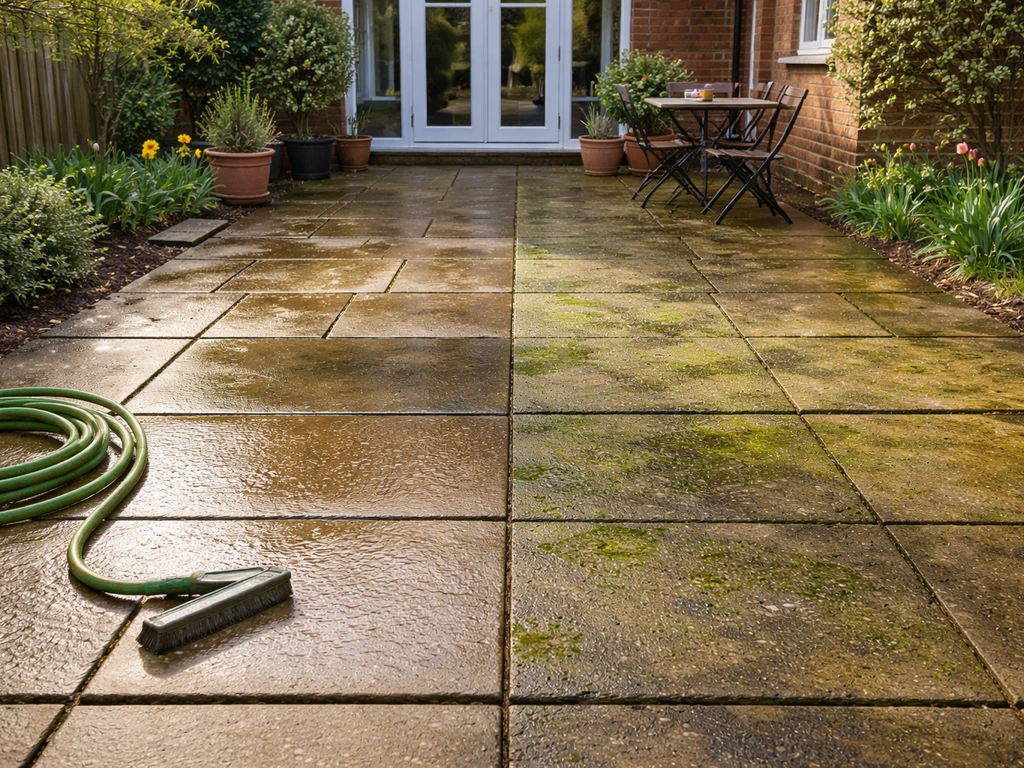
The best time to power wash your patio is late spring to early summer, once overnight temperatures are consistently above 50°F (10°C), there's no rain in the forecast for at least 48 hours, and relative humidity is below 60%. That combination gives your patio surface enough time to dry fully before mold and algae can take hold again. If you're reading this in June, you're right in the sweet spot.
When to Power Wash Patio: Timing and Material Tips

Rhea Lang
12 Jun 2026
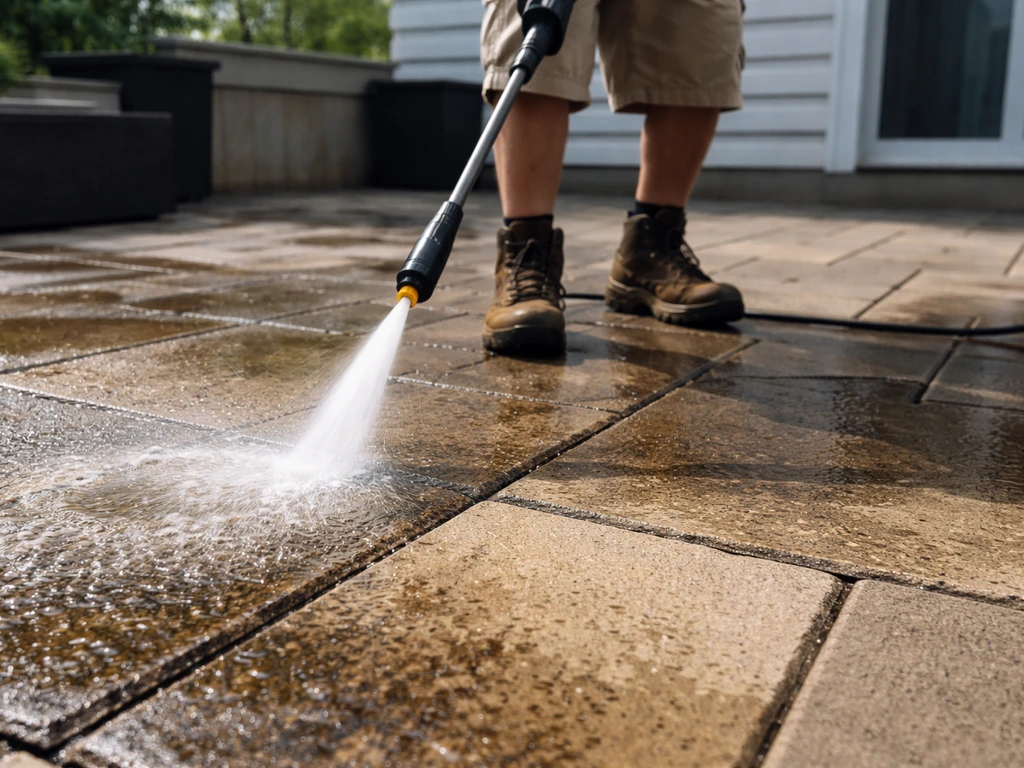
Quick note on terminology: power washing and pressure washing are essentially the same job for a patio. Power washers heat the water slightly, which can help with grease and organic staining, but for most homeowners the timing rules, the technique, and the risks are identical. I'll use both terms throughout, but don't stress about the distinction.
Best time of year to pressure wash your patio
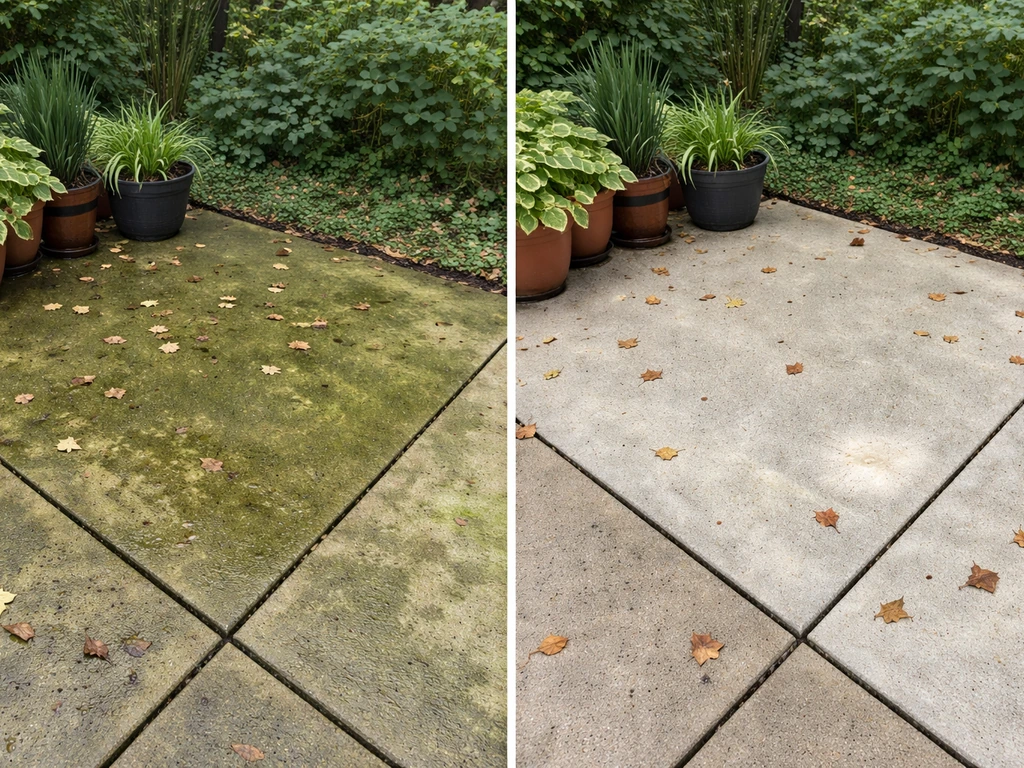
Late spring (April through June) is the standout window for most climates. Winter is over, so you're not fighting frost or frozen joints, but summer heat hasn't set in to dry the surface too aggressively or bake any detergent residue into the stone before you can rinse it. Winter is over, so you're not fighting frost or frozen joints, but summer heat hasn't set in to dry the surface too aggressively or bake any detergent residue into the stone before you can rinse it, which is why the best time of year to power wash patio is typically spring. You're also cleaning away everything that accumulated over winter: moss, algae, leaf stain, and general grime that built up during the wet months.
Early autumn (September to October) is a solid second choice. Cleaning before the wet season begins removes the organic debris that would otherwise sit on the surface all winter and feed algae and moss growth. If you seal after washing, autumn gives the sealant a chance to cure before the rain and frost arrive.
Avoid washing in winter or early spring if overnight lows are still dropping below freezing. Water driven into cracks and joints by a pressure washer will expand as it freezes, and on materials like sandstone, slate, or natural stone that can cause spalling and cracking. I've seen patios take real damage this way. Wait until the last frost has passed.
Mid-summer can work, but there are two things to watch for: direct intense sunlight that dries soap before you can rinse it (leaving white residue), and the fact that algae and moss regrow faster in warm, humid conditions. Clean in the morning when it's cooler, and rinse thoroughly.
Weather and timing factors that actually matter
Temperature
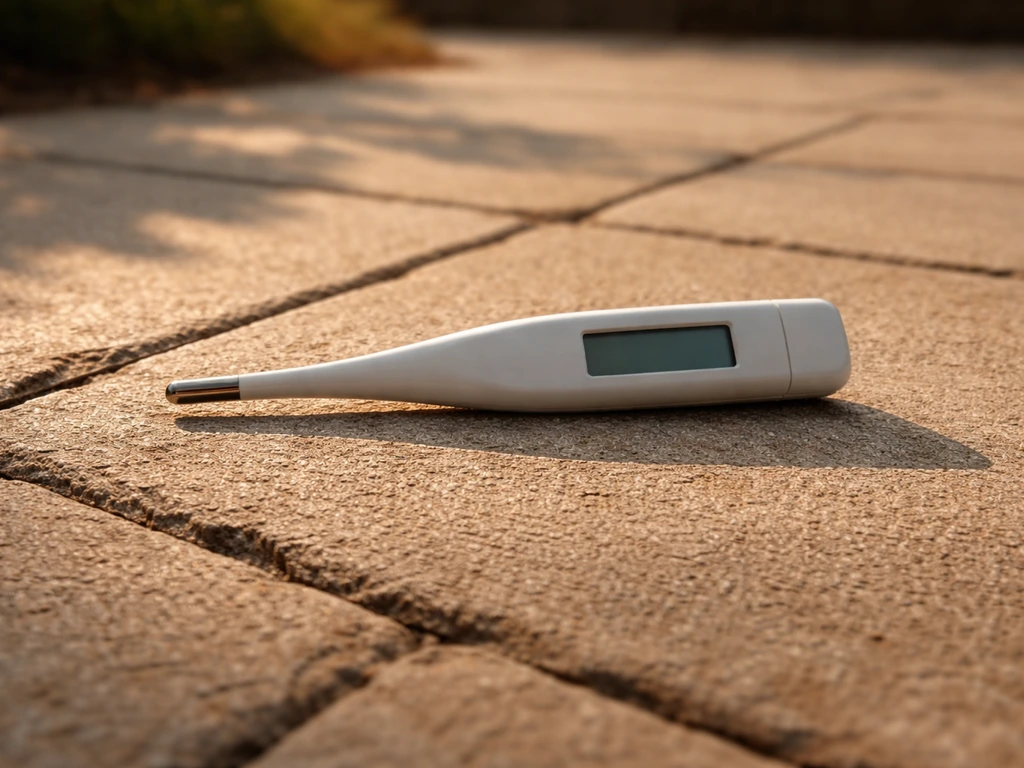
Aim for air temperatures in the high 60s to mid 70s°F (around 18 to 24°C) on the day you clean. Below 50°F (10°C) and drying slows dramatically, which means moisture sits in joints and surface pores far longer than it should. Above 85°F (30°C) in direct sun and you're fighting the heat as much as the dirt.
Rain forecast
Check the forecast before you pull out the washer. If rain is coming in the next 48 hours, reschedule. Washing a patio and then getting rained on the same day defeats the purpose and can redeposit debris before the surface dries. Official pressure washing management guidance (including state-level environmental guidelines) explicitly flags this: don't start surface treatment when rain is forecast. Runoff from cleaning products is also an environmental concern, so dry conditions matter for more than just drying time.
Humidity
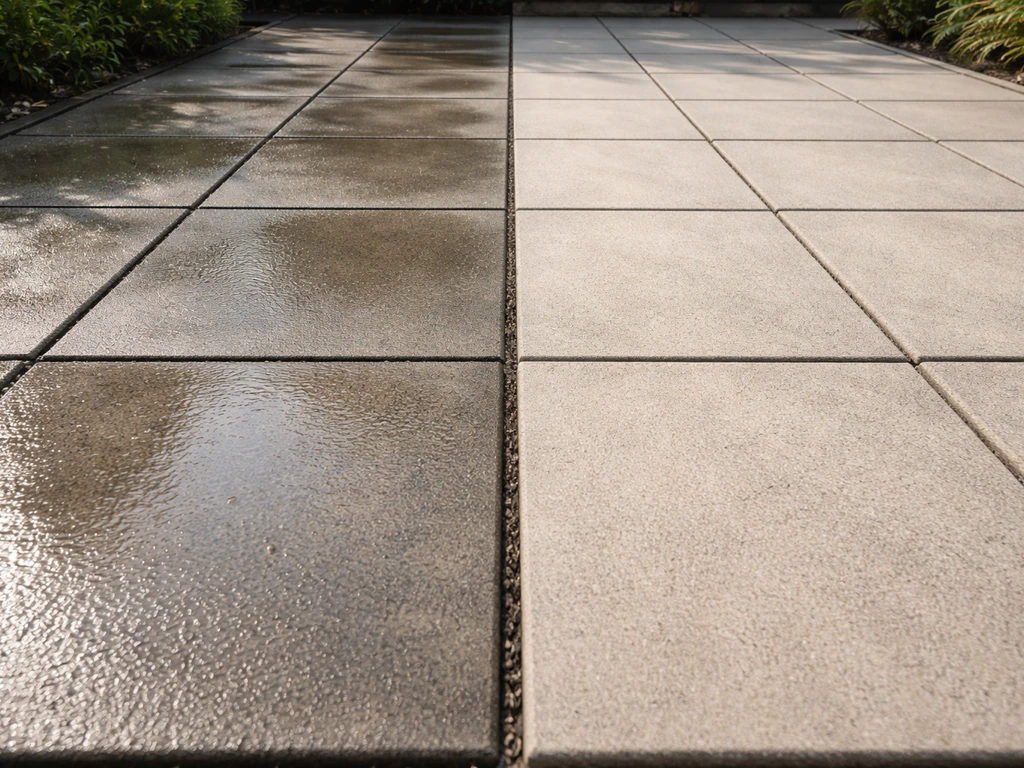
Relative humidity below 60% is the target. High humidity slows drying significantly. Home Depot’s paver sealer documentation also warns that higher humidity can slow drying time, so you should allow about 24 hours to dry and avoid vehicle traffic for 48 hours Home Depot / PDF. If you're in a humid climate or it's been a damp week, give it an extra day before you start. The dew point is worth thinking about too: if the surface temperature is close to the dew point, moisture will condense on your freshly cleaned patio and keep it damp far longer than you'd expect. Early morning on a humid day can mean wet surfaces even without rain.
Best time of day
Mid-morning is ideal, usually around 9 to 11 a.m. The surface has warmed up enough to help drying but isn't in full direct sun yet. Avoid washing in full midday sun (soap dries before rinsing on light-coloured stone), and avoid late afternoon if you expect cool or damp evenings, since the surface may not be fully dry before the temperature drops.
Drying time to plan for
In good conditions, most patios are surface-dry within a few hours. If you're wondering how long does it take to pressure wash a patio, use these surface-dry windows in good conditions as your baseline. But if you're planning to apply a sealer afterward, plan for 24 to 72 hours of dry, sunny weather after power washing. Pavers and natural stone joints need that full drying period before sealant goes on, otherwise you trap moisture underneath and the sealer fails. I always allow at least 48 hours between washing and sealing, even in good weather.
Signs your patio needs cleaning right now
Timing isn't only about the calendar. Sometimes the patio tells you it needs cleaning regardless of season. Here's what to look for:
- Green or black slippery film: This is algae or mildew. It's a slip hazard and will spread aggressively if left. Clean it as soon as conditions allow.
- Visible moss growth: Moss holds moisture against the surface and gradually loosens jointing sand and mortar. The sooner it comes off, the better.
- Orange or brown rust spots: Usually from metal furniture legs or iron in the stone itself. These don't get better on their own and can etch deeper over time.
- Grease and oil marks: BBQ grease and cooking oil attract dirt and are much harder to shift once they've soaked in. Clean within a few weeks of the stain appearing.
- Pet stains and odour: Urine can stain and etch porous surfaces like sandstone and concrete. This is one case where waiting for the 'perfect' season is the wrong move. Clean when it happens.
- General grey or brown dullness: A surface that's lost its colour under a layer of general grime, leaf tannins, or weathering is overdue. A good power wash will restore it noticeably.
- After a storm: Storms push debris, leaf matter, and muddy water into joints and across surfaces. A wash within a few days of a major storm prevents staining from setting.
Material-specific timing and caution
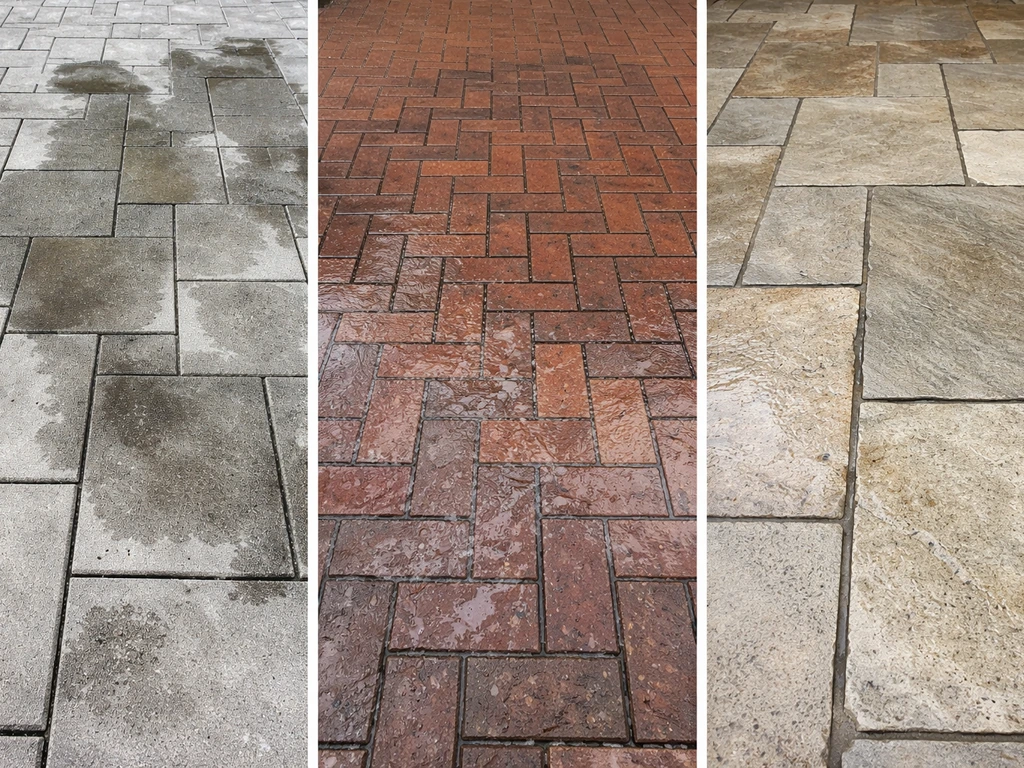
The right time to clean also depends on what your patio is made of. Some materials handle pressure washing easily. Others need much more care, and the risk of damage from wrong timing or wrong pressure is real.
| Material | Safe pressure range | Key timing caution | Special notes |
|---|---|---|---|
| Concrete | Up to 3,000 PSI (standard) | Avoid freezing conditions; wash in dry weather | Most forgiving surface; can handle strong detergents and higher pressure |
| Brick | 1,200 to 1,500 PSI | Avoid winter; allow full drying before sealing | Mortar joints are vulnerable; use a wide fan tip, not a narrow jet |
| Natural stone (limestone, granite) | 1,000 to 1,500 PSI | Avoid washing before first frost; allow 48-hour dry | Porous surfaces absorb water; high humidity prolongs drying |
| Sandstone | Under 1,000 PSI | Never wash in cold or wet conditions; check for frost risk | Very soft and easily damaged by high pressure or acid cleaners; moisture sits longer in pores |
| Slate | 800 to 1,200 PSI | Avoid washing before freezing spells | Can delaminate if water penetrates and freezes; keep pressure low |
| Porcelain | 1,500 to 2,000 PSI | Low frost risk; most weather-tolerant | Non-porous so dries faster; watch grout joints which are more vulnerable than the tile itself |
Sandstone and slate deserve special attention. Both are softer and more porous than concrete or porcelain, which means they absorb and hold moisture longer after washing. In cool or shaded conditions, they can stay damp for 48 hours or more. If rain follows or temperatures drop, that trapped moisture becomes a problem. Always choose a warm, dry, sunny stretch before washing these materials.
Porcelain is the most forgiving in terms of timing. Because it's non-porous, it dries quickly and isn't affected by freeze-thaw the way natural stone is. You can wash porcelain earlier in the season than you'd risk with sandstone.
How often should you actually power wash your patio?
For most patios in a typical UK or US climate, once a year is the practical minimum. That one annual clean, usually in spring, removes the winter buildup and sets you up for a clean surface through the outdoor season. If you're wondering about the best time to clean patio in the UK specifically, the ideal window is usually spring or early autumn so the surface dries properly between wet spells. If your patio is shaded, surrounded by trees, or in a damp climate, you'll likely need twice a year: spring and autumn.
Beyond the scheduled clean, there are spot-wash moments: after a big BBQ season, after heavy leaf fall, or whenever you notice the signs listed above. A pressure washer is the right tool for those situations, but you don't need to do a full deep clean every time. If you are wondering how often to pressure wash a patio, the schedule usually comes down to climate, shade, and how quickly grime and algae build up how often to pressure wash your patio. A targeted blast on a grease spot or algae patch, followed by a good rinse, is sometimes all it takes.
One thing I'd push back on: more frequent washing is not always better. Power washing removes jointing sand over time, can erode softer surfaces, and strips sealant if you're not careful. For most surfaces, once every 12 months for a full clean, with spot treatment as needed, is the right balance. Over-washing is a real issue, particularly on sandstone and brick.
What to do next: prep and choosing the right approach
Once you've decided the timing is right, do a bit of prep before you reach for the washer. It makes a real difference to the result.
- Clear the patio completely: Move all furniture, plant pots, and accessories. Water and detergent will get everywhere and you want clear access to every surface.
- Sweep off loose debris: Leaves, grit, and dirt on the surface will just be blasted around and can clog drains. A quick sweep first saves you time.
- Check your pressure washer settings: Start lower than you think you need, especially on stone. You can always increase pressure, but you can't undo damage. Use a wide fan tip (25 to 40-degree nozzle) for most surfaces, not a zero-degree pencil jet.
- Pre-treat problem areas: For moss, algae, or mould, apply a patio biocide or moss killer 15 to 30 minutes before washing. Let it work, then wash off. For grease, a dedicated degreaser applied first will lift the oil so the pressure washer can remove it effectively.
- Protect nearby surfaces: Cover drains with mesh if you're using cleaning chemicals, and keep detergent away from lawn edges and planted borders.
- Work with the slope: Always wash toward the drain or the edge of the patio so dirty water runs off cleanly.
Matching the cleaning method to the stain
Pressure washing alone is enough for general dirt and mild algae. For heavier green staining, moss, or mildew, combine a biocidal cleaner with the pressure wash. For rust, you need a dedicated rust remover before washing as the pressure washer won't touch rust on its own. For grease and oil, a degreaser pre-treatment is essential. Pressure washing without pre-treatment for these stains is wasted effort.
Mistakes that cause damage or fast regrowth
These are the ones I see most often, and some I've made myself when I was less careful about timing and technique.
- Washing when rain is coming: You lose the cleaning benefit, push contaminants into joints, and potentially cause runoff issues. Always check the 48-hour forecast.
- Washing too early in spring when frost is still possible: Water driven into joints and pores by a pressure washer and then frozen will cause cracking, especially on sandstone and slate. Wait until overnight temps are reliably above freezing.
- Using too much pressure on sensitive surfaces: Sandstone, older brick, and slate can all be damaged by pressures that are totally fine on concrete. Start low. I learned this the hard way on an old flagstone path where I pulled the surface face off a couple of slabs by going too hard, too close.
- Washing in full midday sun without rinsing fast enough: Soap and detergent residue left on warm stone dries into a white haze. Work in sections and rinse each one before moving on.
- Skipping a post-wash treatment: Washing removes biofilm but doesn't prevent regrowth. If you don't follow up with a biocidal treatment or sealer, algae and moss will return faster than before because you've removed the old growth barrier.
- Not allowing full drying before sealing: If you rush into sealing while the surface is still damp, you trap moisture and the sealer will peel or cloud within months. Minimum 24 hours, ideally 48 to 72 hours of dry weather.
- Washing at a 90-degree angle to jointing: Always hold the lance at an angle to the joints rather than directly into them. A straight-on blast removes jointing sand rapidly, which leads to loose pavers and weed infiltration.
If you're also thinking about the specific best time of year to clean (beyond just pressure washing), or how often jet washing fits into your maintenance schedule, those are related questions worth looking at alongside this guide. The core timing logic overlaps heavily, but there are nuances around method and frequency depending on your surface and climate.
FAQ
Can I power wash my patio if there is only a light drizzle or mist forecast, not a full rain?
If precipitation could reach the surface during or right after washing, reschedule. Even light mist can leave the patio damp longer than you expect, and it can also make detergent residues dry as white streaks on light stone. A safe rule is to wait until rain is not just unlikely, but absent for at least the full drying window you need (typically several hours), with no new precipitation for the next 48 hours.
What should I do if I already power washed and then the weather turned cool at night?
If nights drop close to freezing or the surface starts to feel cool and wet, avoid sealing and let it dry fully first. For natural stone, trapped moisture in pores and joints can worsen if temperatures swing. If the patio is still damp the next day, give it extra warm, dry time or use airflow (not heat guns on stone) before any sealant goes on.
Is there an exact humidity or dew point threshold I should follow?
Humidity below 60% is a practical target, but dew point closeness matters more in real conditions. If the patio surface temperature is within a few degrees of the dew point, expect condensation and slower drying even without rain. In that case, plan for an additional day and do the wash closer to mid-morning rather than early morning.
How do I know my patio is fully dry enough before sealing?
Do a simple moisture check instead of guessing by time. Tape a small plastic square to the surface for a few hours, if you see condensation or darkening underneath, it is not ready. Also, confirm that paver and natural stone joints look dry throughout, not just on the top layer, since sealant failures often come from moisture trapped in gaps.
Will power washing in hot weather damage the patio or just make it harder to rinse?
It can do both. In direct sun, soap can dry before you rinse, leaving residue that becomes more noticeable and harder to remove later. Heat can also make some sealants and cleaners flash or flash-react, so if you must wash during warm periods, start earlier, work smaller sections, and keep rinse timing tight.
Can I power wash a patio that has a thin layer of moss or algae but no obvious buildup?
Yes, but treat it as a biocide-friendly spot cleaning rather than only rinsing. Light moss and algae can re-establish quickly, especially in shade. Use a biocidal cleaner on the affected area, let it dwell as directed, then rinse thoroughly. This reduces regrowth compared with washing alone when growth is already starting.
How often should I power wash if my patio is under trees or in shade?
Plan for more frequent spot treatments, and potentially a second full wash. Shade keeps surfaces cooler and damp, so algae and organic debris build up faster. A common approach is one spring deep clean plus a targeted autumn clean for green staining, then additional spot washing after leaf fall or BBQ grease incidents.
Are there times when I should avoid power washing even if temperatures look good?
Avoid it when the patio surface is already wet from dew, foggy mornings, or just after cleaning it with another method. Also pause if you see active efflorescence, unstable joints, or loose mortar, because forcing water into gaps can worsen displacement. If you suspect structural or drainage issues, fix those first, then wash later when conditions are ideal.
Does the “late spring to early summer” timing change for different patio materials beyond what I’ve read?
Yes, especially for porous stones. Porcelain dries fastest and is generally more forgiving, while sandstone and slate can stay damp in cool or shaded stretches, even if the air temperature is in range. If your patio is mostly shade or is near a wall that traps moisture, treat it like a natural stone scenario and choose the warmest, driest window available.
What’s the safest way to handle grease or rust staining in terms of timing?
For grease, timing matters because pre-treatment needs contact time while the surface is dry. Apply a degreaser to a cool, dry morning surface and then wash within the recommended window, ensuring you fully rinse before any soap can dry. For rust, power washing alone will not remove it, so plan for a dedicated rust remover treatment, which may require extra dry and rinsing time compared with algae or dirt.
Next Article
Best Time of Year to Clean a Patio for Best Results
Seasonal timing for patio cleaning by material and problem, with weather checks for safe drying and best results.