The best all-round waterproofing spray for most patio cushions is 3M Scotchgard Heavy Duty Water Shield. It works on polyester, acrylic, canvas, and nylon, stays breathable so the fabric doesn't stiffen, dries odorless, and gives solid water-bead performance after two light coats. If your cushions are Sunbrella or another solution-dyed acrylic, 303 Fabric Guard is the better pick because it's specifically tuned for performance outdoor fabrics and restores the factory-level DWR (durable water repellent) finish more faithfully. Either way, the spray itself is only half the job: if you skip cleaning the cushions first, the coating bonds to grime instead of fabric and fails within weeks.
Best Waterproofing Spray for Patio Cushions: How to Choose and Use
Rhea Lang
28 May 2026
What waterproofing spray can and can't do for patio cushions
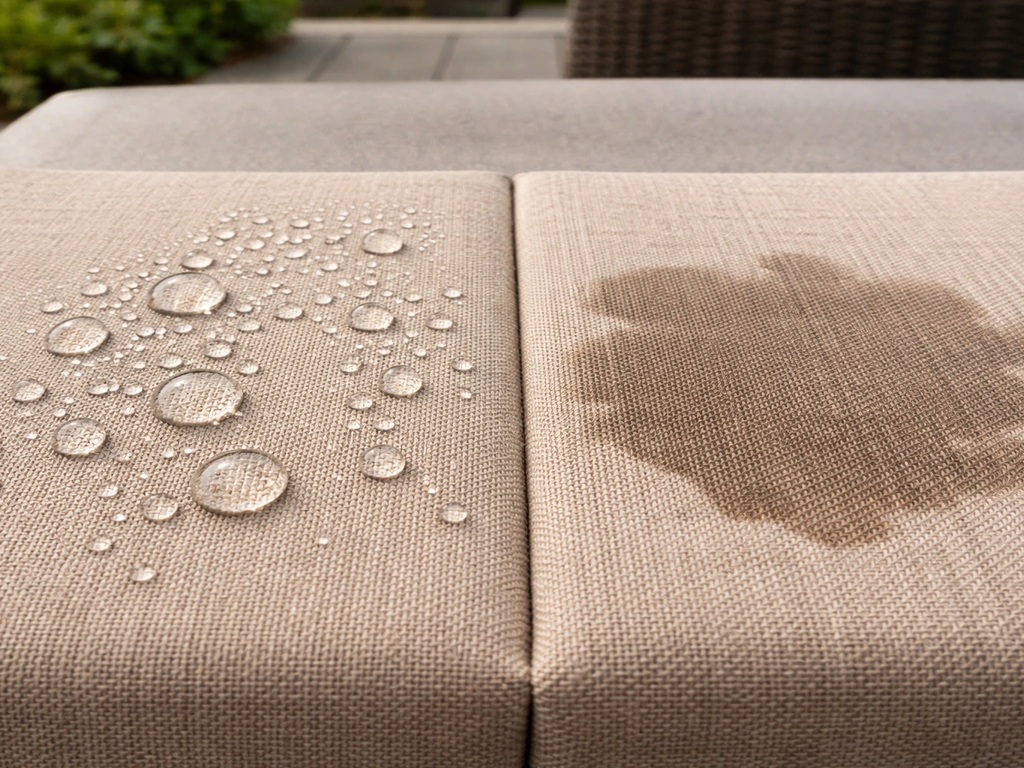
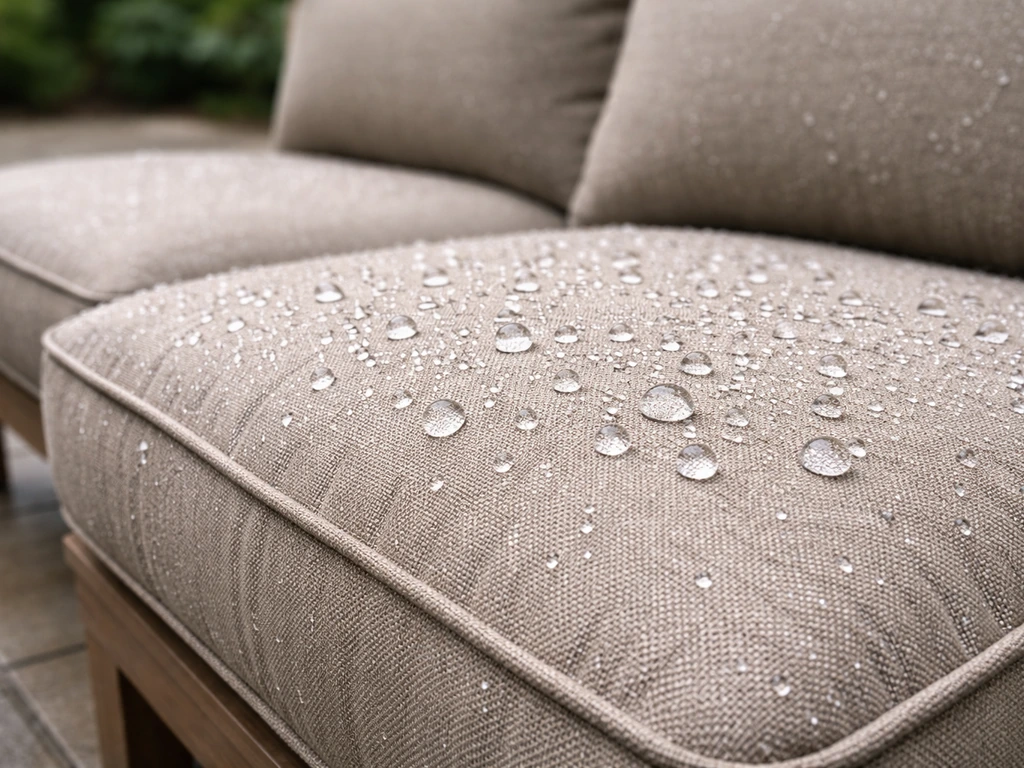
It's worth being straight about this because the marketing language can mislead you. Almost every spray sold for patio cushions is a water repellent, not a waterproof coating. That's an important distinction. A water repellent treatment makes water bead up and roll off the fabric surface.
Under short exposure to rain, most of it sheds cleanly. Under sustained, heavy rain or pooling water with any pressure behind it, some moisture will eventually work through.
Centexbel explains that the AATCC 42 / ISO 18695 test assesses water resistance under rainfall or splash conditions, which is especially suited to finishes expected to repel liquid water compared with hydrostatic pressure tests for fully waterproof materials Under sustained, heavy rain or pooling water with any pressure behind it, some moisture will eventually work through. .
That's not a product failure, that's just physics. Patio cushion fabrics like polyester and acrylic are porous by design, partly for breathability and comfort.
What a good spray genuinely does well: it significantly extends how long your cushions shed light-to-moderate rain before moisture penetrates, it reduces the amount of water absorbed into the foam core (which is what causes musty smells and slow drying), and it slows the growth of mold and mildew on the surface by keeping the fabric drier. Some sprays also add meaningful UV protection, which helps slow fading. What it won't do: make a cheap cushion perform like a purpose-built waterproof outdoor seat pad, fix a cushion that's already saturated and mildewed through, or compensate for leaving cushions uncovered through weeks of rain.
One thing I want to flag from testing: the AATCC 22 spray test that brands sometimes reference on packaging measures how water beads on the surface in controlled conditions. AATCC TM22, often referenced as “AATCC 22,” evaluates water repellency by spraying water under controlled conditions and visually rating the wetting pattern against a rating scale, which assesses repellency rather than true rain penetration under sustained soaking or pressure AATCC 22 spray test. It doesn't replicate real sustained rainfall.
A cushion rated excellently on that test can still feel damp inside after an hour of actual rain. Set your expectations accordingly, and think of the spray as solid protection for light showers and occasional exposure, not a substitute for a decent patio cover or cushion storage during extended wet weather.
Choosing the right spray: fabric compatibility, UV and mildew protection, and finish
The biggest mistake people make is grabbing the first spray they find without checking fabric compatibility. Most repellents work fine on synthetic outdoor fabrics, but some formulas can darken or stiffen natural fibers or leave a sheen on certain weaves. Before buying, check what your cushion covers are made of. Common patio cushion materials are polyester, solution-dyed acrylic (Sunbrella being the most recognized brand), olefin (polypropylene), canvas, and blended weaves. All of these respond well to fluoropolymer-based DWR sprays, which is the technology inside most of the reliable products.
Beyond basic water repellency, look for these features when comparing products:
- UV inhibitors: look for this specifically if your cushions are sun-exposed. UV protection in the spray doesn't replace fabric UV resistance, but it slows photodegradation of the coating itself and gives a small added buffer against fading.
- Mildew/mold resistance: some formulas include an antimicrobial agent or create a surface hostile to mold growth. This is worth paying for if your outdoor area is shaded or humid.
- Breathability: this matters for comfort cushions. A spray that clogs the fabric structure will make the cushion feel slightly crispy or stiff after application. Look for products that explicitly state the treatment is breathable. Scotchgard Heavy Duty Water Shield calls this out directly.
- Dry time and odor: solvent-based sprays tend to perform slightly better on heavily used outdoor fabrics but have a stronger initial smell and need more ventilation. Water-based formulas like 303 Fabric Guard dry faster and are more pleasant to apply in an enclosed patio area.
- Finish: most good outdoor fabric sprays dry invisible with no change to the fabric texture if applied correctly. Avoid sprays marketed primarily for leather or shoes since these can leave a visible sheen on fabric.
Prep steps: clean the cushions first (and when to treat mildew)
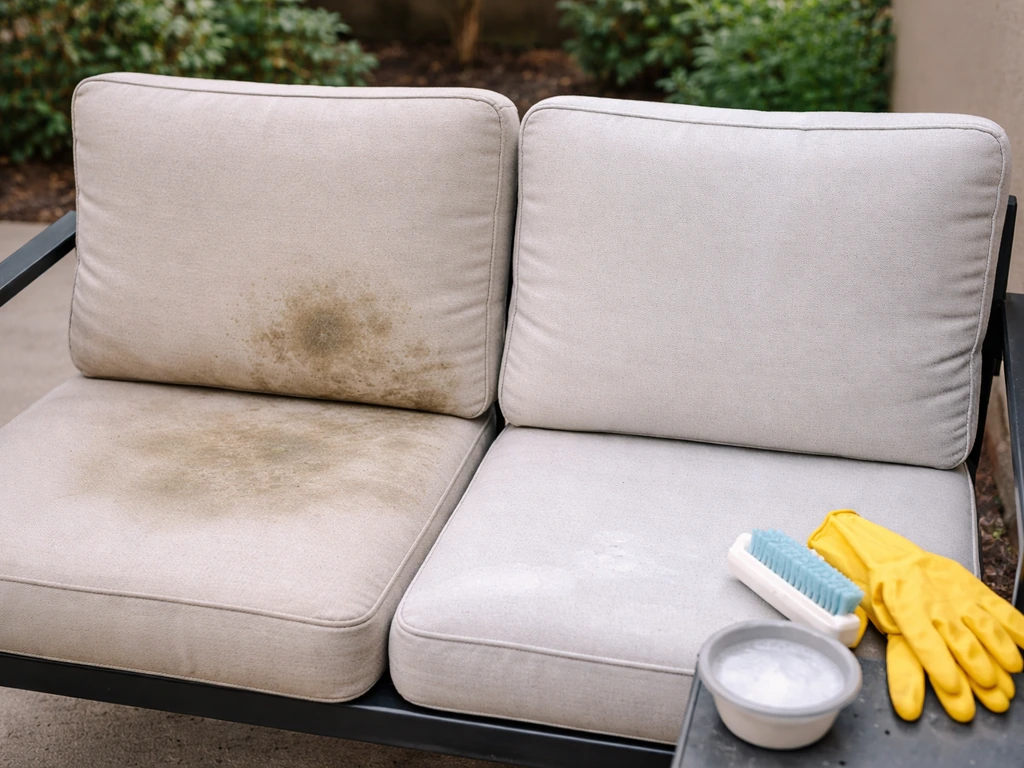
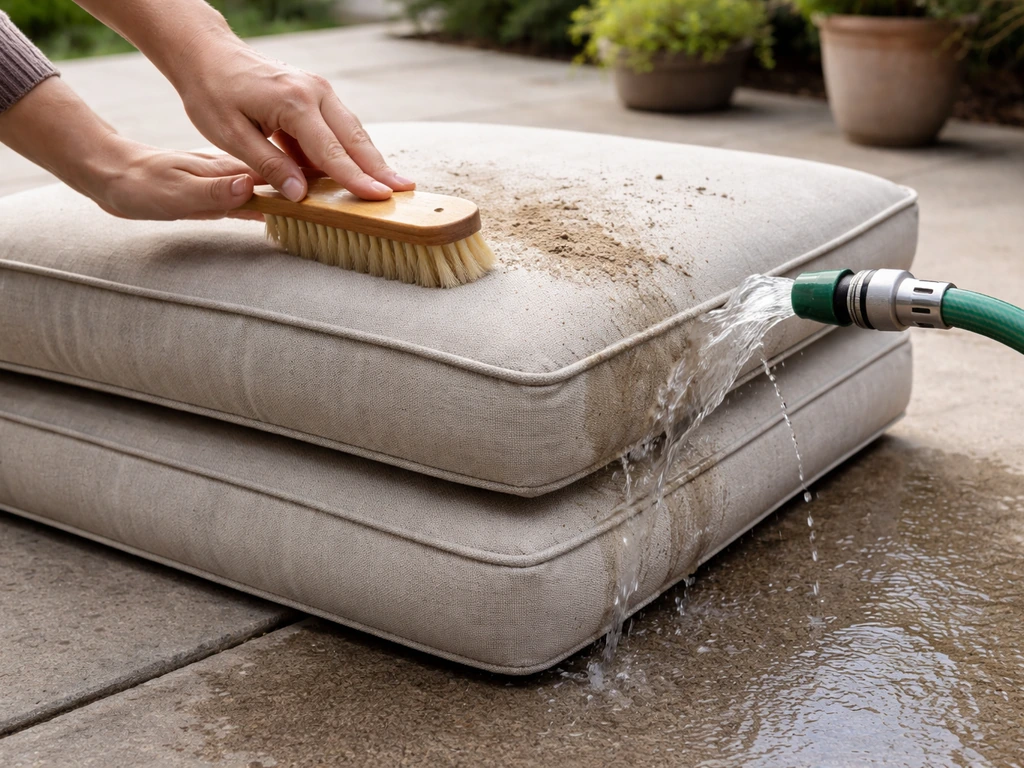
I cannot stress this enough: do not spray waterproofing onto dirty cushions. The spray forms a bond with whatever is on the surface of the fabric. If that's dust, bird mess, sunscreen residue, or old mildew, you're sealing that in and the coating will fail fast. For cushions that are just dusty or lightly soiled, a good brush-off and a wipe-down with mild soapy water (washing-up liquid works fine) is enough. Rinse well and let them dry completely before you even open the spray can.
For cushions with visible mildew or a musty smell, you need to treat that before waterproofing. Mix one part white vinegar with one part water in a spray bottle, apply it to the affected areas, leave for 10 to 15 minutes, then scrub with a soft brush and rinse. For heavier mildew, a diluted oxygen bleach solution (like OxiClean dissolved in water, not chlorine bleach which can damage colored fabrics) applied for 20 minutes before rinsing is more effective. After any mildew treatment, the cushions must dry fully, ideally in direct sunlight for several hours. Waterproofing a cushion that's still damp inside is pointless and creates more mildew problems.
If your cushions have existing waterproofing treatment from the factory that's just worn off, a simple clean and re-spray is all you need. You can test whether the existing treatment is still working by dropping a few beads of water on the fabric: if they roll off, the treatment is intact. If they soak in within a minute or two, it's time to reapply. For brand-new cushions, many higher-end outdoor fabrics come pre-treated from the manufacturer, but a top-up spray after their first season is a smart move and significantly extends protection.
Depending on the cleaning method needed, it's worth knowing your options for different types of soiling. Light grime responds to hand-washing, while heavier built-up dirt might benefit from a more thorough clean before you treat. You may also be wondering whether you can power wash patio cushions before you treat them can you power wash patio cushions. Some homeowners use a gentle pressure wash on cushions before reapplying waterproofing, which can be an efficient approach if done correctly with low pressure to avoid damaging the fabric.
If you also need to tackle patio grime, see how to pressure wash a patio for the right technique and pressure so you don't damage surrounding surfaces. If you are pressure washing anything else nearby, like a patio umbrella, use low pressure and let it dry fully before treating or re-wetting the area can you pressure wash patio umbrella.
So if you're wondering whether you should pressure wash your patio itself, the safer approach is to clean only what needs cleaning and avoid blasting fabric or coatings with high pressure pressure wash my patio. If you are deciding how to clean patios and keep any nearby fabrics or coatings protected, focus on gentle cleaning rather than blasting surfaces with high pressure pressure wash patio. If you are planning to power wash patio cushions, keep the pressure low and let them dry completely before you apply any waterproofing spray.
How to apply waterproofing spray the right way
Application technique makes a bigger difference than most people realize. Done right, you get even coverage, good beading, and no stiffness. Done wrong (too close, too heavy, too few coats), either the fabric gets stiff patches or the protection is inconsistent. Here's exactly how to do it:
- Work outdoors or in a very well-ventilated space. Even water-based sprays produce fine aerosol particles that you don't want to breathe or get on nearby surfaces. Lay cushions flat on a drop cloth or old sheet.
- Shake the can well for about 30 seconds before starting.
- Hold the can 6 to 8 inches (15 to 20 cm) from the fabric surface. Any closer and you risk pooling the product in one spot, which causes stiffness and uneven coverage. Any further and you lose too much to the air.
- Spray in slow, even sweeping passes across the cushion, overlapping each pass slightly. You're aiming for an even light mist across the whole surface, not a heavy wet coat.
- Do all sides, including the sides and back of the cushion if those surfaces will see rain.
- Let the first coat dry fully. For most products, that's 15 to 30 minutes in good conditions (warm, low humidity). The fabric should look dry, not wet or shiny.
- Apply a second coat in the same way. Two light coats outperform one heavy coat every time. The second coat fills in any gaps from the first.
- After the second coat, allow the cushions to cure. Most products need a minimum of 24 hours before rain exposure, and 48 to 72 hours is better if you can manage it. Full cure gives meaningfully better long-term durability.
- After full cure, do a water bead test: drip a little water on the fabric. You should see it ball up and sit on the surface rather than darkening the fabric as it absorbs.
A few things that trip people up in practice: applying in cold or very humid conditions slows drying time significantly and can lead to a tacky finish. Aim to apply when temperatures are above about 10°C (50°F) and there's no rain forecast for at least 24 hours. Also protect your patio frame, tiles, and any nearby surfaces with drop cloths before you start. Overspray from fabric waterproofing sprays can leave a faint residue on hard surfaces and glass, and I've learned this the hard way when I got a faint haze on a glass-topped table I forgot to cover.
The best waterproofing spray picks and who each one is for
Rather than giving you a long list, here are the products that consistently perform well on outdoor cushion fabrics, with honest context about when each one makes the most sense.
| Product | Best for | Key strengths | Watch out for |
|---|---|---|---|
| 3M Scotchgard Heavy Duty Water Shield | Polyester, canvas, nylon, cotton blends, mixed-material cushions | Widely available, breathable formula, dries odorless, proven on outdoor fabrics, good coverage per can | Not the top pick for premium Sunbrella-type acrylic; solvent-based so ventilate well |
| 303 Fabric Guard | Sunbrella and solution-dyed acrylic fabrics, high-end outdoor cushions | Closest match to factory DWR treatment, excellent UV and mildew resistance, water-based and low odor | Costs more per application; slightly longer cure time for best results |
| Nikwax TX.Direct Spray-On | Breathable or technical outdoor fabrics, olefin/polypropylene blends | Water-based, eco-friendlier formula, good for fabrics that need breathability preserved | Less widely available in the US; works best when fabric is slightly damp during application (check instructions) |
| Star Brite Waterproofing Spray with PTEF | Marine-grade use, heavy-duty canvas, awning-weight fabrics | Very durable, handles repeated heavy rain well, good for thicker/heavier cushion covers | Stronger smell during application, overkill for lightweight cushion fabric |
| Rust-Oleum NeverWet Outdoor Fabric | Polyester and synthetic blends needing strong hydrophobic effect | Very aggressive water beading (superhydrophobic), easy to find in hardware stores | Can leave slight sheen on some fabrics; test on an inconspicuous area first |
For most homeowners with standard polyester or mixed-fabric cushions, Scotchgard Heavy Duty Water Shield is the practical choice: it's easy to find, reasonably priced, works reliably, and doesn't require any special prep beyond cleaning. If you've invested in quality Sunbrella or similar acrylic cushions, spend the extra on 303 Fabric Guard. It's specifically formulated for that type of fabric and the protection genuinely holds up longer. For anyone dealing with older, heavily worn cushions, don't overthink it: even a budget repellent spray applied correctly to a clean cushion will outperform an expensive spray applied over dirt or applied in one heavy coat.
How long it lasts and how to tell when it's failing
Realistically, a well-applied waterproofing treatment on outdoor cushions lasts one full outdoor season under normal UK or northern US conditions, or about 6 to 8 months of active use. In hotter, sunnier climates with more UV exposure, you might be looking at reapplying every 4 to 6 months. The treatment doesn't expire all at once; it wears down gradually as rain hits it, UV degrades it, and regular use (sitting, brushing off leaves, cleaning) physically abrades the surface coating.
The clearest sign it's time to reapply is the water bead test. When the treatment is working, water drops sit on the surface and roll off. When it's failing, those drops spread out and the fabric darkens as it absorbs moisture. You might also notice the cushions taking longer to dry after rain, or a slight musty smell developing more quickly. If you get to visible mildew patches, you've waited too long: clean and retreat before the start of each outdoor season as a baseline habit, rather than waiting for failure to happen.
A practical reapplication schedule that works well: clean and retreat at the start of spring before peak outdoor season, then do a quick check mid-season (usually late July or August) and add a single top-up coat if the water beading has noticeably dropped off. You don't need a full two-coat application for a mid-season touch-up if the base treatment is still partially intact.
Safety, compatibility, and common mistakes to avoid
Ventilation is the non-negotiable safety point. Even products marketed as low-odor produce aerosol particles during application that shouldn't be inhaled in quantity. Apply outdoors whenever possible. If you must work in a covered patio or garage, open everything up and position yourself upwind of the spray. Keep children and pets away from the area until the cushions are fully dry.
Always test any new spray on a small hidden section of the cushion first, especially if the fabric is a dark color, a delicate weave, or you're unsure of the material. Some sprays can cause temporary darkening that fades as the product cures, but others (particularly silicone-based sprays not designed for fabric) can leave permanent marks. If you're not sure what your cushion fabric is, check the care label on the cushion or contact the manufacturer before treating.
Here are the most common mistakes I see and how to avoid them:
- Spraying onto dirty or damp fabric: the single biggest cause of premature failure. Always clean and fully dry before treating.
- Applying one heavy coat instead of two light coats: heavy single application causes stiffness and uneven coverage. Two thin coats is always better.
- Not protecting the frame and surrounding surfaces: overspray lands on metal frames, tile, and glass. Cover everything nearby with drop cloths.
- Not allowing full cure time: using cushions in rain within hours of application before the product has bonded properly will wash off a significant portion of the treatment. Wait at least 24 hours.
- Using the wrong product for the fabric type: silicone-based waterproofers, some leather sprays, and heavy-duty industrial sealants are not suitable for cushion fabrics. Stick to fluoropolymer DWR sprays designed for outdoor textiles.
- Expecting full waterproofing from a repellent spray: the treatment improves water resistance substantially but doesn't make cushions truly waterproof under sustained exposure. Store cushions or cover them during extended rain.
- Skipping the mid-season check: a quick water bead test every couple of months takes ten seconds and catches coating failure early, before mildew gets a foothold.
One last point on patio furniture maintenance as a whole: waterproofing the cushions is one part of keeping your outdoor setup in good shape. Keeping the patio surface itself clean and well-maintained reduces the amount of dirt, algae, and mold spores that land on your cushions in the first place. If you are cleaning a paver patio, you can use the same idea: start with proper washing and drying so the surface stays ready for treatment. A clean patio environment extends the life of every treatment you apply.
FAQ
Can I waterproof patio cushions that are still slightly damp?
Yes, but only if you’ve confirmed the fabric is actually dry all the way through. If the surface feels dry yet the foam core is still damp, the treatment can trap moisture and accelerate odors. After washing or any mildew treatment, let cushions dry in good airflow for several hours, then do a quick “press test” (press a folded corner or seam for 30 seconds, if it still feels cool or damp, wait longer) before spraying.
How do I know if my cushions already have a working water repellent coating?
Do a controlled bead test after your cleaning and full dry time. Place 3 to 5 water droplets in different spots and watch for 1 to 2 minutes. If water soaks in quickly or spreads into a dark patch, the treatment is failing and you should reapply. If droplets bead and roll off, you can usually just do a light mid-season top-up instead of starting over.
What happens if I apply too much waterproofing spray in one coat?
For most outdoor fabric sprays, more product does not equal more protection. Heavy coats can leave stiff patches, create tackiness, and reduce even beading. Aim for two light, even passes with proper overlap, and keep the nozzle distance consistent, then let each coat dry fully before deciding on a second. If you accidentally overspray, wait until fully dry and evaluate beading before adding more.
Will waterproofing spray work on every type of patio cushion fabric?
Many sprays work, but not all are compatible with every cushion material and finish. Before spraying, check the cushion care label for fabric type (polyester, solution-dyed acrylic, olefin, canvas, or blends) and look for any “no fluorochemical” or “do not treat with coatings” instructions. If the brand is unclear, test on a hidden seam for 24 hours to check for sheen, color shift, or stiffness.
Are there any cushion materials or weaves that are risky to spray?
Be especially cautious with suede-like or tightly woven specialty fabrics and any cushions with coated backings. For these, run a hidden test first and avoid aggressive scrubbing that can damage the weave. If the fabric is delicate or the label says spot-clean only, consider sticking to a targeted, lightly applied treatment rather than soaking coverage across the entire cushion face.
Can I use a different waterproofing spray on top of a previous one?
You generally should not mix or layer different brands or chemistry types without testing. Switching products can cause uneven curing, different slickness, or inconsistent beading. If you want to change brands, clean thoroughly, let the surface fully dry, then apply the new spray to a small hidden area first, then reassess beading after it cures.
How long should I wait between coats, and can I reapply if it feels dry?
If the can has a “reattach” or “recoat” window, follow it. Otherwise, don’t recoat when the fabric is still tacky or cloudy. A practical rule is to wait until the first coat is completely dry to the touch and no odor or tack remains, then apply the next light coat. In cold or humid weather, drying can take much longer, so don’t rush the timeline.
The fabric looks darker or a little shiny after spraying. Is that normal?
If you see a temporary darkening or a slightly uneven sheen, stop and wait for full cure before judging. Some products change appearance as the coating sets, but permanent marks are usually revealed once fully dry. If beading looks good after cure, you’re fine; if it looks patchy or stiff, you may need to clean and reapply instead of adding more product.
How can I apply waterproofing without soaking the foam or seams?
It’s best to protect the foam from direct saturation and to avoid turning cushions into “coated sponges.” Spray the fabric evenly, keep overspray off the foam edges as much as possible, and avoid heavy misting that soaks through. If water beads start appearing from seams or underside, you’re likely applying too aggressively and should lighten technique for the next pass.
What’s the right cleaning method before waterproofing, especially for grime and mildew?
Use a simple dusting and gentle soap wash method for light grime, then rinse thoroughly and dry fully. For heavy mildew or musty smell, do a separate cleaning step first (vinegar solution or oxygen bleach diluted as appropriate for the fabric), then rinse and dry completely in sunlight or strong airflow. Waterproofing is only effective when the surface is clean because it bonds to fabric, not dirt.
What should I do if my cushions were left out in heavy rain for days?
If cushions get left uncovered during prolonged wet weather, the protective layer will degrade faster and the inner foam may stay damp longer. For recovery, dry them fully first, then do a bead test, and only then reapply. If mildew is visible or odors persist after drying, clean and treat the mildew again before waterproofing.
How safe is it to apply waterproofing spray near kids or pets?
Ventilation is key during application, but don’t judge safety by smell alone. Keep pets and kids away until the cushions are fully dry, and apply outdoors or with strong airflow, standing upwind. If you’re sensitive to aerosols, consider a properly fitted respirator rather than relying on “low odor” marketing.
Can I pressure wash the patio or cushions before applying waterproofing?
Yes, but it’s a common mistake. Brushing off loose dirt and doing mild soap cleaning is fine, but a full patio-pressure wash can drive water and debris into cushion seams and coatings. If you must pressure wash nearby, keep pressure low on surrounding surfaces, avoid blasting, and give everything time to dry before you treat the cushions. For cushions themselves, if you choose pressure washing, keep it gentle and dry completely afterward.
Do I need to do the full two-coat process every time I reapply?
A light mid-season top-up can be enough if the base still beads. Use the bead test as your decision tool: if droplets still roll off, apply a single light coat rather than repeating a full two-coat cycle. If water starts spreading and darkening the fabric, treat as a reset and do the full clean and reapplication approach.
Next Article
Can You Power Wash Patio Cushions? Safe Steps by Material
Can you power wash patio cushions? Learn safe steps by material, pre-treat stains, rinse, dry, and avoid foam or waterpr