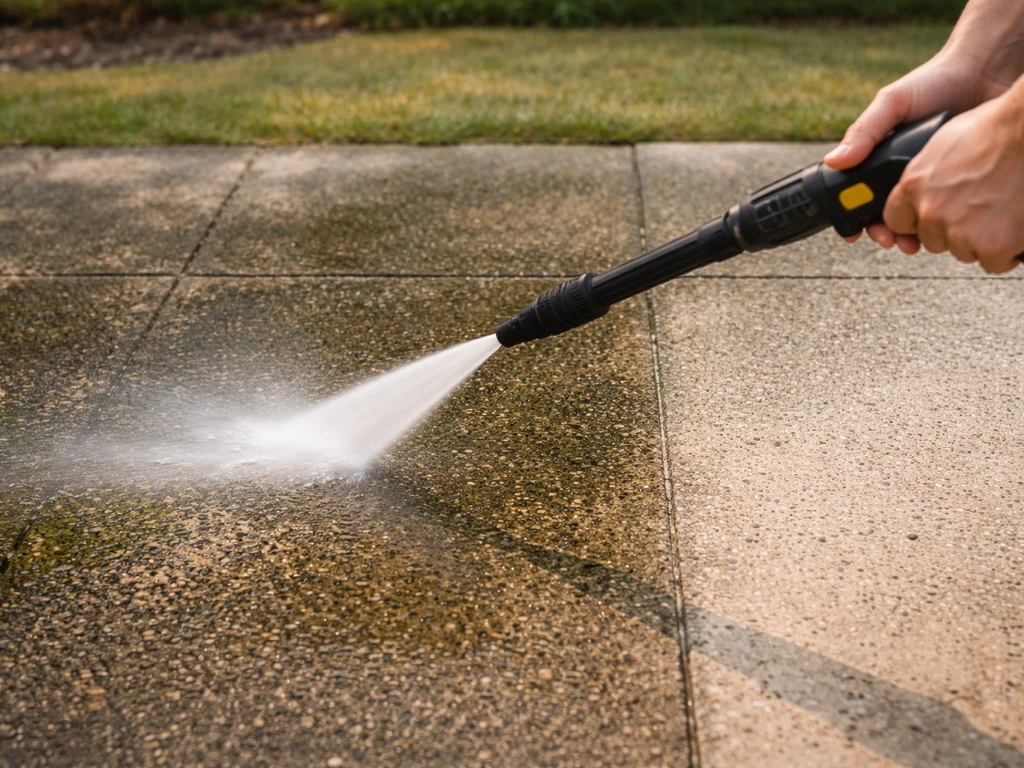
You can pressure wash the frame of a patio umbrella with reasonable safety, but for most canopy fabrics, especially solution-dyed acrylics like Sunbrella, you really should not. Sunbrella explicitly says "do not use a pressure or power washer" on their fabrics, and other major manufacturers like Telescope Casual and Treasure Garden give the same direction.
Can You Pressure Wash a Patio Umbrella Safely
Rhea Lang
6 Jun 2026
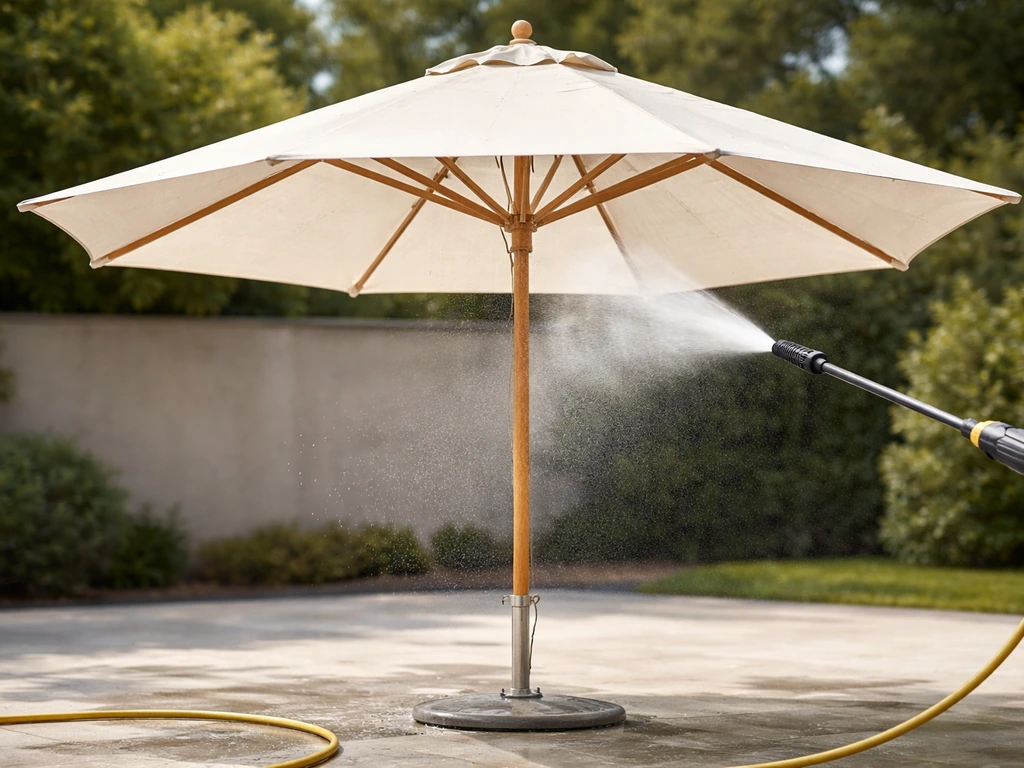
The risk is real: high pressure tears seams, strips the water-repellent finish, and forces water into the weave in ways that invite mildew rather than preventing it. That said, there is a way to use very low pressure (under 500 PSI on a wide fan nozzle, from a safe distance) for a light rinse on tougher canopy materials, and the frame can handle a proper wash.
This guide walks you through both, plus what to do when pressure washing alone won't shift mold or stains.
The honest answer on pressure washing a patio umbrella
Most umbrella canopies are made from solution-dyed acrylic, olefin, or polyester weaves. These fabrics have a factory-applied water-repellent coating that high pressure strips away quickly. Once that coating is gone, water soaks in instead of beading off, and you've essentially accelerated the aging of a canopy that might have cost you a couple of hundred dollars to replace. Manufacturers are unanimous here: routine cleaning should be done by hand or with a garden hose, not a pressure washer.
The frame is a different story. Powder-coated aluminum, steel, and resin frames can handle a low-to-moderate pressure wash without much risk, as long as you keep the wand away from joints, moving parts, and any unsealed hardware. Wood frames are the exception, they need the same caution you'd apply to any outdoor wood surface, and very high pressure will raise the grain or crack a finish.
Getting the umbrella ready before you touch the pressure washer
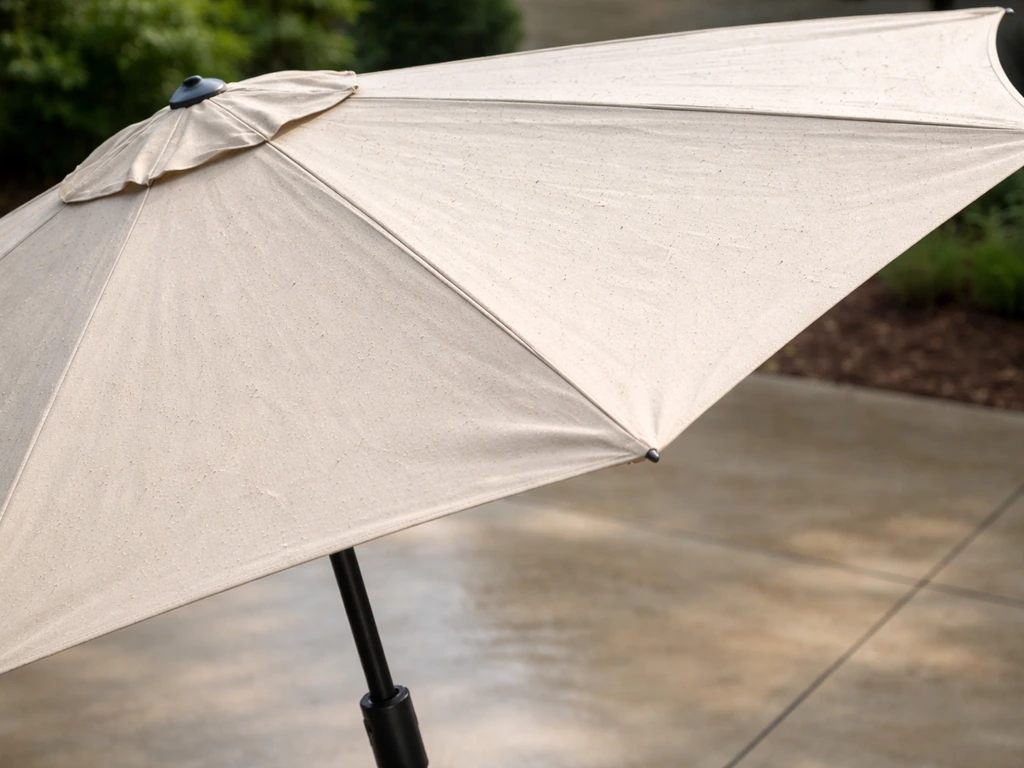
Preparation matters a lot here. Rushing straight to the pressure washer with a dirty, half-open umbrella is how you trap debris under seams and stress fabric that's already stiff with grime.
- Open the canopy fully and tilt it so the fabric faces roughly downward or horizontally. This gives you clean access to the entire surface and lets rinse water run off rather than pool.
- Use a soft-bristle brush to sweep off any loose leaves, bird droppings, pollen, and surface debris. Dried dirt acts like sandpaper under a pressure stream, so getting it off first reduces abrasion.
- Check the fabric for any existing tears, frayed seams, or weak spots. If you find them, skip the pressure washer entirely for that section. Water will exploit every weak point.
- Cover or remove the tilting mechanism, any exposed bearings, and the crank assembly if possible. These are the parts most vulnerable to water intrusion. A piece of cling wrap or a zip-lock bag secured with a rubber band works well for a quick field fix.
- Pre-rinse the entire canopy with a standard garden hose on a gentle setting. This softens dried-on grime and tells you where the stubborn spots are before you escalate pressure.
- Remove the umbrella from its base if you can. Working on it flat or propped against a wall gives you far better control than trying to manage pressure and aim while it's in the stand.
Step-by-step technique for fabric and frame
Cleaning the canopy fabric
For the vast majority of umbrella fabrics, the right tool is a bucket, a soft brush, and a garden hose, not a pressure washer. But if you're dealing with a heavy-duty polyester or canvas canopy (not Sunbrella or branded acrylic) and you want to use low pressure for a final rinse, here's the safest way to do it. Set your machine to the absolute lowest pressure setting available, ideally under 500 PSI.
Attach a 40-degree or wider fan nozzle, which spreads the water into a gentle sheet rather than a concentrated jet. Hold the wand at least 18 to 24 inches from the fabric surface, and keep the spray moving in slow, sweeping passes from the top panel downward. Never aim directly at a seam, vent, or label. Never use a 0-degree or 15-degree nozzle on fabric, ever.
Even doing everything right, this approach is a rinse, not a cleaning method. It won't lift mildew or staining on its own. Think of it as a more powerful garden hose, useful for flushing soap residue away after hand-scrubbing.
Cleaning the frame
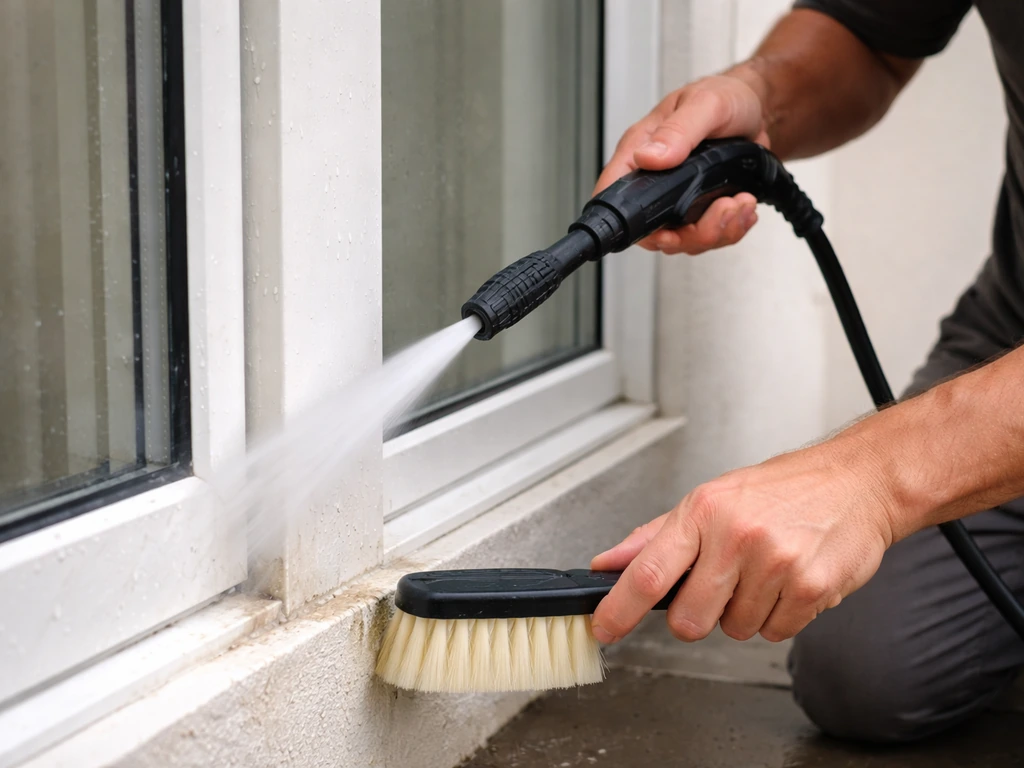
Powder-coated aluminum frames (the most common type) can handle 1,200 to 1,500 PSI comfortably, which is a standard light-duty electric pressure washer setting. Use a 25-degree green nozzle and keep the wand 12 inches or so from the surface. Work from top to bottom, rinsing grime downward. For the central pole, sweep in short horizontal passes rather than blasting straight at a joint or collar.
For steel frames, the main risk is rust at any point where the finish is chipped. Keep pressure moderate (under 1,500 PSI) and avoid holding the stream on bare metal spots. Dry the frame thoroughly immediately after washing. For wood frames, drop your pressure to under 800 PSI and use a 40-degree nozzle. Hold it at least 12 to 18 inches away and avoid prolonged contact with any one spot, which can raise the grain or push water into cracks.
Whatever the frame material, stay away from the umbrella's hub, the pull cord mechanism, any hinged tilt joints, and rivet connections. Water forced into these areas can cause internal corrosion and, over time, seize up your tilt mechanism completely. I learned this the hard way when a quick "efficient" blast at a hinged joint left me with a stuck tilt lever that needed a full disassembly to free up.
Getting PSI and nozzle choice right
| Surface | Max Recommended PSI | Best Nozzle | Distance from Surface |
|---|---|---|---|
| Acrylic/Sunbrella canopy | Do not pressure wash | N/A | N/A |
| Polyester/canvas canopy (rinse only) | Under 500 PSI | 40-degree or wider | 18–24 inches minimum |
| Powder-coated aluminum frame | 1,200–1,500 PSI | 25-degree | 10–12 inches |
| Steel frame | Under 1,500 PSI | 25-degree | 12 inches |
| Wood frame | Under 800 PSI | 40-degree | 12–18 inches |
| Resin/composite frame | 800–1,000 PSI | 25–40 degree | 10–15 inches |
The nozzle colors that matter most here are white (40-degree, widest fan, gentlest), green (25-degree, general surface cleaning), and yellow (15-degree, too aggressive for umbrella fabric but fine for tough frame buildup on metal). Never reach for the red 0-degree nozzle on any part of a patio umbrella.
Tackling mildew, mold, algae, and stubborn stains
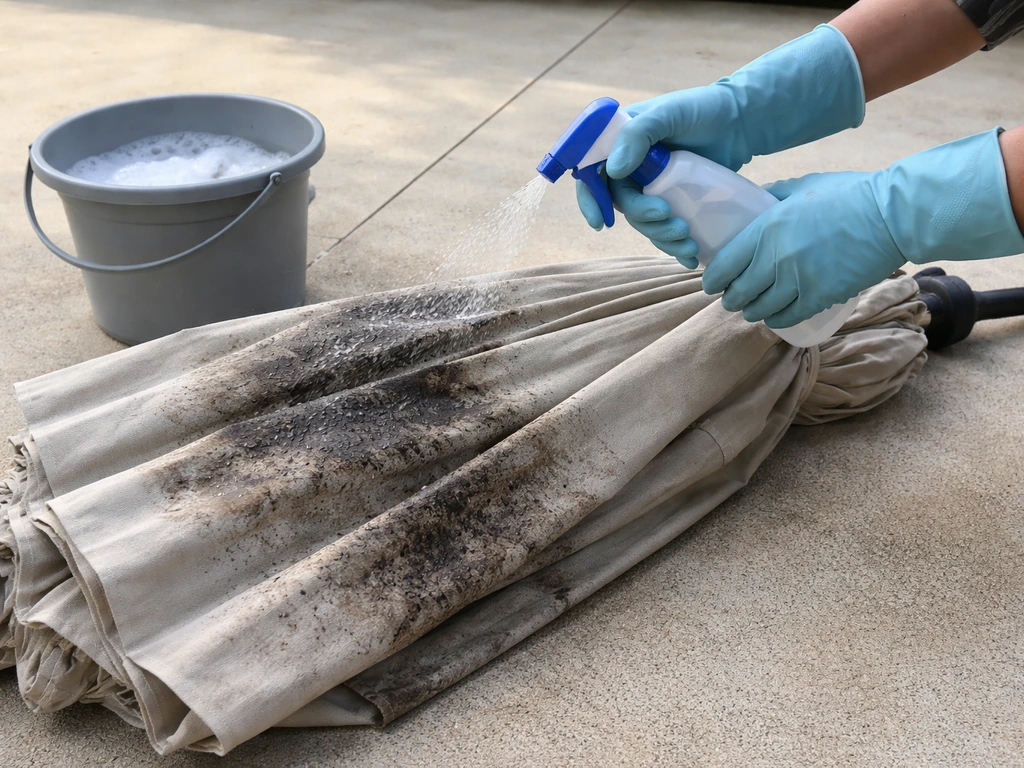
This is where pressure washing alone falls short, and where most people go wrong. Mildew on umbrella fabric isn't sitting on the surface waiting to be blasted off. It's usually rooted in the weave, and water pressure alone won't kill it. You need a cleaning solution with genuine dwell time.
Sunbrella's own method for mold and mildew involves mixing a solution of mild soap and bleach (typically one cup of bleach and a quarter cup of dish soap per gallon of water), applying it to the affected area, and letting it soak for 15 minutes before scrubbing gently and rinsing. The 15-minute dwell time is the key, not the water pressure.
This same soaking principle applies to oxygen bleach (sodium percarbonate) solutions, which are a gentler and color-safer alternative for lighter mildew. For example, Hytech Sales’ sodium percarbonate oxygen bleach technical sheet discusses dissolving and soak/use guidance that aligns with using a dwell time to help with mildew-related applications oxygen bleach (sodium percarbonate) solutions.
Mix per the product instructions, apply, let it sit, then scrub with a soft brush.
For algae, which often shows up as green or black film on fabrics that stay damp in shaded spots, the same bleach-soap solution works well. Algae generally hasn't penetrated the fiber as deeply as mold, so it tends to respond faster. For general grime and pollen stains on acrylic fabrics, warm water and a mild detergent with a soft brush is usually all you need. Rinse thoroughly because soap residue left in the weave will attract new dirt faster.
- Mildew and mold: bleach and mild soap solution, 15-minute dwell, scrub, rinse
- Algae and green film: same bleach-soap approach, shorter dwell usually sufficient
- General grime and pollen: warm water and mild detergent, scrub and rinse
- Oil or food stains: pre-treat with a small amount of dish soap directly on the stain before the full wash
- Rust transfer stains: use a commercial oxalic-acid-based cleaner designed for fabric, follow label instructions
Never use acetone, paint thinner, or other solvent-based cleaners on umbrella fabric. They'll destroy the weave and any protective coating instantly.
Drying, putting it back together, and protecting the fabric
Drying is not optional and not something you should rush. After rinsing, leave the canopy fully open in direct sunlight and let it air dry completely before closing it. Folding or rolling a damp canopy is the number-one cause of mildew growth, it creates the perfect dark, damp environment for spores to take hold. On a sunny day this usually takes two to four hours. On an overcast or humid day, give it longer, or bring it inside somewhere with airflow.
Once the canopy is fully dry, this is the ideal moment to apply a fabric protector spray. Products like 303 Fabric Guard or similar fluoropolymer-based sprays restore the water-repellent finish that cleaning (and especially any pressure rinsing) has partially stripped. That same idea applies to patio cushions too, so choosing the best waterproofing spray for patio cushions helps keep water from soaking in after cleaning fabric protector spray. Apply evenly with the canopy open and flat, let it cure per the product instructions, and you'll see water bead off the surface again the way it did when the umbrella was new. This step makes a real difference in how long the canopy stays clean between washes.
For the frame, dry any metal joints and hardware with a cloth before the frame sits in storage or in the stand. If you noticed any chips in a powder-coated finish during cleaning, touch them up with a matching touch-up paint to stop rust from starting. For wood frames, consider a coat of outdoor wood oil or sealant once fully dry, especially if you noticed the wood looking dry or grey.
When to skip the pressure washer entirely
There are situations where reaching for a pressure washer is the wrong call regardless of settings or technique. If your umbrella has any of the following characteristics, hand-wash only.
- The canopy is Sunbrella, Sunbrella-branded, or any solution-dyed acrylic (Sunbrella explicitly prohibits pressure washing)
- The fabric has visible seam wear, fraying, or small tears
- The umbrella has a printed pattern or applied vinyl graphics (pressure strips graphics off instantly)
- The frame has significant rust, visible corrosion, or loose rivets that water could worsen
- The tilt mechanism or crank is already stiff or showing signs of water intrusion
- The canopy has a special coating (UV-blocking films, specialty waterproof membranes) that isn't standard acrylic weave
In these cases, hand-washing with warm water, mild soap, a soft brush, and a thorough garden-hose rinse will do the job properly without any of the risks. Telescope Casual’s umbrella and fabric care manual likewise recommends spot-washing solution-dyed acrylics with lukewarm water and [mild soap](https://website. telescopecasual. com/pages/care_maintenance/2021%20Care%20and%20Cleaning.
pdf), then rinsing thoroughly and air-drying rather than pressure washing. It takes maybe 20 to 30 minutes and a bit of elbow grease for mildew spots, but it's the method every major manufacturer actually recommends. If you're weighing whether pressure washing is right for your whole patio setup more broadly, the same caution around delicate surfaces applies there too, and matching the right method to the right material is what gets you clean results without damage.
The same material-matching approach applies when you ask can you power wash patio cushions, because some cushion fabrics can be damaged by high pressure and harsh cleaners whole patio setup. If you’re trying to clean patio pavers or slabs, use the right PSI and nozzle technique for the surface so you do not gouge or damage the finish how to pressure wash a patio.
One more thing: never pressure wash an umbrella while it's sitting in its base and positioned over furniture, a deck surface, or other patio materials you care about. If you’re wondering can you power wash a paver patio, the right answer depends on the surface finish and how you control pressure and cleaning agents pressure washer. Runoff from cleaning solutions, loosened grime, and bleach mist will land on whatever is below. Move the umbrella to an open area of the lawn or a concrete pad before you start, and rinse the surrounding area down afterward.
FAQ
What should I do if mildew or stains do not come off after a low-pressure rinse?
If you cannot remove the fabric’s water-repellent coating by rinsing alone, pressure washing will usually make stains and mildew come back faster. For persistent spots, switch to a dwell-time method (mild soap plus bleach, or oxygen bleach), then scrub gently and rinse, rather than increasing PSI.
Can I pressure wash just a small stained area on the umbrella while it is still open?
Do not do spot pressure washing while the umbrella is assembled in place, because mist and runoff get forced into seams, vents, and the hub. Take it down if possible, wash the canopy flat or well-supported, and protect nearby surfaces, then rinse the surrounding ground after.
Is it safe to pressure wash only the frame if the canopy is the problem?
Yes, if you are only cleaning the powder-coated frame, but avoid high-pressure blasts at chipped areas or bare metal. Use moderate pressure, keep the nozzle moving, rinse promptly, and dry the joint areas fully to prevent rust from starting under trapped water.
What if my pressure washer does not have a wide fan nozzle (40-degree or wider)?
A pressure washer is usually overkill if you do not have the correct nozzle. If your unit only has a 0-degree or 15-degree option, do not use it on fabric, even at low PSI. Use a wide fan nozzle (40-degree or wider) or switch to hand scrubbing and a garden hose rinse.
Can I spray fabric protector immediately after rinsing, or should I wait?
Do not apply fabric protector until the canopy is completely dry and cooled. If the material is still damp, the coating can cure unevenly and you can trap moisture, which leads to mildew. Wait for air-dry in open sunlight, then apply evenly with the canopy flat.
How close can I hold the nozzle to the canopy, and should I aim at seams to get cleaner results?
Do not target the seams and vents directly, and never hold the nozzle in one place long enough to create a jet pattern. For any kind of rinse, keep a consistent distance and use overlapping sweeping passes so you are distributing water instead of forcing it into stitching.
What should I do if I accidentally use too much bleach solution on the canopy or mix cleaners incorrectly?
If you spill or overuse bleach-based cleaner, rinse immediately with a thorough garden-hose rinse, then let it air dry fully. Also avoid mixing bleach with other cleaners, especially ammonia or acids, because residue and fumes can damage fabrics and create unsafe conditions.
How can I tell whether my specific umbrella fabric can tolerate low-pressure washing?
It depends on the fabric. Solution-dyed acrylic and branded outdoor acrylics commonly prohibit pressure or power washing, and the risk is faster wear from stripped water repellency. If you are unsure of the material, assume it is acrylic-like and use hand wash plus dwell time for mildew instead of pressure washing.
Why is water forced into the tilt joint or hub such a problem, and how should I clean around it?
If your umbrella has a tilt mechanism, pull-cord area, or any hinged joints, keep the wand away from those areas. The safest approach is to wash the canopy and rinse the frame separately, then manually wipe those components with a damp cloth and dry them, rather than blasting them with water pressure.
After pressure rinsing, my canopy feels rough and less water-repellent. Is there a fix?
If your canopy is made for outdoor performance but looks “stiff” or rough after cleaning, you may have stripped the water-repellent finish. After it fully dries, consider a fabric protector product and avoid future pressure rinses on the fabric unless the manufacturer approves.
Can I pressure wash a steel umbrella frame, and what’s different versus aluminum?
Yes. Aluminum and resin frames can often be washed with reasonable care, but steel frames need extra attention around chipped paint. Touch up chips with matching paint after cleaning, then dry joints immediately before storage.
How do I prevent mildew from returning right after cleaning and drying?
If the umbrella stays closed or folded while damp, mildew growth accelerates, even if the cleaning was successful. Aim for full air drying in open sunlight when possible, and in humid weather, give extra time or bring it inside with airflow.
Can I apply fabric protector on an umbrella that dried but still feels cool to the touch?
Yes, but only after the umbrella is completely dry and you are confident the fabric is not still holding bleach cleaner. Applying protector to damp fabric can trap moisture, so do a full dry check by feel (cool and dry, not just “not dripping”).
Next Article
Should I Pressure Wash My Patio? Safe Guide by Material
Decide if pressure washing is safe for your patio by material, stains, and condition, plus PSI, technique, and aftercare