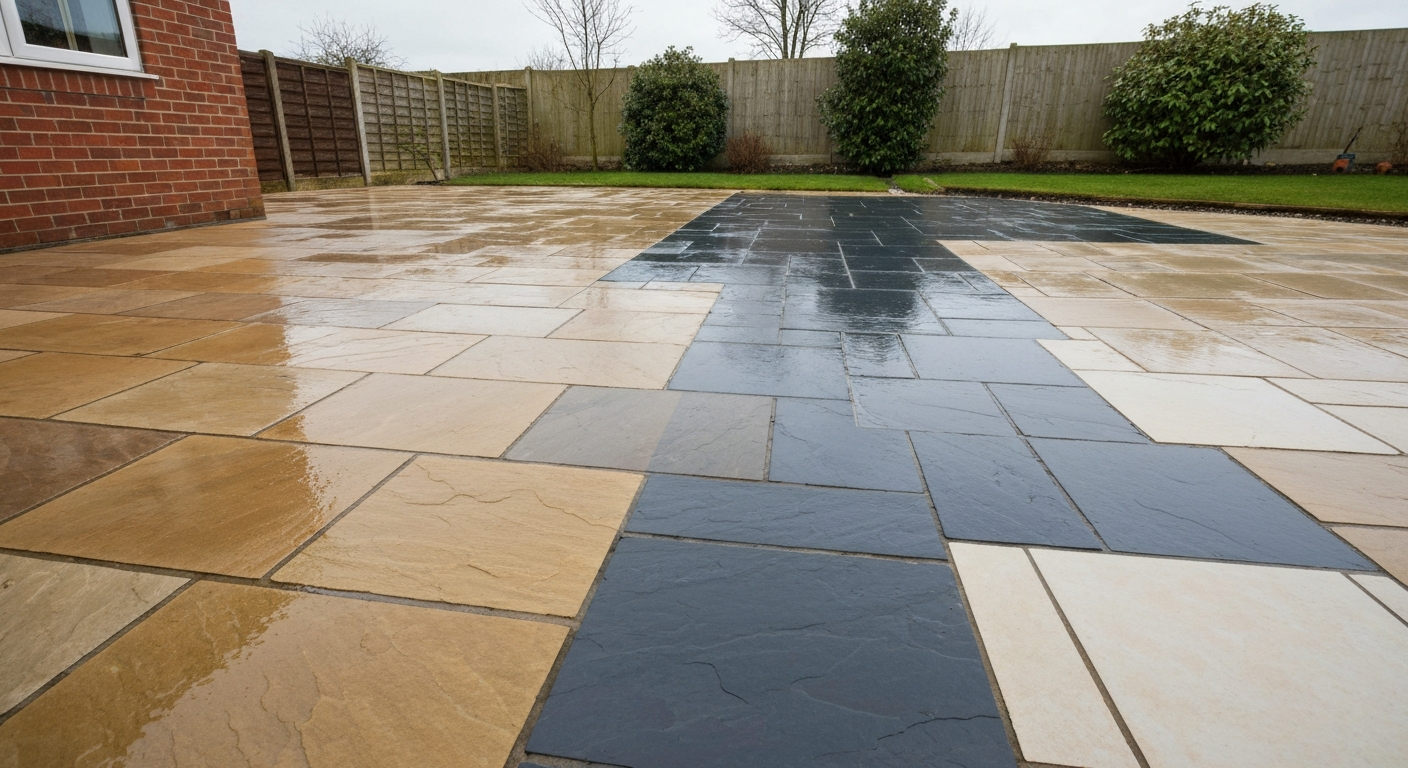
The best patio stain remover depends entirely on what you are cleaning and what surface you are cleaning it from. For mold, algae, and moss, an oxygen bleach or sodium percarbonate-based cleaner (like Patio Magic or an OxiClean outdoor mix) is your most reliable starting point. For rust, you need an oxalic acid or chelate-based product like Evapo-Rust or a dedicated masonry rust remover. For grease and oil, an enzyme degreaser or a poultice is the right call. No single product handles everything, and using the wrong one on the wrong surface can permanently etch, bleach, or discolor the stone or concrete you are trying to clean.
Best Patio Stain Remover: Top Picks for Concrete & Stone

Rhea Lang
26 Jul 2026
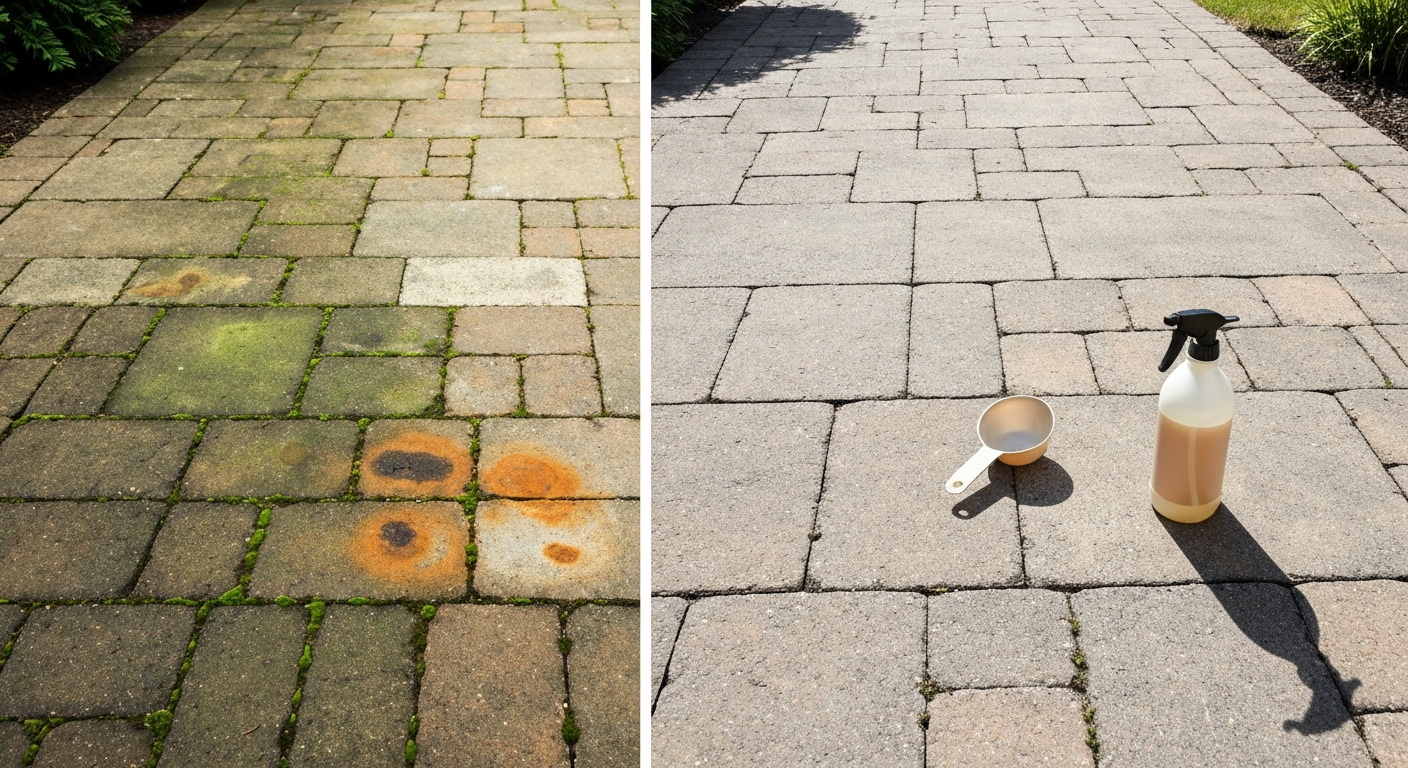
Quick Picks: Top Patio Stain Removers at a Glance
If you are in a hurry, here are the products I reach for most often, grouped by what you are actually trying to remove. Full breakdowns follow further down the article.
| Stain Type | Top Pick | Runner-Up | Best For |
|---|---|---|---|
| Mold, algae, moss | Patio Magic Concentrate | OxiClean Outdoor (sodium percarbonate mix) | All patio surfaces including natural stone |
| Rust | Evapo-Rust (chelate, non-acidic) | PROSOCO Sure Klean 600 (acidic, pro-grade) | Concrete, brick, pavers; avoid unsealed sandstone |
| Grease & oil | Simple Green Pro HD (enzyme degreaser) | Absorbent poultice (fuller's earth + solvent) | Concrete, porcelain, brick |
| Sealer residue | Dedicated sealer stripper (solvent-based) | PROSOCO Sure Klean 600 at higher dilution | Concrete, pavers; test on natural stone first |
| General multi-stain | Wet & Forget Outdoor (biodegradable, no-rinse) | Sodium percarbonate solution (DIY mix) | Shaded or hard-to-rinse surfaces |
| Pet stains & odor | Enzyme cleaner (Nature's Miracle Outdoor) | Dilute oxygen bleach rinse follow-up | Concrete, brick, composite decking |
Product Categories: What Each Type of Stain Remover Actually Does
Walking down the cleaning aisle or scrolling through product listings can feel overwhelming when every label claims to tackle every stain. Here is how I break down the main categories, what chemistry is doing the work, and when each type earns its place in the kit.
Oxygen Bleach (Sodium Percarbonate)
blank" rel="noopener noreferrer">Sodium percarbonate dissolves in water to release hydrogen peroxide and sodium carbonate. That hydrogen peroxide does the heavy lifting on organic growth: mold, algae, moss, lichen, and general grime. It is far gentler than chlorine bleach on surrounding plants and is less likely to strip sealers or bleach out pigmented pavers. Dwell times are typically 15 to 30 minutes before agitation and rinse. Products like OxiClean Outdoor and Patio Magic use this or similar oxidising chemistry. Mix ratios vary by product, so always check the label, but a rough DIY starting point for sodium percarbonate powder is around 60 to 100g per litre of warm water.
Rust Removers (Acid-Based and Chelate-Based)
Rust stains on paving come from metal furniture, fixings, water running off iron railings, or iron-rich water sources. The two main chemistry routes are acid (oxalic acid, hydrochloric/muriatic acid blends, or safer formulated alternatives like PROSOCO Sure Klean 600) and chelation (products like Evapo-Rust use chelating agents to bind and lift iron ions without aggressive acid attack). Acid removers work faster but require more care, especially on softer stones like sandstone and limestone where they can cause etching. Chelate products are slower but much gentler. If you are dealing with persistent rust on pavers or concrete, there is a full breakdown in the rust section below, and a more detailed look at dedicated rust removers available on this site. See our guide to the best patio rust remover for product recommendations and step-by-step instructions.
Sealer Removers (Solvent-Based Strippers)
If a sealer has been applied incorrectly, has gone cloudy (a common problem with wet-look sealers applied in damp conditions), or simply needs replacing, you need a dedicated solvent-based stripper. These products dissolve the polymer film rather than just cleaning on top of it. They are not the same as general cleaners and should not be used as a first resort. Sika notes in their product data that overspray from cured sealers should be removed with a product like Silicone Eater, which gives you a sense of how robust cured sealer chemistry can be. For detailed options and step-by-step instructions, see the best patio sealer remover 38e4e6c7-61ab-4109-b08b-dfe8407099b5.
Enzyme Degreasers
Enzyme-based degreasers use biological catalysts to break down hydrocarbon chains in oil, grease, and organic waste (including pet urine and feces). They are slower than solvent degreasers but safer for porous stones, better for ongoing treatment (the enzymes keep working after application), and significantly kinder to soil bacteria and drainage systems. Simple Green Pro HD and Nature's Miracle Outdoor are practical choices. For heavy machine-oil contamination on workshop-adjacent patios, you may need a solvent degreaser first, then an enzyme follow-up to handle residual odour and staining.
Poultices
A poultice is an absorbent paste applied over a stain to draw contamination out of porous material as it dries. Getty Conservation Institute and National Park Service guidance both document the technique for masonry: you mix an absorbent medium (fuller's earth, kaolin, diatomaceous earth, or even unscented cat litter ground fine) with a chemical agent matched to the stain (solvent for oil, mild acid for rust, hydrogen peroxide for organic stains), apply it thickly (about 6 to 12mm), cover with plastic sheeting to slow drying, and leave it for 24 to 48 hours. This is the go-to method for oil stains on sandstone, slate, and other absorbent natural stones where liquid cleaners would simply spread the contamination.
Biodegradable and Natural Options
Wet & Forget Outdoor is the standout in this category: you dilute it, apply it with a watering can or pump sprayer, and let rain and time do the rest over several weeks. It contains benzalkonium chloride as the biocide rather than bleach or acid, so it is gentler on surrounding planting and most surfaces. It will not give you an instant result on a heavily mossy patio, but for maintenance treatment and prevention it is genuinely one of the most hassle-free products I use. White vinegar, often suggested as a natural cleaner, is mildly acidic (around pH 2 to 3) and can temporarily shift light organic growth, but it is not effective on established moss or algae and can damage calcareous stones (limestone, sandstone) with repeated use.
How to Choose the Right Stain Remover: Selection Criteria and Checklist
Before you buy anything, work through these five questions. Getting this right saves money and avoids damage to your paving.
- Identify the stain type: organic growth (mold/algae/moss), rust, oil/grease, efflorescence, paint, sealer residue, or pet waste. Each needs a different chemical approach.
- Identify your surface material: concrete, brick, sandstone, slate, granite, limestone, porcelain, or composite. Some acids and bleaches are safe on concrete but will etch or bleach natural stone.
- Check sealer status: is the patio sealed? A sealed surface will resist penetration by both the stain and the cleaner. A wet-look sealer adds another layer of compatibility complexity.
- Consider environmental constraints: is there a drain, planting, or watercourse nearby? UK Environment Agency guidance requires wash waters from cleaning to go to a foul sewer, not a surface drain. US EPA rules similarly prohibit uncontrolled discharge of cleaning washwaters to storm drains.
- Assess PPE and safety requirements: all chemical cleaners require at minimum chemical-resistant gloves and eye protection. Acid cleaners and solvent strippers additionally need respiratory protection. HSE COSHH guidance requires a risk assessment before using hazardous cleaning chemicals professionally, and the same logic applies when working in confined or poorly ventilated outdoor areas.
Pros and Cons Checklist by Product Type
| Product Type | Performance | Surface Safety | Safety/PPE Burden | Dwell Time | Cost | Eco Impact |
|---|---|---|---|---|---|---|
| Oxygen bleach | Good on organic growth | Safe on most surfaces; avoid very old sandstone | Low (gloves, eye protection) | 15–30 min | Low–Medium | Low: breaks down to carbonate and water |
| Chelate rust remover (e.g. Evapo-Rust) | Good on rust; slower than acid | Safe on most masonry; avoid prolonged contact on sensitive stone | Low (gloves) | 30 min–4 hours | Medium | Low: water-based, non-acidic |
| Acid rust/masonry cleaner (e.g. Sure Klean 600) | High on rust, efflorescence, sealer residue | Risky on sandstone, limestone, marble | High (acid-resistant gloves, eye/face protection, RPE) | 5–10 min (watch carefully) | Medium–High | Medium: requires neutralisation and contained disposal |
| Enzyme degreaser | Good on oil, grease, pet waste | Safe on most surfaces including sealed stone | Low (gloves) | 30 min–overnight | Medium | Low: biodegrades readily |
| Poultice (DIY or commercial) | Excellent on deep oil/grease in porous stone | Safe when matched to surface | Low–Medium (depends on chemical agent used) | 24–48 hours | Low (DIY) to Medium | Low if using benign carriers |
| Solvent sealer stripper | High on cured polymer sealers | Risky on some plastics and painted surrounds | High (solvent fumes, skin/eye contact) | 30 min–2 hours | High | High: solvent waste needs contained disposal |
| Biodegradable spray (e.g. Wet & Forget) | Moderate: slow-acting, best for maintenance | Very safe on all surfaces | Very low | Days to weeks | Medium | Low: biodegradable biocide |
Comparison Table: Recommended Products by Stain Type and Surface
| Stain | Concrete | Brick/Pavers | Sandstone/Limestone | Slate/Granite | Porcelain |
|---|---|---|---|---|---|
| Mold/algae/moss | OxiClean Outdoor or Patio Magic | Patio Magic or Wet & Forget | Wet & Forget or dilute oxygen bleach (no acid) | Patio Magic or Wet & Forget | OxiClean Outdoor or dilute oxygen bleach |
| Rust | PROSOCO Sure Klean 600 or Evapo-Rust | Evapo-Rust or dilute oxalic acid | Evapo-Rust only (no strong acid) | Evapo-Rust (patch test first) | Evapo-Rust (no acid on glazed porcelain) |
| Grease/oil | Simple Green Pro HD or poultice | Simple Green Pro HD or poultice | Poultice (fuller's earth + solvent) only | Poultice or enzyme degreaser | Simple Green Pro HD (rinse thoroughly) |
| Sealer residue | Solvent sealer stripper | Solvent stripper + Sure Klean 600 | Solvent stripper (test first, no acid) | Solvent stripper (test first) | Solvent stripper (test on small area) |
| Pet stains/odor | Nature's Miracle Outdoor + oxygen bleach rinse | Enzyme cleaner + oxygen bleach rinse | Enzyme cleaner only (no bleach on light stone) | Enzyme cleaner (patch test) | Enzyme cleaner + oxygen bleach rinse |
| Efflorescence | Sure Klean 600 diluted | Sure Klean 600 or dilute white vinegar | Mechanical removal only or specialist limestone cleaner | Mechanical removal (mild acid risky) | Dilute phosphoric acid product (test first) |
Removing Mold, Algae, and Moss: Best Products and How to Use Them
Green or black growth on paving is the most common complaint I hear from homeowners, and the good news is it is one of the more forgiving cleaning tasks as long as you match the method to the surface. Mold tends to appear as black spotting; algae as a green or orange slick; moss as raised, spongy growth that holds moisture and accelerates further staining underneath it.
Recommended Products
- Patio Magic Concentrate (UK): sodium hypochlorite-based, dilute 1:5 for application, extremely effective on established moss, widely available at garden centres. Works within 24 to 48 hours without scrubbing. Avoid on pale natural stone as it can cause temporary yellowing.
- OxiClean Outdoor (US/UK): sodium percarbonate chemistry, safe on most surfaces including coloured concrete and brick pavers. Mix at approximately 90 to 120ml per litre of warm water, apply with a stiff brush or pump sprayer, leave 20 to 30 minutes, agitate, and rinse.
- Wet & Forget Outdoor (US/UK): dilute 1:5 with water, apply once and leave it. No scrubbing or rinsing required. Takes several weeks to show full results as rain activates it. Best for maintenance and shaded areas where regrowth is persistent.
- Patio Shield (UK): similar to Wet & Forget, useful for hard-to-access areas or when you want a combined clean and protect treatment.
Step-by-Step Application
- Clear loose debris: brush or blow away leaves, loose moss, and dirt before applying any chemical. Organic matter sitting on top of the chemical dilutes it and wastes product.
- Pre-wet the surface if using an oxygen bleach or Wet & Forget product. Do not pre-wet if using a hypochlorite concentrate, as dilution reduces contact concentration.
- Apply the cleaner at the manufacturer's dilution ratio using a low-pressure pump sprayer or watering can. Work in sections to avoid the product drying before you can agitate.
- Allow the full dwell time: 15 to 30 minutes for oxygen bleach, 24 to 48 hours for Patio Magic-type products. Do not let the surface dry out in direct sun; reapply if needed.
- Agitate with a stiff-bristle brush or low-pressure washer (around 1,200 to 1,500 psi for most natural stone; up to 2,500 to 3,000 psi for plain concrete). Use a wide-angle nozzle (25 to 40 degrees) to avoid surface etching.
- Rinse thoroughly from the highest point to the lowest and direct washwater to a foul drain, not a surface water drain or into planted borders.
- For stubborn lichen: a second application after 24 hours usually brings full clearance. Lichen anchors itself differently from algae and may need mechanical help with a plastic scraper first.
Pros, Cons, and When to Use Each
| Product | Pros | Cons | Best Use Case |
|---|---|---|---|
| Patio Magic Concentrate | Fast (24–48 hrs), minimal scrubbing, widely available in UK | Contains hypochlorite; can yellow pale stone; toxic to aquatic life in runoff | Concrete, brick, dark-coloured stone; established moss |
| OxiClean Outdoor | Gentle, no chlorine bleach, plant-safe after dilute rinse | Slower than hypochlorite; less effective on mature lichen | All surfaces; best where plant proximity is a concern |
| Wet & Forget Outdoor | No scrubbing, no rinsing, very surface-safe | Slow (weeks); not suitable for immediate results before an event | Maintenance, shaded patios, re-treatment after deep clean |
| Pressure washing alone | No chemicals, immediate visual result | Spreads spores; does not kill growth; regrowth typically faster | Only as a preparation step before chemical treatment |
One thing I always flag: pressure washing without a biocide does not kill algae or moss spores, it just moves them around. If you blast a mossy patio without treating it first, you can expect regrowth within three to four months. Apply a biocide, let it work, then pressure wash. The treatment order matters.
Removing Rust Stains: Best Products and How to Use Them
Rust stains are one of the trickiest jobs on paving because the temptation is to reach for the strongest acid you can find, which is exactly the wrong move on natural stone. I learned this the hard way on a sandstone patio where a client had left an old cast-iron planter sitting in the same spot for years. The stain was deep orange and covered about 30cm in diameter. An acid wash would have stripped the surface. A chelate remover and patience got it out without any damage.
Recommended Products
- Evapo-Rust (CRC): water-based chelating agent, non-acidic, reusable solution, safe on most masonry. Apply by saturating the stain, covering with plastic film to prevent drying, and leaving for 30 minutes to 4 hours depending on stain depth. No special PPE beyond gloves for routine use. Rinse thoroughly.
- Oxalic acid solution (various brands): mildly acidic rust remover, effective on concrete, brick, and hard stone like granite and slate. Mix to a 3 to 5% solution, apply, leave 10 to 15 minutes, agitate, and rinse. Do not use on limestone, sandstone, or mortar joints, as the acid will etch calcium-based materials.
- PROSOCO Sure Klean 600: concentrated acidic masonry cleaner (pH approximately 0.1 at 1:9 dilution per manufacturer TDS). Effective on rust, efflorescence, and sealer residue on concrete and hard brick. Not suitable for natural stone. Requires full acid PPE: acid-resistant gloves, face shield, and respiratory protection. Always pre-wet the surface and dilute precisely per the TDS.
Step-by-Step Application for Rust Removal
- Identify the source of the rust staining and remove or treat it if possible (e.g. paint or coat the metal furniture leg, relocate the item). Treating the stain without addressing the source means you will be doing this again in six months.
- Test the cleaner on an inconspicuous area first. This is non-negotiable on natural stone or any sealed surface.
- Pre-wet the surface with clean water before applying acid-based products; this dilutes residual product in the pores and reduces the risk of deep acid penetration.
- Apply the rust remover directly to the stain, not over the whole surface. For chelate products, cover with plastic film to keep it wet and extend dwell time.
- Monitor carefully: acid products should not be left for longer than their stated dwell time. On concrete, 5 to 10 minutes is usually sufficient. If you see the surface fizzing or changing texture, rinse immediately.
- Agitate with a stiff nylon brush (not metal, which will add more iron to the surface). Rinse thoroughly from the top down with clean water.
- Neutralise after acid treatment: a dilute solution of baking soda (sodium bicarbonate) at around 30g per litre of water applied and rinsed off will neutralise residual acid in the pores.
- Repeat the treatment if needed: deep-penetrating rust stains in porous materials may need two or three treatments. A poultice approach works better than repeated acid washing for very deep staining in sandstone or limestone.
Pros, Cons, and When to Use Each
| Product | Pros | Cons | Best Use Case |
|---|---|---|---|
| Evapo-Rust (chelate) | Non-acidic, safe on most surfaces, reusable, low PPE burden | Slower than acid; may need extended dwell time on deep stains | Natural stone, sealed surfaces, anywhere acid is risky |
| Oxalic acid solution | Effective and widely available; faster than chelate | Cannot use on limestone, sandstone, or mortar; requires PPE | Granite, slate, concrete, hard brick |
| PROSOCO Sure Klean 600 | Very effective on heavy rust and efflorescence | Strongly acidic; high PPE requirements; not for natural stone | Commercial/pro use on hard concrete and brick pavers |
Removing Grease and Oil Stains: Degreasers, Solvents, and Poultices
Grease and oil stains are the stains that catch people out most often because they look like they should be easy to clean and then they are not. The reason is that porous surfaces like sandstone, concrete, and brick absorb oil quickly and deeply. Applying a degreaser to the surface only addresses what is sitting above the pore line. To pull the oil out from inside the stone, you often need a poultice.
Fresh Oil Spills: Act Fast
If the spill is fresh (within the last hour), blot it immediately with dry absorbent material: cat litter, sand, paper towels. Do not rub. Once you have absorbed as much as possible, apply an enzyme degreaser like Simple Green Pro HD at the stated dilution, scrub with a stiff brush, and rinse. On porcelain or sealed concrete, this is often enough. On unsealed natural stone, proceed to a poultice.
Recommended Products
- Simple Green Pro HD (enzyme degreaser): dilute at 1:10 for most patio use, apply, leave 10 to 15 minutes, agitate, and rinse. Safe on concrete, porcelain, sealed stone, and most brick. One of my regular go-to products for barbecue grease and cooking oil on concrete patios.
- Nature's Miracle Outdoor (enzyme degreaser): same category as Simple Green, but with added odor-eliminating enzymes, making it particularly good for grease that has picked up pet or food waste odors. Apply, leave 15 to 30 minutes, rinse.
- Fuller's earth poultice (DIY): mix fuller's earth or diatomaceous earth powder with a solvent (acetone or mineral spirits for petroleum-based oils) to a thick paste, about the consistency of peanut butter. Apply in a 6 to 12mm layer over the stain and extending 25mm beyond its edges. Cover with plastic sheeting and tape the edges down. Leave for 24 to 48 hours. Remove the dried poultice by scraping from the edges inward, then brush away residue and rinse. Repeat if the stain has lightened but not cleared.
- Commercial poultice (e.g. Stain Solve or HG Petroleum Remover): pre-formulated options that remove the guesswork from mixing. Follow product instructions for dwell time and removal.
Step-by-Step Poultice Application
- Mix absorbent powder (fuller's earth, kaolin, or diatomaceous earth) with your chosen solvent or chemical agent to form a thick, lump-free paste. For oil stains, use acetone or mineral spirits. For organic stains, use hydrogen peroxide (6 to 12% concentration).
- Clean loose debris from the stained area and lightly dampen the surrounding surface (not the stain itself, as dampening the stain can seal the pores temporarily).
- Apply the poultice at least 6mm thick, covering the stain fully and extending 25mm beyond its edges in all directions.
- Cover immediately with plastic sheeting and tape or weigh down the edges. This slows the drying process and forces the solvent to draw the contamination upward into the absorbent medium rather than simply evaporating.
- Leave for 24 to 48 hours. For very deep or old stains in sandstone, 48 hours is better.
- Remove the plastic, allow the poultice to dry fully if it has not already done so, then scrape from the edges inward using a plastic scraper to avoid scratching the surface.
- Brush away dried residue and rinse thoroughly with clean water. Assess the result and repeat if needed. Most deep oil stains in natural stone require two to three poultice applications.
- After clearance, consider sealing the area with an appropriate impregnating sealer to reduce future stain penetration.
Caveats: When Solvents Can Cause Problems
Never use neat solvents (acetone, mineral spirits, turpentine) directly on sealed surfaces: they will strip the sealer. Always use them inside a contained poultice paste or apply strictly to the stain only, not over a wide area. On porcelain with a wet-look or resin finish, test any solvent product on an inconspicuous tile edge before committing to the full stain area. Wet-look sealers are polymer-based and vulnerable to solvent attack, so enzyme degreasers are always the safer first option on sealed or finished surfaces.
Pressure Washing vs Chemical Cleaning: Which Approach When?
Pressure washing and chemical cleaning are not competing approaches, they are complementary steps. The sequence, pressure settings, and nozzle selection matter enormously depending on what you are dealing with.
| Surface | Recommended PSI Range | Nozzle | Notes |
|---|---|---|---|
| Plain poured concrete | 2,500–3,500 psi | 25-degree fan | Can handle high pressure; test first near joints |
| Stamped/decorative concrete | 1,200–1,500 psi | 40-degree fan | High pressure will lift texture and sealer |
| Brick and pavers | 1,500–2,000 psi | 25-degree fan | Keep moving; do not linger on mortar joints |
| Sandstone | 800–1,200 psi | 40-degree fan or rotary at distance | Very pressure-sensitive; always test first |
| Slate and granite | 1,500–2,000 psi | 25-degree fan | Hard but can have weak natural splits; test first |
| Porcelain | 1,500–2,000 psi | 25-degree fan | Check grout lines; high pressure damages standard grout |
| Sealed surfaces (any) | 800–1,200 psi | 40-degree fan | High pressure will breach sealer; re-seal after cleaning |
For organic growth like moss and algae, I always apply a biocide first, allow the dwell time, and then use pressure washing to rinse. Trying to blast the growth off cold requires more pressure, more passes, and typically more water than treating first. For grease and oil, pressure washing alone does almost nothing useful on porous surfaces. It pushes the oil deeper rather than removing it. Use degreasers and poultices, then rinse with low-pressure water once the treatment is complete.
Sealer Compatibility and Removing Wet-Look Finishes
A sealed patio changes the cleaning equation significantly. Most impregnating sealers protect the substrate but are invisible on the surface, so cleaning chemistry still reaches the stone through normal application. Topcoat sealers, including wet-look finishes, sit on top of the paving and form a film that both resists staining and resists cleaning chemistry. This means standard cleaners may sit on top of the sealer film rather than reaching the stain underneath. If you are cleaning a sealed surface and a cleaner is not performing, the sealer may be the barrier.
When the Sealer Is the Problem
Wet-look sealers applied in the wrong conditions (damp substrate, temperature below 10 degrees Celsius, or second coat applied outside the recoat window) can turn milky or cloudy. Quikrete's technical data specifies a recoat window of approximately two hours and warns against application if rain is forecast or temperatures are too low. Sika similarly specifies applying a second coat within around one hour for their Water Sealer product. If the sealer has cured incorrectly, no surface cleaner will fix it. You need a sealer remover.
How to Strip a Sealer
- Identify the sealer type if possible (solvent-based vs water-based acrylic, polyurethane, etc.) by checking any remaining product documentation or contacting the installer. Solvent-based strippers work on most acrylics and polyurethanes; some stubborn sealers may need a specialist stripper matched to the polymer chemistry.
- Apply the stripper at the manufacturer's dilution using a brush, roller, or pump sprayer. Work in small sections (around 2 to 3 square metres) so it does not dry before you can work it.
- Allow the dwell time specified (usually 30 minutes to 2 hours). You should see the sealer film begin to soften and lift.
- Agitate with a stiff brush or, for larger areas, a floor scrubber with a stripping pad.
- Rinse thoroughly with a pressure washer at moderate pressure (1,200 to 1,500 psi). Collect the rinse water and dispose of it via a foul drain, not a surface drain. Solvent-containing wash water is a chemical waste.
- Allow the surface to dry fully (minimum 24 to 48 hours in dry conditions) before assessing whether a second strip is needed or whether re-sealing can proceed.
- Re-seal once you are satisfied the old sealer has been removed, following the new product's TDS precisely for application conditions and recoat windows.
PPE, Safety, and Environmental Disposal
It is tempting to skip straight to the cleaning and treat PPE as optional, especially when you are just doing the back patio on a Saturday afternoon. I would not. Some of the most effective patio cleaners are also the ones that can cause the most damage if they splash into your eyes or you breathe the fumes from a warm, poorly ventilated space.
Minimum PPE by Product Type
- All cleaning products: chemical-resistant gloves (nitrile or neoprene, not latex for acid products) and safety glasses or goggles.
- Acid-based cleaners (including oxalic acid, Sure Klean 600, hydrochloric acid blends): acid-resistant gloves (heavy neoprene or PVC), full face shield, waterproof apron, and respiratory protection (at minimum an FFP2/P100 half-mask if using in any enclosed or semi-enclosed outdoor area).
- Solvent strippers: solvent-resistant gloves, safety goggles, respiratory protection with organic vapour cartridges (not just a dust mask). Ensure good air movement around the work area.
- All products: closed-toe footwear, long sleeves and trousers. Avoid working in direct strong wind that could direct spray toward your face.
Environmental Disposal
In the UK, Environment Agency guidance is clear: washwaters from cleaning activities must go to a foul sewer or be collected in a sealed system. Discharging cleaning washwaters to surface water drains, watercourses, or directly to soil near drains is not acceptable and may require pre-treatment (neutralisation, solids removal) before any consented discharge. In the US, EPA stormwater rules similarly prohibit uncontrolled discharge of washwaters containing soaps, solvents, or process chemicals to storm drains or surface water. Practically, for most homeowners, this means directing your rinse water toward a drain that connects to the sewer system, using containment barriers (sandbags or drain covers) when working near road gullies, and not allowing large volumes of biocide, acid, or solvent-containing rinse water to run directly into garden beds or borders. Neutralise acid wash water with a dilute baking soda solution before disposal where practical.
Aftercare: Re-Sealing and Preventing Future Stains
A thorough clean is only half the job. Unprotected paving, especially porous materials like sandstone, slate, and brick, will restain faster than sealed paving because oil, water, and organic matter penetrate directly into the surface. After cleaning, consider whether sealing is appropriate for your patio type and situation.
For most natural stone patios, an impregnating (penetrating) sealer is the right choice: it fills the pores below the surface without altering the appearance significantly, repels water and oil, and does not form a film that can delaminate or cloud. For concrete and pavers where you want an enhanced sheen, wet-look topcoat sealers are popular, particularly in the UK market where brands like Sika, Thompson's, and Ronseal are widely available. Wet-look sealers require correct application conditions and precise adherence to recoat windows to avoid cloudiness. If you are weighing up wet-look options, there are detailed reviews and application guidance available elsewhere on this site that cover the UK market specifically, including a full breakdown of application instructions for Sika products and honest reviews of the most popular wet-look formulations. See our wet look patio sealer reviews for comparisons, application guidance, and honest performance feedback on popular UK formulations. For detailed product comparisons and application guidance, see our guide to the best wet look patio sealer UK. For recommendations and application guidance on wet-look topcoat options, see our guide to the best patio sealer wet look.
For ongoing maintenance regardless of whether you seal, a twice-yearly application of a dilute no-rinse biocide (such as Wet & Forget) will dramatically reduce organic regrowth, especially on shaded or damp-prone patios. Apply once in late spring before growth season and once in autumn after leaf fall. This single habit eliminates most of the deep-clean work.
Troubleshooting: When the Stain Won't Shift
Sometimes a stain just does not respond to the obvious treatment. Here are the most common scenarios and what I actually do about them.
| Problem | Likely Cause | Fix |
|---|---|---|
| Cleaner sits on surface, not penetrating | Surface is sealed; chemistry cannot reach the stain | Strip the sealer first, then retreat the stain |
| Orange stain comes back after rust treatment | Source of iron contamination still present (pipe, fitting, furniture leg) | Treat the source, then re-treat stain; use a poultice for deep staining |
| Surface lightened or bleached after treatment | Acid concentration too high or left too long on sensitive stone | Wet stone thoroughly, neutralise with baking soda solution; consider colour restoration product |
| Greasy stain spread wider after cleaning | Solvent or high-pressure water spread oil before it could be absorbed | Apply fresh absorbent powder, allow to sit 20 minutes, sweep off, then poultice |
| Moss grows back within 3 months of pressure washing | Biocide was not used; spores survived in joints and crevices | Apply biocide after washing; retreat joints and crevices specifically |
| Wet-look sealer turned milky or white | Applied to damp surface, in cold conditions, or second coat outside recoat window | Strip with sealer remover and re-apply in correct conditions |
| WD-40 stain on patio | WD-40 contains mineral spirits and light petroleum distillates; leaves an oily residue | Apply enzyme degreaser or use a solvent poultice; on porous stone treat immediately before it sets |
On the WD-40 question specifically: it is a common accidental stain from lubricating gate hinges, locks, or furniture fixings over paving. For a focused discussion and step-by-step fixes, see our guide Does WD-40 stain patio Does WD-40 stain patio?. The oily carrier in WD-40 will penetrate porous stone and concrete readily. If caught fresh, blot and apply Simple Green Pro HD immediately. If it has been sitting for a day or more on natural stone, go straight to the poultice method. The stain is treatable but the window for easy removal closes quickly.
When to Call a Professional
Most patio stain removal is a realistic DIY task with the right products and method. But there are situations where calling a specialist is the right decision: large-area acid cleaning of historic or rare stone (heritage properties, high-value imported stone) where a mistake has irreversible consequences; removal of paint or graffiti from textured or decorative surfaces where wrong chemistry will cause more damage than the original stain; any job requiring professional-grade equipment (truck-mounted hot water extraction, commercial steam cleaners, industrial degreasers) that exceeds what a domestic pressure washer can deliver; and situations where you have already tried two or three approaches and the stain remains or has worsened. A professional cleaning company with masonry experience will have access to stronger formulations, specialist equipment, and the experience to know which chemistry works on which substrate without damaging it.
FAQ
What primary regulatory and safety sources must I cite when writing an evidence‑based buyer’s guide for patio stain removers?
Cite national regulatory and workplace‑safety authorities that govern chemical use and wastewater: UK Environment Agency guidance on chemical waste and washwater disposal, HSE/COSHH guidance for cleaning‑chemical risk assessment and PPE, and US EPA stormwater/build‑site discharge guidance. These set legal/operational constraints for washwater management, PPE and employer/user duties.
Which product documentation is essential to evaluate and recommend chemical cleaners (rust removers, acids, oxygen bleach, enzyme degreasers)?
Use manufacturer Technical Data Sheets (TDS) and Safety Data Sheets (SDS) for each SKU you recommend. TDSs give recommended dilutions, dwell times, substrate compatibility, application methods and recoat windows; SDSs define hazards, required PPE, first‑aid, incompatible materials and disposal/transport guidance. Examples: PROSOCO Sure Klean TDS/SDS for acid masonry cleaners, Evapo‑Rust TDS/SDS for rust removers, and OxiClean/ sodium percarbonate SDS for oxygen bleach products.
What authoritative conservation/technical literature should I consult for poulticing and oxide removal on porous stone and masonry?
Reference Getty Conservation Institute poulticing guidelines and the US National Park Service Preservation Briefs (esp. Preservation Brief 1) for proven poultice media, matching pore size, containment methods, shrinkage control, dwell times, plastic sheeting technique, and residue removal. These are the technical standards for safe, non‑destructive poulticing on historic masonry and stone.
What industry technical guidance covers pavers, concrete and pressure‑washing best practices?
Use ICPI/CMHA technical notes for pavers and interlocking concrete (stain identification, test‑patch, low‑pressure cleaning, efflorescence approaches). For pressure‑washer PSI/GPM guidance, cite ConcreteNetwork and reputable retailer/brand buying guides (e.g., Lowe’s) which detail recommended PSI ranges for poured concrete (often 2,500–3,500+ psi) and much lower pressures for stamped/sealed concrete and natural stone.
What specific technical product categories and representative products should the article include?
Cover these categories with representative, documented SKUs and TDS/SDS: • Rust removers (oxalic‑acid or chelating, e.g., Evapo‑Rust, oxalic acid formulations) • Sealer removers and acid masonry cleaners (e.g., PROSOCO Sure Klean series) • Enzyme degreasers (bio‑enzymatic formulations for pet/organic grease) • Oxygen bleach (sodium percarbonate / OxiClean style products) • Poultices (kaolin/fuller's earth, cellulose based) • Biodegradable/natural options (oxygen bleach, citrus‑based degreasers). Link each recommendation to its TDS/SDS.
What step‑by‑step cleaning protocols must be provided for each stain type and surface?
Provide concise, reader‑facing procedures including: 1) Identify stain and substrate; test patch small inconspicuous area. 2) Contain/collect washwater (or direct to foul sewer if permitted). 3) Prepare solution per manufacturer dilution and PPE. 4) Apply (spray/gel/poultice) and agitate if required. 5) Observe dwell time; do not let strong acids dry. 6) Rinse thoroughly and neutralise if required (alkaline rinse after acids). 7) Repeat or use poultice for persistent stains. Include specific dwell times, dilution ranges and agitation/poultice techniques per stain type (e.g., oxygen bleach for algae: 1–4% active solution, 10–30 minute dwell; oxalic for rust per manufacturer).
Next Article
Best Wet-Look Patio Sealer UK: Top Picks & Buying Guide
Best wet look patio sealer UK: compare top sealers, prep & application tips, maintenance and troubleshooting.