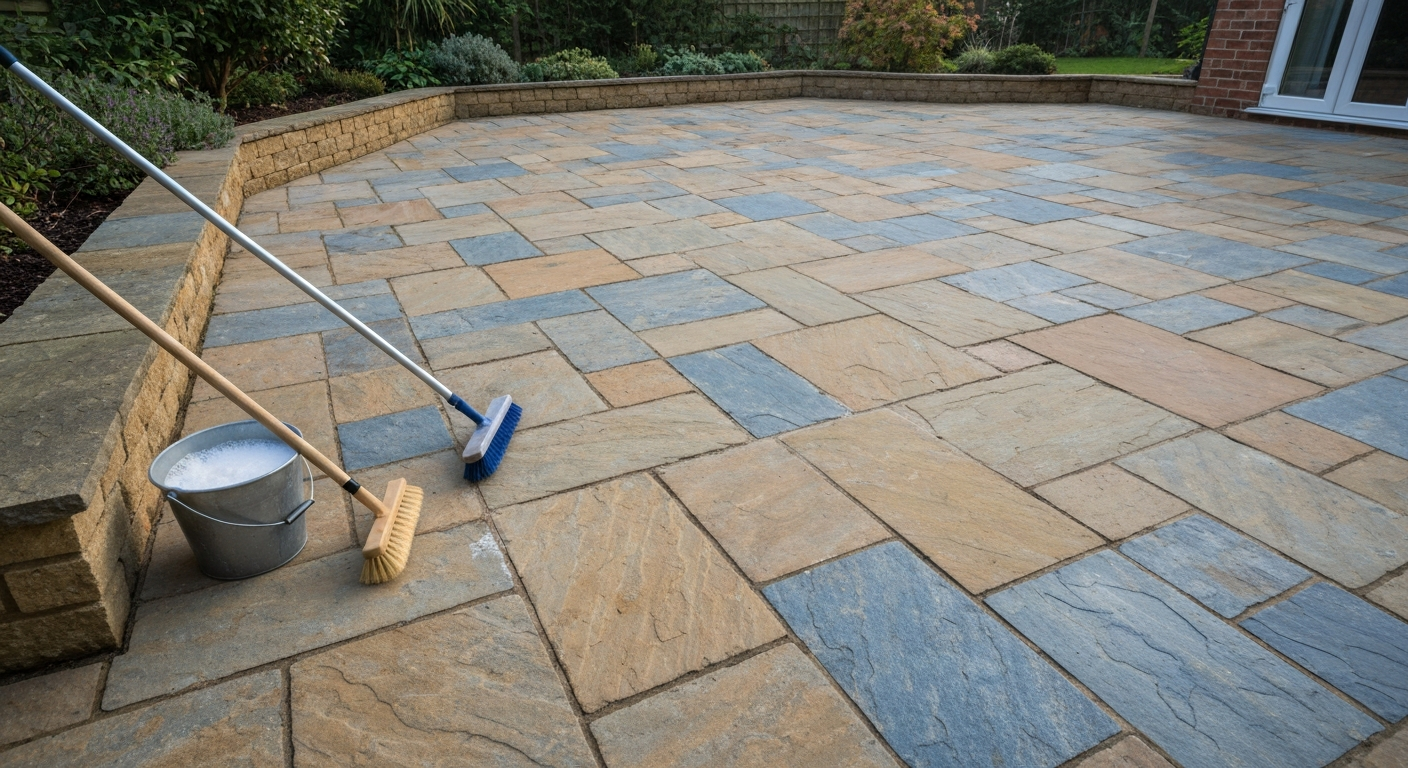
After testing more than a dozen patio stone cleaners across concrete slabs, brick, Indian sandstone, slate, and porcelain tiles, the products that consistently delivered the best results were Simple Green Oxy Solve (oxygen-based, safe on most surfaces), Wet & Forget Outdoor (no-scrub, slow-acting but genuinely residual), and Algon Organic Path & Patio Cleaner for lighter biological growth. The right pick depends entirely on your surface type, the stain you're dealing with, and how much elbow grease you're willing to put in. This guide breaks it all down so you can skip the guesswork. For a short list of top picks, see our guide to the best patio slab cleaner.
Patio Stone Cleaner Review: Best Cleaners by Surface
Rhea Lang
21 Jul 2026
Who this guide is for and what you'll get out of it
Whether you've got a moss-covered sandstone path, a greasy concrete driveway, or a porcelain-tiled patio with stubborn iron stains, this article covers the specific products and methods that actually work for each situation. I've tested cleaners hands-on across multiple surface types, cross-referenced manufacturer technical data sheets and Safety Data Sheets, and checked active ingredient chemistry against environmental guidance from the U.S. EPA and the Natural Stone Institute. The result is a buyer-focused review that goes beyond marketing copy and tells you what dilution to use, what PPE to wear, and what to avoid so you don't permanently etch your expensive stone.
This guide is aimed at DIY homeowners and property managers who want a clear, honest breakdown of patio stone cleaners by surface type and stain type, with real usage instructions and safety notes. If you're specifically looking at brick patios, sandstone, or tools for repointing grout lines, some of the sibling topics on this site go deeper into those areas and are worth reading alongside this overview.
How to choose the right patio stone cleaner
The single biggest mistake people make is grabbing a general-purpose cleaner without checking whether its chemistry is safe for their surface. Acidic cleaners (muriatic acid, phosphoric acid, some rust removers) will etch limestone, marble, and many sandstones. Bleach-based products can discolor grout, damage plant life, and cause real problems if they run into a storm drain. The Natural Stone Institute is explicit on this: neutral cleaners (pH 7, or stone soap) are the safest starting point for most natural stones, and strongly alkaline or oxidizing chemistries need careful vetting before use.
Match the chemistry to the surface
- Concrete and brick: tolerates a wider pH range, including mildly acidic (pH 4-6) and moderately alkaline (pH 8-11) cleaners. High-alkaline degreasers work well on grease and oil.
- Indian sandstone and other sandstones: use pH-neutral to mildly alkaline cleaners only. Acidic products cause visible etching and colour change fast. I learned this the hard way on a client's buff sandstone patio.
- Slate: similar to sandstone, needs neutral or very mildly alkaline chemistry. Avoid anything containing acids or strong bleach.
- Porcelain and ceramic tile: the tile itself is highly resistant to most chemistries, but the grout joints are not. Use pH-neutral cleaners to protect grout and sealant.
- Limestone and travertine: neutral only. These are calcium carbonate-based and dissolve in acid.
Match the product to the stain
- Biological growth (algae, moss, lichen, mold): oxygen bleach (sodium percarbonate) or biocide-based products. Wet & Forget is EPA-registered as a pesticide/mildewcide for residual control.
- Rust and iron stains: oxalic acid or phosphoric acid-based removers. Check surface compatibility before applying anything acidic.
- Grease and oil: high-alkaline or solvent-based degreasers. Simple Green Oxy Solve works well here.
- General dirt and grime: diluted neutral cleaner plus a stiff brush or pressure washer. No need for specialty chemistry.
- Pet stains and urine odour: enzyme-based cleaners that break down uric acid proteins rather than just masking odour.
Budget and environmental rules to know before you buy
Concentrated products almost always cost less per treated square metre than ready-to-use sprays, but you need to dilute them correctly. Always read the manufacturer's technical data sheet for the right ratio. On the environmental side, the U.S. EPA classifies many leftover cleaning products as household hazardous waste and warns against pouring them down storm drains or onto the ground. Many municipalities, including Portland OR and Charlotte NC, specifically prohibit pressure-wash runoff from entering storm drains. Practically, this means containing wash water on larger jobs, neutralizing chlorine residue with sodium thiosulfate before disposal, and checking your local authority's best-management practices. Sodium percarbonate (oxygen bleach) breaks down to hydrogen peroxide and sodium carbonate, making it considerably more environmentally benign than sodium hypochlorite (bleach), which is corrosive and acutely toxic to aquatic life.
Top cleaners for brick patios
Brick is one of the more forgiving surfaces to clean because fired clay is dense and less porous than sandstone or limestone. That said, the mortar joints are the weak point: aggressive acids or high pressure can erode them quickly. For most brick patios I recommend starting with an oxygen-bleach concentrate rather than sodium hypochlorite, because it's effective on biological staining and far easier to dispose of responsibly.
Simple Green Oxy Solve Deck and Fence Cleaner
Simple Green Oxy Solve uses hydrogen peroxide and sodium percarbonate as its active system. The SDS confirms no chlorine bleach content, which means no bleach odour, no risk of toxic chloramine gas if it contacts ammonia-based products, and dramatically lower aquatic hazard compared to hypochlorite. On brick it works well at the standard 1:10 dilution for general cleaning, or neat on heavy algae. Dwell time is 10 minutes, then rinse. Wear nitrile gloves and eye protection: even mild oxidisers irritate skin and eyes. I've used this on dozens of brick jobs and it consistently removes green algae and light grime without touching the mortar.
Wet & Forget Outdoor
Wet & Forget uses a benzalkonium chloride quaternary ammonium compound (QAC) as its active ingredient, and it's EPA-registered as a pesticide/mildewcide. The application method is unusual: you spray it on diluted (1:5 ratio) and simply walk away. No rinsing, no scrubbing. Over several weeks of rain it gradually kills and removes biological growth. This makes it ideal for moss-covered brick where you don't want to scrub. The trade-off is time: don't expect results overnight. It's also worth noting that QAC compounds are identified as chemicals of emerging environmental concern due to aquatic toxicity and potential antimicrobial selection pressure in peer-reviewed literature, so avoid over-application and keep it off ornamental ponds.
Algon Organic Path and Patio Cleaner
Algon is popular in the UK market and uses an organic fatty acid chemistry rather than bleach or QACs. It's genuinely biodegradable, safe around pets and plants once dry, and works well on light-to-moderate biological growth on brick. It doesn't have the punch of percarbonate products on heavy algae or lichen, but for maintenance cleaning it's excellent. Dilute 1:5 for light growth, 1:3 for heavier staining. If you're looking at brick-specific options in more detail, the best patio brick cleaner guide on this site goes deeper into product comparisons for that surface.
Top cleaners for concrete slabs and poured patios
Concrete is tough but porous, and it soaks up oil, rust stains, and biological growth readily. It can handle more aggressive chemistry than most natural stones, but the Portland Cement Association warns against very high pressure and improper technique. Their guidance recommends limiting pressure to ranges that won't erode the cement paste, and suggests using fan nozzles rather than zero-degree nozzles, which can cut grooves into concrete. Consumer Reports similarly recommends staying at around 1,200 to 1,500 PSI for general patio concrete cleaning and avoiding 0-degree tips entirely.
Zep Driveway and Concrete Pressure Wash Cleaner
Zep's concentrate is a high-alkaline detergent designed specifically for concrete and masonry. It's effective on oil and grease at a 1:4 dilution, and works well pre-applied before a pressure wash. Let it dwell for 5 to 10 minutes, then rinse with a 25-degree fan nozzle. The alkaline chemistry (pH around 11 to 12) is fine on concrete but should not go anywhere near sandstone, limestone, or slate. PPE is essential: chemical-resistant gloves and eye protection are listed on the SDS, and I'd add an apron if you're pressure washing, because high-alkaline mist is genuinely irritating.
Simple Green Oxy Solve (concrete application)
The same Oxy Solve product listed for brick works well on concrete too, particularly for biological staining and general grime. Its advantage over Zep on concrete is that it's safer for surrounding plants and is a more sensible choice if your patio has mixed surfaces nearby. For heavy grease on a pure concrete driveway, though, Zep has more degreasing power.
Muriatic acid (for stubborn efflorescence only)
Dilute muriatic (hydrochloric) acid is sometimes used to remove heavy efflorescence (white mineral deposits) from concrete. I include it here because it does work, but with a strong caution: it requires significant PPE including acid-resistant gloves, goggles, and a respirator, must be heavily diluted (typically 1 part acid to 10 parts water, always add acid to water, never the reverse), and the wash water must be neutralized with sodium bicarbonate before disposal. Refer to Massachusetts HHW guidance or your local authority for safe disposal instructions. Do not use muriatic acid anywhere near sandstone, limestone, slate, or marble.
Top cleaners for Indian sandstone and other sandstone patios
Indian sandstone is the surface where I see the most DIY cleaning damage. The stone is iron-rich, naturally variable in colour, and very sensitive to both acid and strong alkali. Even some 'general purpose' patio cleaners marketed for all surfaces will visibly bleach or mottle sandstone if used at the wrong dilution or left to dwell too long. The Natural Stone Institute's guidance is to stick to pH-neutral products or mild stone soaps, and I agree completely. See our roundup of the best sandstone patio cleaner for products and dilutions proven safe on Indian sandstone. If you want detailed product rankings specifically for this surface, the best patio cleaner for Indian sandstone guide on this site covers it exhaustively.
Lithofin MN Power-Clean
Lithofin is a professional stone care brand widely used in the UK and available in the US. Their MN Power-Clean is a mildly alkaline, surfactant-based cleaner (pH around 8 to 9) that is safe for Indian sandstone, slate, limestone, and quartzite. It works well at a 1:10 dilution for regular cleaning and 1:5 for heavier soiling. Dwell 5 minutes, scrub gently with a soft-bristle brush, rinse thoroughly. It does not strip existing sealant, which matters if you've already invested in sealing your sandstone.
Patio Magic (original formula)
Patio Magic is a UK-market product that has been around long enough to have a genuine track record. The formula is a benzalkonium chloride biocide, similar in mechanism to Wet & Forget. It's applied diluted (1:3 or 1:6 depending on growth severity) and left to work without scrubbing. It's listed as safe for natural stone including sandstone and slate, which I've verified through use. It's slower than a percarbonate scrub-clean but far safer for stone, and the lack of rinsing pressure reduces the risk of disturbing surface finish. The same QAC environmental caveats apply as with Wet & Forget.
What to avoid on sandstone
- Any acid-based cleaner, including rust removers with oxalic or phosphoric acid.
- Sodium hypochlorite (bleach) at full or even medium dilution: it can leach iron from sandstone and cause orange staining.
- High-pressure washing above 1,200 PSI: sandstone is soft enough that a zero-degree or 15-degree nozzle will gouge it. Use a 25 or 40-degree fan tip and keep a 30 cm distance minimum.
Top cleaners for slate patios
Slate is a naturally layered metamorphic rock and its main vulnerability during cleaning is delamination: aggressive pressure washing or harsh chemistry can lift the surface layers off in sheets. I've seen this happen when someone used a zero-degree pressure tip on slate without realising the damage they were doing until it was too late. Use low pressure (800 to 1,200 PSI maximum), a 40-degree nozzle, and keep nozzle distance at least 30 cm from the surface. Neutral to mildly alkaline chemistry only.
StoneTech Professional Heavy Duty Exterior Cleaner
StoneTech's Heavy Duty Exterior Cleaner is formulated specifically for natural stone including slate and is pH-balanced to avoid etching. It targets biological growth and general outdoor grime well, and doesn't require pressure washing: a scrub brush, dwell of 10 minutes, and a garden hose rinse is sufficient for most jobs. It's one of the safer options if you want a product that's been tested and documented against stone industry standards.
Lithofin MN Power-Clean (slate application)
The same Lithofin product recommended for sandstone works just as well on slate. The mildly alkaline pH and surfactant system cleans effectively without risk of chemical damage. At 1:10 dilution with a soft brush and garden hose rinse, it handles general algae and grime on slate reliably. If your slate shows any rust-coloured staining from iron minerals, consult a stone specialist before using any cleaner, as this kind of discolouration can sometimes be made worse by the wrong product.
Top cleaners for porcelain and tiled patios
Porcelain pavers are the most forgiving surface from a chemistry standpoint. The tile itself is vitrified (essentially glass-like), which means it's non-porous and resistant to most cleaning chemicals. The vulnerability is the grout joints, which are typically cement-based and can be etched by acids or degraded by strong alkali over time. Use pH-neutral cleaners for routine maintenance and reserve stronger products for heavy staining, applied carefully away from grout lines.
Fila Surface Care CLEANER PRO
Fila's CLEANER PRO is a concentrated, pH-neutral cleaner designed for porcelain, ceramic, and other smooth stone surfaces. Diluted at 1:20 for routine cleaning or 1:5 for more stubborn marks, it cuts through algae, general grime, and light grease without harming grout sealants. It leaves no film and doesn't require special rinsing. This is the product I use for regular maintenance cleans on porcelain-paved patios.
HG Extra Strong Tile Cleaner
For heavily soiled porcelain where routine cleaners aren't making progress, HG Extra Strong is a dilutable acid-based cleaner. On porcelain tile itself it's safe and highly effective on mineral deposits, rust staining, and hard water marks. The critical step: rinse the grout lines thoroughly after use, as prolonged contact with grout is not recommended. Never use this product on natural stone, sandstone, slate, or limestone tile. Read the SDS before use, wear acid-resistant gloves and eye protection.
Pressure washing porcelain
Porcelain can handle higher pressures than natural stone: up to 2,000 PSI with a 25-degree fan nozzle is generally fine for the tile surface. The concern is the grout and the bedding below. Keep the nozzle moving and don't linger in one spot. If your porcelain is laid on a sand/cement bed rather than full-bed adhesive, concentrated high-pressure water can erode the sand bed from below the joints over time.
Best cleaners for biological growth: mold, algae, and moss
Biological growth is the most common complaint I hear about patios, and it's also the most treatable. The key distinction is between cleaners that kill biological growth on contact (percarbonates, hypochlorite) and those that provide residual prevention (QAC-based products like Wet & Forget and Patio Magic). For most homeowners, the ideal approach combines a contact-kill clean-up with a follow-up treatment that slows regrowth.
Step-by-step approach for heavy biological growth
- Remove loose moss and algae manually with a stiff brush or scraper. Don't skip this step: cleaners work far better on surfaces that aren't caked in thick biological material.
- Apply an oxygen bleach solution (Simple Green Oxy Solve at 1: 5 dilution, or a sodium percarbonate concentrate at roughly 50g per litre of warm water). Dwell for 15 to 20 minutes on hard biological staining.
- Scrub with a stiff-bristle brush or use a pressure washer at the appropriate PSI for your surface (see surface sections above).
- Rinse thoroughly with clean water.
- Once dry, apply a QAC-based residual treatment (Wet & Forget at 1: 5 or Patio Magic at 1:3 to 1:6) and leave to work. Do not rinse off.
- Reapply the residual treatment annually, typically in spring or early autumn before growth peaks.
Sodium percarbonate is PubChem-documented to decompose to hydrogen peroxide and sodium carbonate in solution, both of which have reasonably benign environmental profiles compared to sodium hypochlorite. See the blank" rel="noopener noreferrer">Sodium percarbonate – PubChem (properties and hazard summary) entry, which notes that sodium percarbonate decomposes to hydrogen peroxide and sodium carbonate and summarizes its oxidizer hazards and environmental fate. If you're in an area with strict stormwater rules, percarbonate-based cleaners are the right choice over bleach. Sodium hypochlorite is listed by the EPA's PubChem database as corrosive and acutely toxic to aquatic organisms at low concentrations. It also reacts with ammonia compounds to produce toxic chloramine gases, so don't use it near fertilizers or cat urine.
Lichen: the tough case
Lichen is the hardest biological growth to remove because it anchors physically into stone. A QAC-based treatment applied and left for several months will eventually kill it, after which the dead lichen can be brushed off. Trying to scrub or pressure-wash live lichen typically spreads spores and makes things worse. Patience and a residual biocide are your tools here.
Best cleaners for rust stains and iron deposits
Rust stains on patios typically come from one of three sources: iron-containing minerals in the stone itself, metal furniture left on the surface, or irrigation water with high iron content. The treatment chemistry is the same in all cases: an oxalic acid or phosphoric acid-based product that chelates the iron and lifts it from the surface.
Bar Keepers Friend (oxalic acid-based)
Bar Keepers Friend is oxalic acid-based and works extremely well on rust staining on concrete and porcelain. Make a paste with water, apply to the stain, let it dwell for 10 to 15 minutes, scrub, and rinse. On porcelain it's safe and effective. On concrete it will work but may leave a slightly lighter patch if the concrete is coloured. Do not use on sandstone, limestone, slate, or any calcium-carbonate stone: oxalic acid etches these surfaces quickly.
Rust-Oleum Rust Stain Remover
Rust-Oleum's outdoor rust stain remover uses oxalic and other organic acids to address iron deposits on concrete and masonry. It's ready-to-use from a spray bottle, which makes it convenient for spot treatment. Similar surface restrictions apply: concrete and porcelain yes, natural stone no. Wear gloves and eye protection, and neutralize any runoff with sodium bicarbonate before it enters a drain.
Pretreatment and neutralization for acid-based rust removers
Before applying any acid-based rust remover, wet the surrounding surface with plain water to reduce lateral spread. After treatment, capture the runoff if possible and neutralize with a sodium bicarbonate solution (roughly 60 grams per litre of water) until the pH tests at 6 to 8 on a test strip before disposal. Massachusetts HHW guidance and several municipal BMPs specifically recommend this process. Don't pour acidic wash water into storm drains: under EPA NPDES guidance, this is potentially an unauthorized discharge.
How these products compare across surfaces and stain types
| Product | Active Chemistry | Best Surfaces | Best For | Safe on Sandstone? | Eco Profile |
|---|---|---|---|---|---|
| Simple Green Oxy Solve | Sodium percarbonate / H2O2 | Brick, concrete, wood | Algae, grime, general cleaning | Yes (diluted) | Good (percarbonate) |
| Wet & Forget Outdoor | Benzalkonium chloride (QAC) | All exterior surfaces | Moss, lichen, algae (residual) | Yes | Moderate (QAC concerns) |
| Algon Organic | Fatty acid blend | All exterior surfaces | Light biological growth | Yes | Good (biodegradable) |
| Lithofin MN Power-Clean | Mild alkaline surfactant | Natural stone, slate, sandstone | General cleaning, algae | Yes | Good |
| Patio Magic | Benzalkonium chloride (QAC) | Natural stone, concrete, brick | Moss, algae (no-rinse) | Yes | Moderate (QAC concerns) |
| Zep Driveway & Concrete Cleaner | High-alkaline detergent | Concrete, masonry | Oil, grease | No | Moderate |
| Fila CLEANER PRO | pH-neutral surfactant | Porcelain, ceramic, smooth stone | Routine maintenance | Yes | Good |
| HG Extra Strong Tile Cleaner | Acidic | Porcelain, ceramic only | Mineral deposits, rust | No | Caution needed |
| Bar Keepers Friend | Oxalic acid | Concrete, porcelain | Rust stains | No | Caution (aquatic toxicity) |
| Bar Keepers Friend | Oxalic acid | Concrete, porcelain | Rust stains | No | Caution (aquatic toxicity) |
| StoneTech HD Exterior Cleaner | pH-balanced, enzymatic | Slate, natural stone | Biological growth, grime | Yes | Good |
Application tips that actually make a difference
The biggest factor separating a good result from a mediocre one isn't usually the product: it's how you apply it. I've seen expensive professional cleaners fail because the user rinsed too soon, and cheap concentrates work brilliantly because someone took the time to pre-wet the surface and let the product dwell. Here are the practices that actually move the needle.
- Pre-wet the surface before applying any cleaner. This stops the product from soaking instantly into dry stone and gives it time to work on the stain rather than being absorbed immediately.
- Never apply cleaner in direct hot sun. It dries before it can work, wastes product, and increases the risk of chemical residue on the surface.
- Respect dwell times from the manufacturer TDS: under-dwelling wastes the product; over-dwelling can cause problems on sensitive stones.
- Use the right brush: a stiff-bristle nylon brush for concrete and brick, a medium-bristle brush for sandstone and slate, and a softer brush for porcelain to avoid scratching.
- Rinse thoroughly and don't let cleaner dry on the surface. Dried chemical residue is both a safety issue and can leave ghosting marks.
- Contain runoff on larger jobs: use sandbags or inflatable dams at drain entries, and direct wash water to a suitable collection point for disposal per your local EPA or municipal BMP guidance.
Pressure washer settings for each surface
| Surface | Max Recommended PSI | Nozzle Type | Min Distance from Surface | Notes |
|---|---|---|---|---|
| Concrete | 2,000 PSI | 25-degree fan | 20 cm | Never use 0-degree tip; risk of surface scoring |
| Brick | 1,500 PSI | 25-degree fan | 20-25 cm | Keep off mortar joints; use surface cleaner attachment if available |
| Indian Sandstone | 1,200 PSI | 40-degree fan | 30 cm | Soft stone; low pressure and wide fan essential |
| Slate | 1,000 PSI | 40-degree fan | 30 cm+ | Risk of delamination; minimal pressure preferred |
| Porcelain | 2,000 PSI | 25-degree fan | 20 cm | Tile is tough but protect grout joints |
These figures align with guidance from the Portland Cement Association, Karcher's operator manuals for stone and cement surfaces, and Consumer Reports' practical testing. Which Surfaces Can Be Pressure‑Washed?, Consumer Reports recommends avoiding 0°/very-narrow tips and using roughly 1,200–1,500 PSI for many porous or delicate exterior surfaces Which Surfaces Can Be Pressure‑Washed? — Consumer Reports. The Karcher documentation specifically mentions 3 to 6 inch nozzle-to-surface distances and recommends surface cleaner accessories for large flat areas, which I've found genuinely reduces streaking on concrete and brick.
PPE and safety: what you actually need
Every cleaner covered in this guide has a Safety Data Sheet available from the manufacturer or from an SDS repository. OSHA's Hazard Communication Standard requires that these SDS documents follow a standardized 16-section format that includes active ingredients, exposure controls, first aid, and disposal instructions. Before using any product, download the SDS and check Section 8 (Exposure Controls/PPE) and Section 13 (Disposal). At a minimum, for most patio cleaners you'll need:
- Chemical-resistant gloves (nitrile for most cleaners, acid-resistant rubber for acid-based products)
- Eye protection (safety glasses minimum; goggles for acid-based cleaners and pressure washing)
- Old clothes or a waterproof apron when pressure washing
- Closed-toe footwear, not flip-flops
- Respirator if you are using concentrated acid products or working in an enclosed or poorly ventilated area with bleach-based cleaners
Sealing and aftercare to protect your clean patio
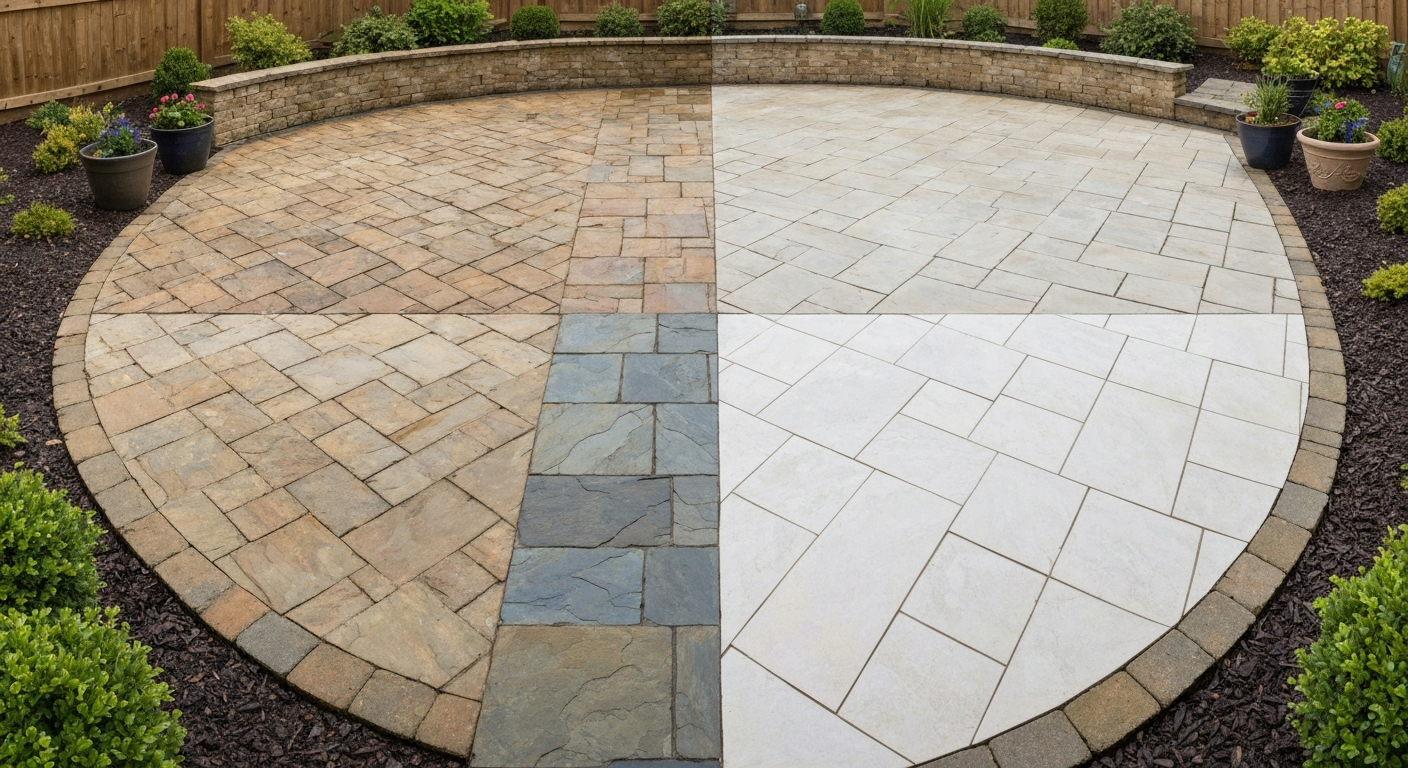
Cleaning is only half the job. An unsealed patio will be back to its dirty state significantly faster than one with a properly applied sealant, because biological spores and grime adhere to bare stone far more readily than to a sealed surface. Once you've cleaned and allowed the patio to dry fully (typically 24 to 48 hours of dry weather), consider an impregnating sealant appropriate to your surface type. Impregnating sealants penetrate the pores of the stone and provide protection without changing the surface appearance. Topical sealants sit on the surface and can look good initially but are more prone to peeling and require more frequent reapplication.
- Sandstone and slate: use a dedicated natural stone impregnating sealant, such as those from Resiblock, Lithofin, or StoneTech. Reapply every 2 to 3 years or when water no longer beads on the surface.
- Concrete: an acrylic or penetrating concrete sealer helps resist oil, staining, and frost damage. Reapply every 2 to 5 years depending on traffic.
- Porcelain: generally doesn't need sealing on the tile surface, but grout joints benefit from a grout sealant to prevent biological growth and staining.
- Brick: joint sealants or patio sealers designed for clay pavers reduce water ingress and slow moss and algae regrowth.
Grout joints deserve special attention because they're the most porous and most vulnerable part of any tiled or block-paved patio. Using the right brush and correct technique in grout lines makes a measurable difference to both cleanliness and longevity. See our brush in patio grout reviews for recommended grout brushes and techniques. For guidance on tools specifically for grout, the best brush for patio grout and brush-in patio grout reviews pages on this site cover equipment and products in detail.
Cost and buying guidance
Ready-to-use spray products cost more per square metre treated but require no measuring or mixing, making them suitable for small spot treatments. Concentrated cleaners are the better value for any job covering more than about 10 to 15 square metres. Here's a rough cost breakdown based on current retail pricing:
| Product Type | Typical Retail Price | Coverage (diluted) | Cost per m² | Best For |
|---|---|---|---|---|
| RTU spray (e.g. Wet & Forget spray) | $15-20 / 800ml | ~20 m² | ~$0.85/m² | Small spot treatments |
| Concentrate 1L (e.g. Algon 1L) | $15-25 / 1L | ~30-50 m² (at 1:5) | ~$0.40-0.65/m² | Mid-size patios |
| Concentrate 5L (e.g. Patio Magic 5L) | $40-60 / 5L | ~150-250 m² | ~$0.20-0.35/m² | Large areas or regular maintenance |
| Powder concentrate (e.g. percarbonate 1kg) | $10-15 / 1kg | ~20 litres at 50g/L | ~$0.15-0.25/m² | Heavy biological cleaning jobs |
For a standard 30 to 40 square metre patio, a 1 litre concentrate is usually sufficient for a full clean. Buy a 5 litre container if you have a larger area or want to do a treatment plus a follow-up residual application in the same season. Always check whether the product you're buying is a UK or US formulation: some products carry different active ingredient concentrations or surface safety claims across markets, and the formulation listed on the US SDS may differ from the UK product with the same name.
FAQ
What primary product documents must we collect for every cleaner we test?
Collect each product’s Safety Data Sheet (SDS), Technical Data Sheet (TDS) or product label (pesticide label if antimicrobial claims are made), and manufacturer usage/dilution instructions. These are the authoritative sources for active ingredients, hazard statements, PPE, dilution ratios, dwell times, disposal, and surface recommendations (example sources: manufacturer product pages and SDS PDFs).
Which regulatory and disposal rules should inform test protocols and wash‑water handling?
Use federal EPA guidance on household hazardous waste and non‑stormwater washwater (NPDES/MSGP fact sheets) plus local municipal BMPs (e.g., Portland, Charlotte) to define legal disposal options: capture and treat, discharge to sanitary sewer if allowed, or use HHW programs. Cite EPA HHW pages and MSGP/non‑stormwater guidance when specifying containment/neutralization/disposal steps.
What safety and personal‑protective requirements must be verified per product?
Derive PPE, first aid, exposure controls and hazard classifications from the SDS (OSHA Hazard Communication Standard / SDS 16‑section format). Also cross‑check SDS and manufacturer instructions for respiratory, eye, glove and clothing recommendations and for incompatible chemistries (e.g., bleach + acids/ammonia).
How do we determine material compatibility (which cleaners are safe for brick, concrete, sandstone, slate, porcelain, etc.)?
Use the Natural Stone Institute guidance for natural stones and PCA (Portland Cement Association) P22 and related concrete cleaning guidance for masonry and concrete. Also review manufacturer’s recommended surfaces on the product TDS and pressure‑washer OEM manuals for technique limits to avoid etching/etch damage.
What pressure‑washer settings, nozzle types and application methods should our tests use?
Base settings on pressure‑washer OEM manuals (Kärcher, SIMPSON, Nilfisk), PCA/Consumer Reports safe‑surface PSI references, and manufacturer nozzle guidance. Define safe PSI/nozzle bands per surface (recorded distance, GPM, nozzle angle), and avoid 0° tips on delicate materials. Document exact PSI, nozzle degree, distance and number of passes in every test.
Which environmental‑toxicity and fate data are needed for each active ingredient?
Gather PubChem/EPA/ECHA summaries and SDS aquatic toxicity data for key chemistries (sodium hypochlorite, sodium percarbonate, hydrogen peroxide, QACs, acids). Use peer‑reviewed reviews for emerging concerns (e.g., QAC persistence and aquatic toxicity) to inform environmental pros/cons.
Next Article
Best Patio Cleaner for Indian Sandstone: Cleaning & Care Guide
Best patio cleaner for Indian sandstone: top picks, step-by-step cleaning, PSI specs, sealing & maintenance.