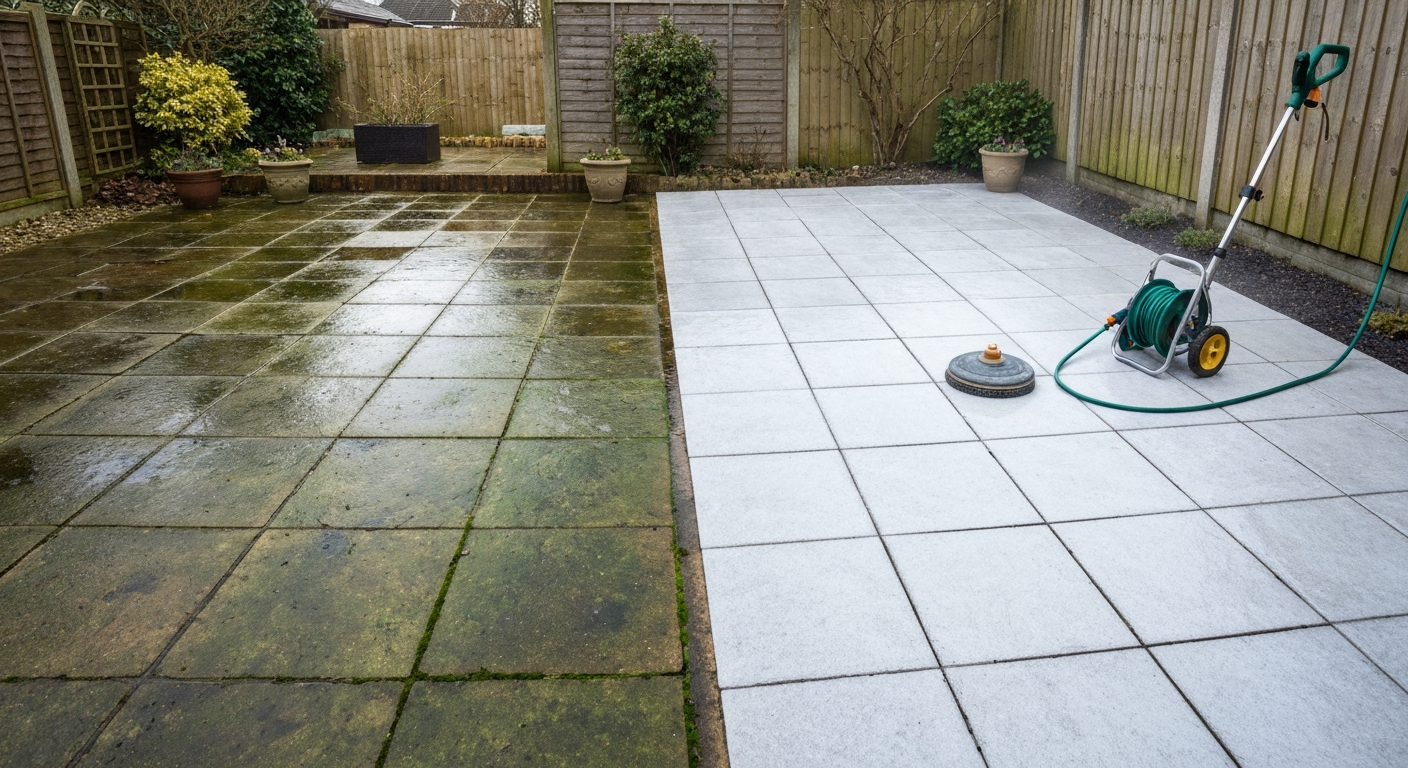
The best time to pressure wash your patio is mid-spring, once overnight temperatures are consistently above 4 °C (40 °F) and you have a dry, overcast morning ahead of you. For more on timing and seasonal details, see the guide on the best time of year to power wash patio. For a deeper guide on the best time of year to clean patio, see our detailed timing and seasonal checklist. That window, roughly late March through May in the UK and April through May across most of the US, lets you blast away the winter's worth of moss, algae, and grime before you actually want to use the space. If you miss spring, early fall (September to October) is a solid second choice. Both seasons give surfaces time to dry fully and, if you plan to seal, time for the sealant to cure before the next cold spell. For more on timing and weather considerations, see when to power wash patio.
When Is the Best Time to Pressure Wash Your Patio: Timing Guide

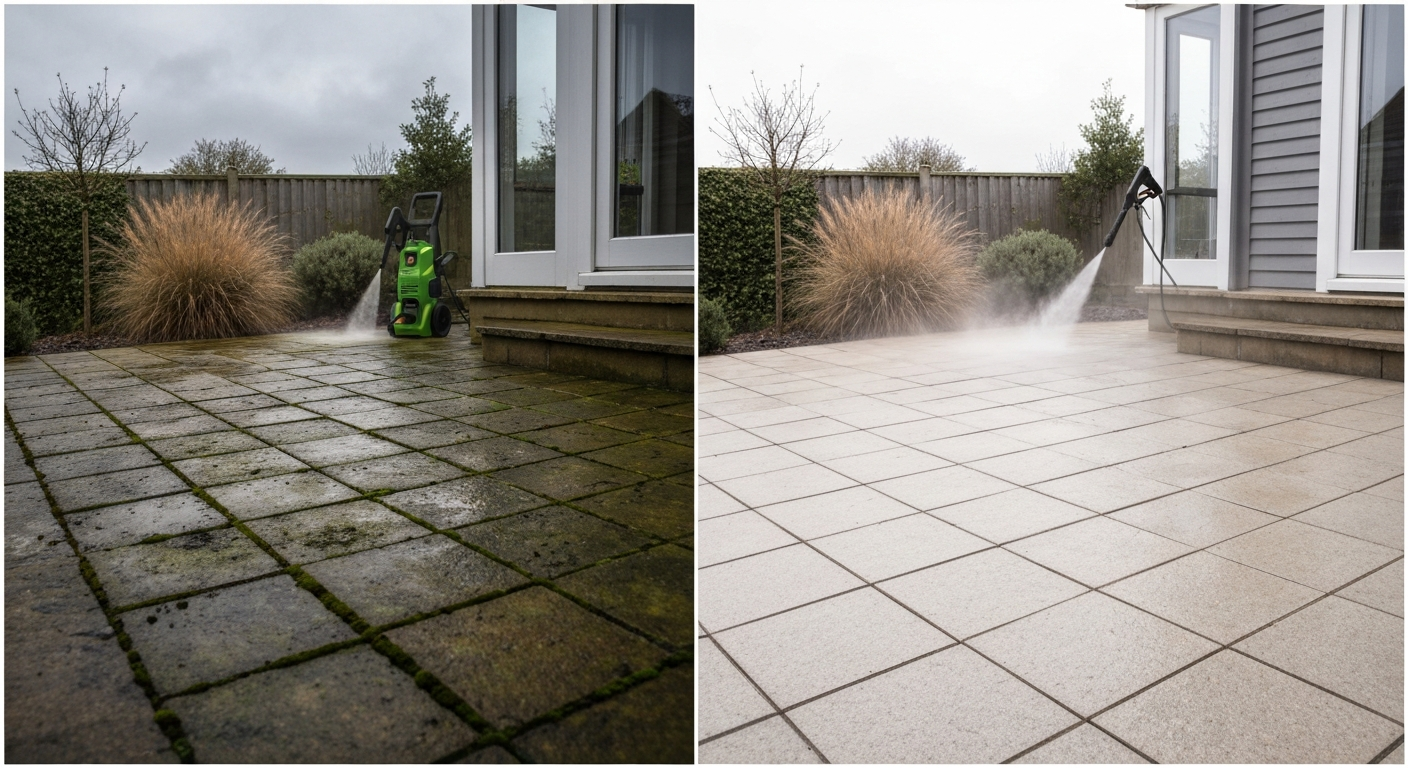
The best season and a month-by-month breakdown
Spring is the standout winner for most homeowners, and the logic is straightforward: your patio has spent several months being rained on, possibly frozen and thawed, and in shade long enough for moss and algae to take hold. Cleaning it in spring removes all that before outdoor furniture goes out, before barbecue season starts, and before guests arrive. Fall is the runner-up because you are removing a summer's worth of grease, sunscreen, and general grime, and you want the surface in good shape before winter settles in.
| Month | Suitability | Why |
|---|---|---|
| January–February | Avoid | Frost risk, saturated masonry, freeze-thaw damage likely |
| March | Good (mild climates) / Caution (cold regions) | Winter grime removal; check overnight temps stay above 4 °C / 40 °F |
| April | Excellent | Temps reliable, moss/algae at peak — ideal spring clean |
| May | Excellent | Warm enough for fast drying, not yet peak summer heat |
| June–August | Touch-ups only / avoid midday | High heat causes rapid drying and streaking; morning or late afternoon only |
| September–October | Excellent | Post-summer clean-up; surfaces dry well before winter |
| November | Caution | Drying time longer, frost possible at night — plan carefully |
| December | Avoid | Frost and persistent damp — high freeze-thaw risk |
A note on summer: I would not skip a July clean if your patio has visible mold growth or a genuine slip hazard building up. Just shift the job to early morning, below 24 °C (75 °F) if you can manage it, and rinse thoroughly. Detergents dry and leave residue fast in direct sun and heat, which creates its own cleaning headache. Summer is fine for quick maintenance blasts but not the ideal time for a full deep clean with pre-treatment chemicals.
Best time of day and ideal weather conditions
Morning is the best time of day to pressure wash, specifically between about 8 am and 11 am. Temperatures are cooler, any dew has lifted, and you have the rest of the day for the surface to dry. Late afternoon (after 4 pm when direct sun is dropping) works as a backup. The reason to avoid midday is practical: in direct sun and above about 24 °C (75 °F), detergent dries on the surface before you get the chance to rinse it properly. I learned this the hard way on a sandstone patio one August afternoon when I ended up with dried chemical streaks that took a second pass to shift.
The sweet spot temperature range for pressure washing is 4–24 °C (40–75 °F), though many contractors prefer 15–27 °C (60–80 °F) for the best detergent performance. Outside that lower bound you risk water freezing in joints and cracking mortar overnight. Outside the upper bound you are fighting evaporation the whole time.
Weather conditions to avoid completely
- Rain or wet weather: dilutes detergents significantly and you cannot see the results properly
- Frost forecast within 24 hours: water soaks into masonry joints and freezes overnight, cracking grout and mortar
- High wind: spray drifts onto cars, plants, and neighboring surfaces; rinsing becomes inconsistent
- High humidity combined with low temperatures: drying time extends dramatically, especially on natural stone
- Extreme heat above 35 °C (95 °F): detergents become almost impossible to control and surfaces streak badly
Regional timing: UK, wet climates, freeze-thaw zones, and hot/dry areas
UK and maritime climates (Atlantic Europe, Pacific Northwest US)
In the UK and similar wet climates, the challenge is not cold so much as persistent damp. You genuinely need to wait for a dry window, which sounds obvious but is harder than it sounds when you get eight months of grey drizzle. UK paving specialists consistently point to March through May as the prime window, specifically to tackle the moss and algae that thrive in damp, low-light winters. Avoid jet washing right before a wet spell is forecast, and never pressure wash if frost is possible in the following 48 hours. Autumn cleaning in the UK (September to October) is viable but requires checking the forecast carefully.
Freeze-thaw regions (Northern US, Canada, Northern/Eastern Europe)
In climates that get genuine winter freezes, the timing rule is non-negotiable: do not pressure wash until you are confident the last frost has passed, typically mid-April to May depending on latitude. The danger is not just frost on the surface, it is water driven deep into masonry pores and cracks by a pressure washer, then frozen solid overnight. That expansion cracks mortar joints and can chip or spall the surface of softer stones. In fall, aim to complete any pressure washing at least four to six weeks before the first expected frost so surfaces and any sealant can fully cure.
Hot and dry climates (Southern US, Mediterranean, coastal California)
In Mediterranean-type climates, freeze-thaw is less of a concern but heat is the main enemy of a good clean. Spring and fall remain the best full-clean windows, while summer is workable for maintenance sessions if you start at first light and finish before temperatures climb past around 27 °C (80 °F). In very dry, dusty climates, you may need more frequent maintenance washes simply because windblown grit accumulates faster and bonds to surfaces. Year-round scheduling is genuinely flexible here, but avoid the hottest part of summer afternoons.
Surface-specific timing and technique: what changes for concrete, stone, brick, and tile
Timing guidance above applies broadly, but how you pressure wash varies a lot by surface material. Getting this wrong is expensive, I have seen sandstone patterned with jet wash lines from someone using a zero-degree nozzle at full pressure. Here is how to approach each surface type.
Concrete patios
Concrete is the most forgiving surface to pressure wash. You can run machines in the 1,800–3,000+ PSI range with a surface cleaner attachment or a 25–40 degree fan nozzle. Concrete patios are commonly cleaned with 1,800–3,000+ PSI machines and 1.5–4.0 GPM; surface‑cleaner attachments and 25°–40° fan nozzles reduce tracking and improve uniformity Concrete patios are commonly cleaned with 1,800–3,000+ PSI machines and 1.5–4.0 GPM; surface‑cleaner attachments and 25°–40° fan nozzles reduce tracking and improve uniformity.. A surface cleaner (like the Simpson 80165, rated for 2,200–3,700 PSI machines) gives far more uniform results than a wand alone and prevents the classic tiger-stripe pattern you get from overlapping passes. Spring and fall are ideal, but concrete handles summer washing better than most surfaces, especially if you pre-soak with a concrete-specific degreaser for grease stains or an algaecide for biological growth.
Natural stone (sandstone, limestone)
Natural stone is the one that catches most people out. Sandstone and limestone are porous and relatively soft, so high-pressure direct jets etch the surface and blast out the fine material that gives them their texture. Keep pressure at or below 1,000–1,500 PSI, use a wide fan nozzle (25–40 degrees), and keep the nozzle at least 30 cm (12 inches) from the surface. Better still, consider soft-washing: apply a diluted algaecide or stone-safe cleaner, let it dwell for 10–15 minutes, then rinse at low pressure. Timing matters especially here: never clean natural stone if frost is forecast, and allow a full dry day (ideally two) before any foot traffic or sealing.
Brick patios
Brick and mortar joints are vulnerable to high pressure. Industry guidance, echoing Brick Industry Association notes, advises low-to-medium pressure settings and wider nozzle angles. Keep PSI in the 100–1,200 PSI range for the initial rinse pass, and apply detergent at low pressure rather than direct jetting. Direct the spray at an angle rather than perpendicular to the joints, as straight-on jetting blows out mortar. Check the joints before and after cleaning, any loose or crumbling mortar should be repointed before you introduce pressurized water.
Slate patios
Slate varies significantly in hardness and condition. Well-sealed, harder slates can handle moderate pressures around 1,200–1,500 PSI with a wide fan nozzle. Softer or older slate, and any slate with visible lamination or flaking, should be treated with the same caution as sandstone: low pressure, wide angle, long nozzle distance. Slate is also prone to efflorescence (white mineral deposits) after washing if water is driven too deep into the stone, so work with light, sweeping passes rather than dwelling in one spot.
Porcelain tiles
Porcelain itself is very hard and dense, meaning the tile body handles pressure washing well. The vulnerability is the grout joints. Avoid zero-degree nozzles entirely and use a surface cleaner or 25-degree tip at moderate pressure. Manufacturer guidance for porcelain pavers consistently recommends patch-testing first, using mild pH-neutral detergent, and keeping concentrated jets away from grout lines. The good news is that porcelain resists staining and biological growth better than natural stone, so it often needs less aggressive treatment.
| Surface | Max Recommended PSI | Nozzle Angle | Timing Notes |
|---|---|---|---|
| Concrete | 1,800–3,000+ PSI | 25°–40° or surface cleaner | Spring/fall ideal; summer morning fine |
| Sandstone / Limestone | 1,000–1,500 PSI (or soft wash) | 25°–40°, nozzle 30 cm+ away | Avoid frost risk; allow 48 hrs drying |
| Brick | 100–1,200 PSI | 25°–40°, angled away from joints | Check mortar first; avoid freeze forecast |
| Slate | 1,200–1,500 PSI (harder grades) | 25°–40°, wide sweeping passes | Test patch first; no direct jet on flaking areas |
| Porcelain | Moderate, surface cleaner preferred | 25°, no zero-degree nozzle | Spring/fall; patch test grout areas |
Pressure washing vs power washing vs jet washing: does the name change anything?
For practical patio cleaning purposes, these three terms describe essentially the same process: a machine pumps water at high pressure through a nozzle to remove dirt, moss, and grime. The functional difference between pressure washing and power washing is that power washers heat the water (typically to 60–93 °C / 140–200 °F), which improves degreasing performance, especially on oil stains and embedded grime. Jet washing is simply the common UK/European term for what Americans call pressure washing. If you see advice about the best time to jet wash a patio or when to power wash, the seasonal, temperature, and weather guidance in this article applies equally to all three.
The one caveat: hot water from a power washer accelerates detergent action, which is useful in cold weather when cold water reduces chemical performance. But hot water also increases the risk of thermal shock on cold natural stone, so on surfaces like sandstone and slate, cold-water pressure washing with a good dwell-time pre-treatment is often the safer option even if a hot-water machine is available.
Signs you need to clean your patio right now, regardless of the season
Ideal timing is great in theory, but some conditions mean you should clean sooner rather than waiting for the perfect spring morning. Here are the situations that should push the job up your list.
- Visible moss or algae: both spread rapidly and make surfaces slippery within weeks; treat as soon as you spot active green or black growth
- Mold (dark patches, often black or grey): in addition to being a slip hazard, mold spores in damp grout and joints cause accelerating surface damage if left untreated
- Rust stains: metal furniture, planters, and fixings leave iron oxide deposits that bond into porous surfaces over time and become harder to remove the longer you leave them
- Grease or oil patches: from BBQs, garden machinery, or vehicles — these attract further grime and are significantly easier to remove before they have been baked on through multiple hot days
- Pet stains and organic residue: urine salts and biological matter cause odor and surface degradation, especially in porous stone — clean promptly with an enzyme-based or specialist pet-stain cleaner
- Genuine slip hazard: if the surface feels noticeably slippery underfoot when damp, do not wait for the ideal season — clean and treat it now
A practical test I use: walk across the patio in normal shoes after morning dew has settled. If it feels even slightly slick, there is enough biological growth present to clean. Algae in particular can reach hazardous levels before it becomes visually obvious, especially on dark-coloured stone.
How often should you pressure wash your patio?
Most patios benefit from one thorough pressure wash per year, with a second pass if the space gets heavy use or the climate is persistently damp. See our guide on how often to jet wash a patio for examples tailored to surface type and climate. A full annual clean in spring handles the majority of cases. Where you land on the frequency scale depends on three things: surface type, how much the patio is used, and how much sun and rain exposure it gets. For a quick refresher on recommended frequencies and seasonal considerations, see our guide on how often to pressure wash patio.
| Surface / Situation | Recommended Frequency | Notes |
|---|---|---|
| Concrete (average use, moderate climate) | Once a year (spring) | Second pass in fall if heavily used |
| Natural stone in damp/shaded area | Twice a year (spring and fall) | Shaded, north-facing patios accumulate moss faster |
| Brick (moderate use) | Once a year (spring) | Check mortar annually regardless |
| Porcelain tiles | Once a year or less | Resists biological growth well; spot clean as needed |
| High-use patio (BBQ area, heavy foot traffic) | Twice a year | Plus spot treatment of grease/stains as they occur |
| Patio with pets / children | Twice a year minimum | Enzyme-based pre-treatment recommended for organic stains |
| Exposed, full-sun patio in dry climate | Once a year or less | Lower biological growth risk; grit accumulates instead |
| Shaded, damp, or north-facing patio | Twice a year | Moss and algae regrowth is faster — consider post-clean biocide treatment |
One thing that dramatically reduces how often you need a full pressure wash is applying a patio biocide or inhibitor treatment after cleaning. These work by preventing moss and algae re-establishing for six to twelve months, which in practice pushes a twice-yearly job down to once a year for many shaded patios. If you are sealing the surface after cleaning (recommended for natural stone and brick especially), the sealant itself slows biological growth and makes the next clean significantly easier.
Equipment, pressure settings, and a word on safety
For a typical domestic patio, a consumer electric pressure washer in the 1,400–2,200 PSI range handles concrete and porcelain well and, used carefully at lower settings or with a wide nozzle, manages brick and harder stone. If you need a quick estimate of how long does it take to pressure wash a patio, typical DIY jobs range from about 1–4 hours depending on patio size, surface type, and how much pre-treatment is required. Budget consumer machines from brands like Sun Joe (models in the 1,160–2,200 PSI range) are capable for annual patio maintenance. For larger concrete areas or if you want to invest in a surface cleaner attachment, you need a machine rated at least 2,200 PSI and a flow rate of at least 1.5 GPM to run the attachment properly, the Simpson 80165, for example, requires a minimum of around 2,200 PSI to operate correctly.
On nozzles: the colour-coded system matters. Red (0°) is for stripping paint or industrial work, never use it on a patio surface. Yellow (15°) is aggressive and fine for concrete stains, held well back from the surface. Green (25°) is the practical all-rounder for most patio work. White (40°) is the safe choice for brick, natural stone, and porcelain. Kärcher accessories follow the same logic, with their wide-angle and brush-jet attachments suited to stone and wood surfaces. Always test on an inconspicuous corner before committing to the full area.
On safety: wear closed-toe footwear and eye protection, pressure washer spray ricochets unpredictably off hard surfaces. Keep the wand moving; dwelling in one spot on any surface at high pressure will cause damage. Keep children, pets, and bystanders well back while the machine is running. And if you are working on a raised deck or near a garden, cover or move plants beforehand, especially if using detergent or biocide.
Aftercare: drying, sealing, and when to call a professional
Allow at least 24 hours of drying time before replacing furniture or applying sealant, and 48 hours in cooler or more humid conditions. For natural stone especially, sealing a surface that still holds moisture traps that moisture in and causes efflorescence and staining. If you are applying a patio sealer or impregnator, read the product's moisture tolerance carefully, most require the surface to be completely dry to the touch and ideally bone-dry throughout.
As for when to call a professional: if you have a large area (over 80–100 sq m), deeply embedded rust or chemical staining, or very old or fragile natural stone that you are not comfortable testing yourself, the cost of a professional clean is usually worth it. Pros with commercial hot-water machines and experience with specific stone types will complete the job faster and with less risk of surface damage than a first-time DIY user with a consumer machine. For ongoing annual maintenance once you know your surface and equipment settings, DIY is entirely practical and cost-effective.
FAQ
When is the best time of year to pressure wash your patio?
Spring (after the last frost) and early autumn are the best seasonal windows for a full patio clean: spring removes winter moss/algae and prepares the area for summer use; early autumn cleans off summer dirt and prevents organic build‑up before winter. In Mediterranean climates you can add light summer touch‑ups; in very wet maritime/UK or Pacific Northwest climates choose the driest window in spring or autumn rather than a rainy spell.
What is the best time of day and ideal weather to pressure wash?
Choose morning or late afternoon (cooler, lower sun) to avoid rapid chemical/detergent drying, streaking and heat stress on materials. Work when temperatures are consistently above freezing and ideally between about 4–24 °C (40–75 °F); many pros prefer 15–27 °C (60–80 °F) for optimal detergent action. Avoid rain (dilutes cleaners), high wind (spray drift), very high humidity (slower drying) and imminent frost (freeze‑thaw risk).
How often should I pressure wash a patio?
Typical frequencies: high‑traffic or shaded patios — once or twice per year; sunny, low‑use patios — every 18–36 months. Moss/algae‑prone areas may need spot treatment more often. Use visual signs (moss, algae, black staining, grease) to decide on interim cleanings.
How long does a typical patio pressure‑washing job take?
Estimated durations: small patio (10–20 m² / 100–200 ft²): 30–90 minutes; medium (20–50 m² / 200–550 ft²): 1–3 hours; large or heavily soiled patios: 3–6+ hours including detergent dwell time and rinsing. Natural stone or delicate work takes longer because of lower pressures, testing and careful rinsing.
What signs mean my patio needs pressure washing now?
Look for visible mold, algae, moss or green/black staining; slippery or slimy surfaces; rust or heavy oil/grease/pet stains that won’t spot‑clean; heavy pollen or layers of dirt that affect appearance or drainage. If grout/joints trap soil and make the area unsightly or hazardous, schedule cleaning.
When should I postpone cleaning?
Postpone if temperatures will fall below freezing within 24 hours, during heavy rain or high winds, during periods of extreme heat (midday >30 °C/86 °F) which can cause detergents to flash dry, or if a long humid/damp spell prevents drying. Also delay if plants, nearby vehicles or neighbor concerns can’t be protected.
How Often to Jet Wash a Patio: Frequency, Timing & Tips (UK)
How often to jet wash a patio: clear schedules, surface-specific intervals, tools, timing and DIY tips.